Safe Online Casinos in the UK: Checks Before You Play
 Available in GB

A practical look at operator information, terms, support and payments when assessing whether a casino site is worth a closer look.
Table of Contents
- What Makes a UK Casino Site Worth a Closer Look?
- The UK Rules Behind a Safer Casino
- Reliable Means Verifiable, Not Just Well-Branded
- Playing for Real Money: Checks, Deposits and Withdrawals
- What UK Players Should Know Before They Play
- Games Have Rules Too: Slots, Stakes and Pace
- My Checks Before I Trust a Casino with a Deposit
- Licensed Casinos, Bitcoin and the Offshore Trade-Off
- Casino Bonuses: Read the Turnover Before the Headline
- Secure Payments, Without the Sales Talk
- Safety
What Makes a UK Casino Site Worth a Closer Look?
I used to treat a polished homepage as a decent sign. If the games loaded quickly, the buttons looked tidy and the welcome message sounded confident, I assumed someone had their act together. That was an easy mistake. A good-looking site can still leave basic questions unanswered, and “trusted” is just a word until you can see what sits behind it.
When I’m assessing a casino, I look for things I can check, not adjectives. Can I find clear information about who operates the site? Are the terms readable before I register? Can I see how to contact support without digging through a maze of promotional pages? None of those details proves that a site is safe on its own. Together, they tell me whether the operator is making it reasonably easy to understand what I’m getting into.
Look beyond the front page
The main page is built to get you moving. I try not to let it set the pace. I open the account, payment, terms and safer-gambling sections before deciding whether I’m comfortable going further. If important information is scattered, vague or hard to find, I take that seriously. I don’t assume a missing detail will somehow become clearer after I’ve deposited.
When choosing a casino for 2026, you should check what is known about its practical features rather than assume safety from a name alone. The details below give you the stated payout speed for each operator.
1. BeOnBet
Payout speed: 1-3 business days BeOnBet lists a payout speed of 1–3 business days, giving you a stated timeframe to consider.
2. EvoSpin
Payout speed: 1-3 business days EvoSpin lists payouts as taking 1–3 business days, a useful detail for you to weigh when reviewing its terms.
3. Revery Play
Payout speed: 1-3 business days Revery Play states a payout speed of 1–3 business days, so you have a timeframe to factor into your choice.
4. NightLuck
Payout speed: 1-3 business days NightLuck lists a payout speed of 1–3 business days, providing you with a stated expectation for payouts.
5. Zombillion
Payout speed: 1-3 business days Zombillion gives a payout speed of 1–3 business days, which you can consider when looking at payout timing.
6. Dieselwin
Payout speed: 1-3 business days Dieselwin lists payouts as taking 1–3 business days, giving you a stated timeframe to keep in mind.
7. SpinFormula
Payout speed: 1-3 business days SpinFormula states a payout speed of 1–3 business days, a practical timing detail for you to review.
8. NightWin
Payout speed: 1-3 business days NightWin lists a payout speed of 1–3 business days, giving you an indication of the stated payout timeframe.
9. Britsino
Payout speed: 1-3 business days Britsino states that payouts take 1–3 business days, a timeframe you can factor into your assessment.
10. WinBeast
Payout speed: 1-3 business days WinBeast lists payouts as taking 1–3 business days, giving you a stated timing detail to consider.
I also pay attention to whether the site explains its conditions in plain language. You should be able to understand what applies to your account and where to ask if something is unclear. A long page of legal wording is not automatically a warning sign, but a key condition hidden inside dense text is a reason to slow down. “Simple” can mean a clean layout; it does not mean the rules have disappeared.
I check whether the site gives you practical ways to manage your gambling, rather than treating that subject as a token link at the bottom of the page. Account controls should be easy to locate and understand. If I have to hunt around to find them, I ask myself why the site has made the fun parts so much more visible than the controls.
That matters more than a friendly slogan. A casino can look welcoming and still make it awkward to pause or set a boundary. I want to know where those options are before I’m caught up in a session, not when I’m already annoyed or chasing a loss. A small check now can save a poor decision later.
Notice how the site talks to you
The tone of the marketing tells me something, too. I’m wary of language that makes gambling sound like a way to earn, solve money problems or turn a bad day around. A casino is there to take bets, not to offer a financial plan. If the pitch leans hard on urgency or makes every click feel like an opportunity I’ll lose by waiting, I step back.
Merkur Casino Online UK: Games, Licences and Checks
I’m also careful with claims that imply a site is “the best” or “risk-free”. Those phrases don’t tell me how the operator handles a complaint, what its terms say or whether its controls are useful. I’d rather see specific information than a parade of reassuring labels. Less sparkle, more detail.
Support is another thing I test before I need it. I look for a clear route to contact the operator and check whether the help pages address ordinary account questions in a useful way. I don’t expect every answer to be instant, and a polished chat window isn’t proof of good service. But if I can’t work out how to raise an issue, that is relevant information.
Treat “safe” as a question, not a promise
People searching for safe online casino sites in the UK are often hoping for a simple yes-or-no answer. I don’t think a page design or a set of reassuring badges can provide one. Safety is about the operator, the rules it follows and the protections available to you; a few visible features are only an initial read.
For a UK casino, the legal position matters, but I’m not going to treat a badge on the homepage as confirmation. The next step is to verify the operator properly, rather than relying on how official its branding looks. A logo can be copied. A claim can be vague. What matters is whether the details stand up to checking.
Safety is about the operator, the rules it follows and the protections available to you; a few visible features on a homepage are only an initial read.
I also remind myself that the word “secure” can mean different things. It might refer to protecting information, or it might be used as a broad claim about the whole gambling experience. Those are not the same thing. Good security wording should be clear about what it describes, and it should not distract from questions about the operator or the terms.
One thing I learned the slow way: convenience can make a bad choice feel harmless. A site that puts games front and centre and keeps the conditions out of sight may still feel smooth to use. Smooth is not the same as safe.
My first-pass test
Before I go any further, I ask myself whether I can find the operator’s identity, understand the important terms, locate the account controls and work out how to contact support. If those basics are hard to establish, I don’t let a bright design or a strong “trusted” claim fill in the blanks. I move on and check the legal details separately.
This is a first pass, not a guarantee. It helps me decide whether a site deserves more scrutiny; it cannot prove that every part of the experience will go well. I’ve learned to be comfortable with that uncertainty. There is no clever shortcut around checking.
One final note: this site may receive a commission if you register at a casino through a partner link. That does not change the checks I recommend, but it is worth knowing when you read any casino coverage. Mark the incentive clearly. Then judge the information for yourself.
Anjouan Casino Licence in the UK: What It Means
The UK Rules Behind a Safer Casino
When I first started looking at online casinos, I treated a polished site and a familiar-looking logo as signs that everything was above board. That was an easy shortcut, and not a useful one. For a casino serving players in Great Britain, the more important starting point is the regulatory framework behind it: the operator needs a UK Gambling Commission licence to operate legally.
The UK Gambling Commission, usually shortened to the UKGC, regulates gambling operators serving British players. Its role is not to tell you that a particular casino will suit you, or that you will have a good experience there. It sets and oversees the rules that licensed operators must follow. That distinction matters. A licence is a legal baseline, not a personal recommendation.
The Gambling Act 2005 is the main law governing gambling in England, Scotland and Wales. Under this framework, operators offering online gambling to customers in Great Britain need the relevant UKGC licence, even if the company is based elsewhere. A business cannot avoid the requirement simply by putting its servers or head office in another country. If it is selling real-money gambling into the British market, the local rules apply.
That is the part I wish I had understood sooner. A site can look British, use pounds and talk about local players without being part of the UK regulatory system. Those details do not make it legal to serve players here. The baseline is the licence, not the branding.
Legal Baseline
For a casino serving players in Great Britain, the operator must hold a UK Gambling Commission licence to operate legally.
This is also why “safe” needs a bit of care as a word. A UKGC licence means an operator is within the regulator’s system and is required to meet its rules. It does not remove the risks of gambling, promise that you will get the outcome you want, or mean every decision made by an operator will feel fair to you. Regulation sets obligations and accountability; it is not a guarantee of a win or a substitute for your own judgement.
For players, the practical value is knowing that there is a regulator responsible for the market. If a casino is operating legally for British players, it must be licensed by the UKGC. That gives the relationship a defined framework rather than leaving it entirely to the operator’s own claims. Without that local licence, a site is not operating under the same British rules.
I used to read “trusted” and “secure” as if those words settled the question. They do not. They are marketing language unless backed by something verifiable. The legal baseline is more concrete: the operator must hold a UKGC licence to offer casino gambling legally to players in the market. Whether the site’s claims match that status is a separate question, and deserves a proper check rather than a quick glance at a badge.
So when people talk about safe UK online casinos, the first distinction is not between flashy and plain websites. It is between operators inside the UKGC framework and those outside it. That does not decide which licensed casino is right for you; it tells you what legal system the operator is accountable to. A useful starting point. Not the whole answer.
Curaçao casino licence in the UK: what it means
Great Britain’s rules are the relevant frame for much of the UK’s online gambling market, while Northern Ireland has a different legal framework. Either way, “online casino” is not a special exemption from gambling law. The basic point remains: where an operator is serving British players, a UKGC licence is the legal foundation. Without it, the site should not be treated as a lawful UK casino, however convincing its presentation may be.
Reliable Means Verifiable, Not Just Well-Branded
A casino can have a polished site, a confident “trusted” badge and a page full of reassuring language. None of that tells you whether the business behind it is the one authorised to serve players in Great Britain. I’ve been taken in by good presentation before. It looks convincing; that is not the same as being checkable.
For reliable online casinos in the UK, I start with the operator’s identity rather than its design. Find the UKGC licence information on the site and note the licence number, the exact web address, the trading name and the legal business name. Then compare those details with the UK Gambling Commission’s public register. The register is the place to check the claim, not a badge copied onto a homepage.
The details need to line up. A licence number attached to a different business is not confirmation that the casino you are looking at is covered. Nor is a similar-sounding brand name enough if the domain you use does not match the entry. Check the exact spelling of the website address, including its ending, and look for the business operating it. A group may use one name for its company and another for its casino brand; the register should let you understand how those names connect.
Do
- Use the UK Gambling Commission’s public register
- Match the exact website domain and legal business name
- Check for a working link to the regulator’s register
Don’t
- Rely on a badge copied onto a homepage
- Trust a similar-sounding brand name without domain verification
- Treat a reviewer’s “reliable” label as a substitute for evidence
There should also be a working link to the regulator’s official register beside the licence information. If the link is missing, broken or takes you somewhere that does not let you verify the details, treat the claim as unconfirmed until you can check it independently. A logo is decoration. A register entry is evidence you can inspect.
This is the difference between reading safe casino reviews and relying on a review’s label. A reviewer may describe a site as “reliable,” but that word is a conclusion, not a substitute for the operator’s identity and licence details. I now look for the evidence behind the description. If a review gives no clear route to verifying the licence, I don’t let its confident tone do the work for me.
The same applies on a phone. A mobile site or app can feel seamless while hiding the same basic information in a menu or footer. Take the time to locate the licence details and compare them with the register before treating the experience as proof of safety. Familiar branding, neat menus and a quick load do not establish who is taking your custom.
If the name, domain or legal business cannot be matched clearly, pause rather than filling the gap with a guess. That is not proof of wrongdoing by itself, but it leaves the central claim unchecked. When I want to know how to choose a safe and reliable online casino, I come back to this plain test: can I connect the site in front of me to the operator named in the regulator’s register?
Gibraltar Casino Licence in the UK: What It Means
No match, no confidence.
Playing for Real Money: Checks, Deposits and Withdrawals
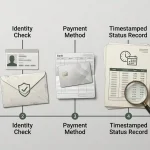
The point where a casino account feels simple is often the point where I used to stop paying attention: registration done, payment page open, ready to deposit. That order can leave you dealing with identity checks only when you want to withdraw. Every licensed operator has to verify your identity before it processes a withdrawal, so treating verification as an afterthought can turn a cash-out into a paperwork job.
I now get the documents ready as soon as the account is created, before putting money in. The standard request is a government-issued photo ID, such as a passport or driving licence, plus proof of address dated within the past three months. A utility bill or bank statement may serve for that address check. Some operators also ask you to confirm that you own the payment method you used.
Get the paperwork ready first
Check that the details on your account match the documents you plan to send. If your name or address is out of date, resolve that before you deposit rather than hoping the difference will go unnoticed. Keep the original files clear and readable; a cropped or blurry image can make a straightforward check harder to complete.
The exact upload process varies by operator, so follow the instructions in your account and use the requested document type. Don’t send extra personal information through an informal channel just because someone claims it will speed things up. If you are unsure what a request means, ask the operator through its stated account-support route.
Identity Verification
Step 1: Prepare Documents
Gather a government-issued photo ID (passport or driving licence) and a proof of address dated within the past three months.
Step 2: Match Details
Ensure your account name and address exactly match the provided documents before depositing.
Step 3: Upload Files
Follow the operator’s specific instructions to upload clear, readable images through the stated account-support route.
It is easy to think, “I’ll deal with it later.” I’ve made that mistake. Later is often when you want your money back.
Depositing and withdrawing
Before making a deposit, make sure the account details and payment method are yours and that you understand how the operator expects withdrawals to be handled. Some checks may relate to the ownership of the payment method, so be prepared to provide confirmation if asked. Keep a record of the deposit and the payment route you used; it makes it easier to follow what happened if you need to query a transaction.
A successful deposit does not mean the account has passed every check needed for a withdrawal. The operator may still need to review your identity documents before it releases funds. Submit the requested items promptly, and check your account for any follow-up request rather than assuming that uploading one file completes the process.
If a withdrawal is pending, look for a clear explanation in the account or in the operator’s message. Check whether a document is missing or whether the payment method needs confirming. Avoid sending repeated versions of the same document through different channels unless support asks you to; that can make it less clear which submission is being reviewed.
I’d also keep the wording of any payment or withdrawal confirmation. If something does not match your account history, contact the operator with the transaction details and ask for a specific explanation. Don’t assume a pending status means a payment has failed, but don’t ignore it either.
Casino Without a Swedish Licence: UK Rules Explained
A calmer way to fund an account
For real-money play, I treat the deposit as the start of an account process, not a shortcut to the games. Uploading your ID and address evidence before funding means the withdrawal check is less likely to catch you unprepared. It does not promise a particular processing time, and it does not remove the operator’s need to review documents.
If you are considering a bonus, read its conditions separately before accepting it; an incentive can affect what you need to do before withdrawing. A headline is not a payment term. I have learned to check the account rules before clicking, not after.
The practical order is simple: create the account, provide the requested identity and address documents, confirm any payment-method ownership if asked, then decide whether to deposit. Keep copies of the confirmations and check the account if the operator requests anything further. Less guesswork at cash-out.
What UK Players Should Know Before They Play
Is it safe to play at an online casino? On a licensed platform, there are practical safeguards intended to reduce harm and give you more control. They do not remove the risks of gambling, and they are not a promise that you will win. I learned that distinction the hard way: a tidy-looking account can still make it easy to spend longer than you meant to.
Age checks are part of the experience, not a box to skip past. Licensed platforms must verify your age before you can access gambling-related content, including free game demos, and before you can deposit money into an account. If a site lets you browse casino games or play a demo without checking your age, that is a reason to pause rather than assume its safeguards are in order.
Deposit Limit
Restricts the total amount of money you can add to your account.
Time-out
Provides a temporary break from gambling activities.
Self-Exclusion
A stronger measure to stop all access to gambling, often managed through GamStop.
Once you have an account, you should be able to set a deposit limit, take a time-out or self-exclude through GamStop. These controls do different jobs. A deposit limit restricts how much you can add; a time-out gives you a break; self-exclusion is a stronger step for stopping access to gambling. I used to think I could rely on willpower alone. Not my best plan.
Licensed operators must also keep player funds separate from the money used to run the business. That separation is a safeguard, not a guarantee that every balance can be recovered in every circumstance. It is still worth knowing what happens to your money if an operator runs into trouble, rather than treating the word “protected” as a blank cheque.
Payment security and gambling safety are related, but they are not the same thing. A payment can be processed securely while you still lose money you did not intend to spend. Before paying, check the amount and payment route shown on the screen, and make sure the account controls are easy to find. The same caution applies to free spins: “free” describes the entry cost, not necessarily the conditions attached to any winnings. Read those before accepting.
A safe casino for UK players is not simply one with familiar games or a polished cashier. The more useful question is whether the safeguards are present and usable when you need them. Can you set a limit before play? Can you find the time-out and self-exclusion controls without hunting through obscure menus? If gambling has stopped feeling manageable, use a break or self-exclusion rather than trying to win losses back.
Offshore casinos for UK players: what to check
These protections matter at the point of play. They are separate from checking an operator’s licence and matching its details to the regulator’s register. One is about whether the site is authorised; the other is about the controls you can use as a player. Both matter. Neither makes gambling risk-free.
Games Have Rules Too: Slots, Stakes and Pace
When I think about whether casino games are safe to play, I look beyond the graphics and the studio name. The mechanics matter: how quickly the game lets you stake again, whether it keeps playing without a fresh decision, and what stake limits apply. A polished slot can still make it easy to lose track of time. Nice artwork, same old risk.
For online slots in Great Britain, the pace has specific restrictions. Autoplay was removed from UKGC-licensed slot games in 2021, so you cannot set a run of spins going and watch the game continue by itself. Each spin needs a new action from you. That small interruption matters: it gives you a moment to notice what you are doing instead of letting the next stake follow automatically.
There must also be at least 2.5 seconds between one slot spin and the next. The rule was introduced to slow play and reduce the intensity of a session. It does not turn a slot into a slow game, exactly, but it does stop the quickest possible sequence of spins. I used to treat fast play as harmless because each individual round felt small. That was the mistake: a short gap does not tell you what you have spent or how long you have been playing.
Slot Pace Rules
UKGC-licensed slots require at least 2.5 seconds between spins and prohibit the use of autoplay to reduce session intensity.
Stake limits are another part of the picture. The maximum stake per game cycle on online slots is £5 for players aged 25 and over, and £2 for those aged 18 to 24. Those are ceilings, not sensible targets. A permitted stake can still be more than you want to risk, and repeated rounds can add up even when each one looks manageable. I now decide what I can afford to lose before opening a slot, rather than letting the game set the pace for me.
These rules apply to online slots in Britain, not every casino-style game in the same way. A table game has different mechanics; a slot’s spin interval and autoplay controls are not a useful test for every title. If you move between games, check the controls and stake information shown for the game you are actually playing. Don’t assume that a familiar layout means the same pace or conditions.
The rules reduce some design features that can encourage rapid, unattended play. They cannot prevent you from choosing to keep spinning, and they do not make gambling risk-free. I still use a break as a signal to check in with myself: am I playing for entertainment, or trying to get back money I have lost? If it’s the second, I close the game. No clever system fixes that feeling.
My Checks Before I Trust a Casino with a Deposit
I used to treat a licence badge like a stamp of approval. It looks official, so I’d move on. That was backwards: a badge is a claim made on the casino’s own site. I now check the claim against the UK Gambling Commission’s public register before putting money in.
VPN-Friendly Casinos in the UK: Rules and Risks
Start with the licence details. Find the operator’s licence information on the casino site and note the licence number. There should be a working link to the regulator’s official register next to it. If the details are hard to find, the link is broken, or the site offers only a vague statement such as “fully licensed”, I don’t treat that as proof.
Open the register yourself. Use the UK Gambling Commission’s public register and look up the licence number. Check that the entry is current and that it belongs to the business behind the casino, not simply to a name that sounds similar. I don’t rely on a search result snippet or a copied image of a licence badge.
Match the identities, not just the logo. Compare the exact website domain you intend to use with the domain shown in the register. Then compare the trading name and legal business. A casino’s brand can differ from the company name, but those names still need to connect clearly to the registered operator. If one detail points somewhere else, or I can’t establish the link, I stop there. Close enough isn’t close enough.
Check the page again before depositing. Make sure you are still on the same domain you checked, rather than a lookalike address or a page reached through an unexpected redirect. I’ve learned not to assume that a familiar logo means I’m dealing with the same business. The address bar matters.
Verify Casino Safety
- Locate the licence number on the casino site
- Look up the number in the UK Gambling Commission’s public register
- Confirm the register entry is current
- Match the website domain with the one in the register
- Verify the trading and legal business names
This is the practical answer to how to check whether an online casino is safe: verify the current UKGC licence, then match the number, domain, trading name and legal business in the regulator’s register. No single badge or confident “trusted” claim can do that work for you. If the information doesn’t line up, don’t deposit while hoping it will make sense later.
I also keep the distinction clear: a register check can establish whether the operator has the required UKGC licence; it doesn’t promise that every experience with the site will be perfect. For me, the check is a basic threshold, not a guarantee. It takes a little patience. Cheaper than guessing.
This site may receive a commission if you register at a casino through a partner link. That doesn’t change the check I’d make: confirm the operator’s details in the regulator’s register yourself before depositing.
Licensed Casinos, Bitcoin and the Offshore Trade-Off
A site can accept players from Britain and still sit outside the UK regulatory system. That distinction matters more than the look of its lobby or the currency in your wallet. Operators offering gambling to British customers need a UKGC licence; a licence issued elsewhere does not authorise them to serve this market under the same rules.
I used to treat “licensed” as a complete answer. It isn’t. A foreign regulator may oversee an operator, but that does not put the site under the UKGC’s requirements or give you the same route to resolve a complaint. An offshore licence also does not bring the protections associated with a UKGC or Malta Gaming Authority licence. Different oversight, different safeguards.
Non-UKGC-Licensed Casinos: Rules and Risks
What the licence does not tell you
Non GamStop casinos are not required to link to GamStop. If you cannot find an identifiable UKGC licence entry for the operator, do not assume that self-exclusion through GamStop will block your account. The same caution applies to disputes: these casinos sit outside UK dispute-resolution channels, so you should not count on UKGC-regulated alternative dispute resolution.
Nor should you assume UK-specific protections for customer funds. Check what the operator actually says about handling funds, but treat that as information about the operator’s own arrangements, not a substitute for UKGC oversight. A reassuring badge is not the same thing as an identifiable licence entry.
That’s the trade-off.
Bitcoin does not change the regulator
Bitcoin can make a casino feel separate from the usual banking system, but it does not change who regulates the operator. A Bitcoin deposit is still a deposit with that casino. If the site lacks an identifiable UKGC licence, paying in cryptocurrency does not add GamStop protection, UK dispute access or UKGC supervision.
I would make the licence question first, then consider payment. The same logic applies to a live dealer table: a real-time stream does not make an offshore operator a UK-licensed one. “Safe” is not a payment feature or a game format.
There is another practical difference. UK rules introduced a ban on credit-card gambling deposits in April 2020. That restriction applies to UK-regulated operators, while offshore sites may still accept credit cards. The fact that a payment option appears does not make the site equivalent to a licensed casino serving Britain. It may simply mean the operator is outside that UK restriction.
Attention: A foreign licence does not provide the same protections as a UKGC licence, nor does it grant access to UK-specific dispute-resolution channels or GamStop protections.
If you are comparing a Bitcoin casino with one that takes cards, do not let the payment menu settle the question for you. Look for a current UKGC entry that clearly identifies the operator. Without it, do not assume UK protections apply. I learned to separate “can I pay?” from “who is accountable?” They are not the same check.
Casino Bonuses: Read the Turnover Before the Headline
A bonus figure can look generous until you see what has to be wagered before any associated winnings can be withdrawn. Read the terms for the wagering requirement, and check whether it applies to the bonus alone or to your deposit and bonus together. Those are very different calculations.
A specialist review reported both approaches in bonus terms it examined. Its example of a £100 deposit matched with a £100 bonus showed the difference: at 35x, wagering the bonus alone meant £3,500 in turnover; applying it to the combined amount meant £7,000. Those figures illustrate the arithmetic, not a permitted UK offer: wagering requirements attached to incentives must not exceed 10x.
Then check which games count, and how much each stake contributes. A specialist review reported slots contributing the full stake, while table games counted for 5% to 10%. If a game contributes less, you may need to stake more to reach the same turnover. The terms should spell out eligible games and contribution rates; don’t assume every game moves the counter equally.
One more detail is easy to miss: a single incentive must not bundle different types of gambling product. A casino promotion cannot combine casino play with betting, bingo or lottery products in one incentive. If the terms appear to join them together, pause rather than treating the headline as the whole deal.
I used to look at the bonus amount first and the conditions later. That order cost me time, and sometimes money. Now I check the base used for the wagering calculation, the games that count and the applicable cap before deciding whether an incentive is worth accepting. “Generous” is just a label. The turnover is the real commitment.
UK Casino Safety & Regulation: Licensing Guide
Secure Payments, Without the Sales Talk
A payment option appearing on a casino’s cashier page does not, by itself, tell you whether the whole transaction will be quick or dependable. I separate three things: how the payment is handled, whether the method is available to me, and how long a withdrawal takes. They are not interchangeable.
For crypto, the blockchain settlement clock starts only after the operator has processed the withdrawal. A specialist review reports on-chain settlement within 10–30 minutes after that point. That is not a promise of when the casino will approve and send a payment; processing time comes first, and the settlement estimate cannot tell you how long that stage will take. Two different clocks.
Bank transfers can take longer. Across the brands covered in a specialist review, the stated range was 3–5 banking days. Treat that as a reported comparison, not a universal timetable: the time a transfer takes can depend on the operator and the banks involved. If you need access to the money by a particular date, a stated estimate is worth checking before you rely on it.
PayPal is not a given at non GamStop casinos. Its availability depends on PayPal approving the operator as a merchant, so seeing the method elsewhere—or having a PayPal account yourself—does not mean it will appear in a particular casino’s cashier. Check the payment page directly.
I used to read “secure” as if it answered every practical question. It doesn’t. Security claims, payment availability and settlement timing each need their own check. Look for clear payment terms and make sure the cashier actually offers the method you intend to use; don’t assume a logo guarantees access or speed. A payment route can be legitimate and still take longer than you expected, or simply not be available to you. That’s the part worth checking before you commit.
Is it safe to play at online casinos in the UK?
A UKGC-licensed casino must follow UK rules, including providing deposit limits, time-outs and GamStop self-exclusion. That offers protections, but it does not guarantee that every aspect of playing will be safe for you.
What are the differences between UK-licensed and non-UK-regulated online casinos?
UKGC-licensed casinos must provide tools such as deposit limits, time-outs and GamStop self-exclusion, segregate player funds from operating capital, and follow UK rules on credit-card deposits and slot play. Offshore operators are not required to connect to GamStop, do not offer the same UK protections or dispute-resolution channels, and may allow credit-card deposits and autoplay.
How do I verify whether a UK online casino is safe before depositing?
Check the operator’s details against the UK Gambling Commission’s official register, using the regulator link beside the licence information rather than relying on a logo. Before depositing, also make sure you can find and understand the terms, account controls and support contact details.
What does a dependable online UK casino combine?
A dependable casino combines verifiable operator and licence details with clear terms, accessible support and easy-to-find account controls. Its marketing should avoid presenting gambling as a way to make money or solve financial problems.
What exactly are non GamStop casinos and are they legal in the UK?
Non-GamStop casinos are operators that are not connected to GamStop, typically because they operate under an offshore licence. A casino must hold a UK Gambling Commission licence to operate legally for UK players; offshore operators are outside that UK framework and its protections.
Safety

Anjouan Casino Licence in the UK: What It Means
An Anjouan licence reflects the operator’s claimed approval under its own framework, not permission to...

Foreign Casinos for UK Players: Rules and Risks
Foreign casinos accepting UK customers sit outside UKGC regulation, which can affect player protections, bonuses,...

International Casinos for UK Players: Rules and Risks
Foreign licences, bonus terms, player safeguards and payment delays all affect how offshore casinos differ...

Offshore casino sites in the UK: licence checks
An offshore licence is not a substitute for UKGC approval, and payment, bonus and verification...

Offshore casinos for UK players: what to check
A practical look at licensing, promotions, crypto and withdrawals, with a focus on what changes...

British Casinos Not on GamStop? What the Label Means
The label describes a casino’s distance from GamStop, not its safety, UK status or equivalent...

Casino sites not on GamStop: what UK players should know
Explore how operator participation, licensing, payment claims and bonus rules relate to the limits of...

Casino Without a Swedish Licence: UK Rules Explained
A casino’s location or international label does not establish its licensing status or whether it...

Casinos That Bypass GamStop: What to Know
GamStop applies to UKGC-licensed operators, while casinos outside that system may offer different licensing, support...

Curaçao casino licence in the UK: what it means
A Curaçao licence identifies an operator's regulatory framework, but does not mean it is regulated...

Gibraltar Casino Licence in the UK: What It Means
A Gibraltar regulatory base is not a substitute for the UK Gambling Commission licence required...

Merkur Casino Online UK: Games, Licences and Checks
Merkur branding does not identify a casino or confirm its games, so check the operator,...

Trustworthy Online Casinos in the UK: What to Check
Trust depends on the operator’s licence and terms, while even regulated sites cannot guarantee a...

Non-Gamban casinos in the UK: what it means
Gamban only indicates whether access is blocked; it does not confirm a casino’s safety, suitability...

Non-GamStop Curaçao Casino Sites: UK Licence Checks
A licence badge is not proof of UK authorisation or participation in the UK self-exclusion...

Non-GamStop European Casinos: UK Rules Explained
European branding does not establish UK licensing or GamStop participation; the distinction matters when exclusion...

Non-UK Licence Casinos: What the Licence Means
A licence identifies the regulator and oversight system, but non-UK authorisation does not mean the...

Non-UK-Registered Casinos: What the Label Means
The guide separates a casino’s licensing jurisdiction from UKGC oversight and examines protections, payments and...

Non-UK-Regulated Casinos: Licences and Risks
A licence applies under the rules of its jurisdiction; UKGC permission is required for operators...

Non-UKGC-Licensed Casinos: Rules and Risks
A look at how non-UKGC casinos are licensed, what protections may be missing and what...

Online Casinos with Malta MGA Licences in the UK
An MGA licence sets obligations for operators, but does not by itself establish that a...

Online slots not on GamStop: what it means
GamStop participation depends on a casino’s regulatory position, which can affect the protections and checks...

Casinos Not on GamStop UK: What Trust Really Means
A clear-eyed guide to licensing, gambling safeguards, bonuses and withdrawals at casinos outside the UKGC...

Trusted UK Casinos in 2026: Licence Checks
A practical check starts with UKGC permission, then looks at player safeguards, bonus terms, support...

USA Casinos for UK Players: Licensing and Risks
A practical guide to licensing status, cash-out routes, ownership ties and the limits of offshore...

VPN-Friendly Casinos in the UK: Rules and Risks
Understand how casino VPN policies differ from licensing, and what offshore sites may mean for...