Anjouan Casino Licence in the UK: What It Means
 Available in GB

An Anjouan licence reflects the operator’s claimed approval under its own framework, not permission to offer gambling in Great Britain.
Table of Contents
- What an Anjouan Licence Does—and Doesn’t—Authorise
- What “Anjouan Licensed” Means for a Casino
- How Anjouan Online Casinos Fit into the Offshore Market
- Bonus Terms That Can Make an Offer Look Better Than It Is
- Checking the Licence Claim Before You Trust It
- What to Expect from an Anjouan Casino Site After You Deposit
- Why a New Casino Can Be Harder to Check
- Crypto Payments and Other Ways Offshore Sites Take Deposits
- What Casino Reviews Can’t Guarantee About Player Protection
- The UK Legal Position on Using an Offshore Casino
- Safety
What an Anjouan Licence Does—and Doesn’t—Authorise
An Anjouan casino licence is not a UK gambling licence. That distinction is easy to miss when a site displays a licence badge beside a familiar-looking sign-up page, but the badge answers a narrower question: the operator says it is licensed under Anjouan’s framework. It does not, by itself, give that operator permission to serve customers in Great Britain.
For a casino to offer gambling services to customers in Great Britain, it needs a licence from the UK Gambling Commission (UKGC). That requirement applies whether the operator is based in Britain, Anjouan or somewhere else. A licence issued by another jurisdiction does not replace it. So if you are looking at an Anjouan casino and trying to work out what the licence means for a British customer, keep those two permissions separate.
I used to treat a licence logo as a kind of general approval stamp. It isn’t. A licence is tied to the authority that issued it and the places where the operator is allowed to offer its services. An Anjouan licence does not authorise operation in the United Kingdom, nor does it grant permission in other markets that Anjouan lists as restricted. A casino cannot turn that limit into UK authorisation simply by being available on a website you can open from Britain.
If you’re looking into Anjouan-licensed casinos from the UK, check the licensing and terms carefully before choosing. This list gives you one specific point to consider for each operator: its stated payout speed.
1. BeOnBet
Payout speed: 1-3 business days BeOnBet lists a payout speed of 1–3 business days, giving you a stated timeframe to consider.
2. EvoSpin
Payout speed: 1-3 business days EvoSpin lists payouts as taking 1–3 business days, a useful detail for your payment planning.
3. Revery Play
Payout speed: 1-3 business days Revery Play’s stated payout speed is 1–3 business days, which gives you a basic expectation for withdrawals.
4. NightLuck
Payout speed: 1-3 business days NightLuck lists a payout speed of 1–3 business days for you to factor into your choice.
5. Zombillion
Payout speed: 1-3 business days Zombillion states a payout speed of 1–3 business days, offering you a clear timeframe to note.
6. Dieselwin
Payout speed: 1-3 business days Dieselwin lists payouts at 1–3 business days, a practical detail for you to keep in mind.
7. SpinFormula
Payout speed: 1-3 business days SpinFormula gives a stated payout speed of 1–3 business days, helping you set a basic withdrawal expectation.
8. NightWin
Payout speed: 1-3 business days NightWin lists a payout speed of 1–3 business days for you to consider.
9. Britsino
Payout speed: 1-3 business days Britsino states that payouts take 1–3 business days, giving you a timeframe to bear in mind.
10. WinBeast
Payout speed: 1-3 business days WinBeast lists payouts as taking 1–3 business days, a stated withdrawal detail for you to note.
That is the central point behind searches for an Anjouan casino licence in the UK: the licence may describe the operator’s regulatory status in Anjouan, but it does not establish that the operator is authorised to supply gambling services in Great Britain. If a site presents its Anjouan status as though it were equivalent to UKGC approval, those are not interchangeable claims.
Two regulators, two different permissions
The UKGC is the relevant regulator for operators serving customers in Great Britain. Anjouan’s authority can issue a licence within its own framework, but it cannot issue a UKGC licence. The operator’s home base does not change that: a business located abroad still needs the British permission if it serves customers in Great Britain.
This is why phrases such as “internationally licensed” can leave out the detail that matters to you. They may sound broad, yet they do not say which regulator issued the licence or whether the operator has the authorisation required for the market you are in. “Licensed in Anjouan” is more specific, but it still doesn’t mean “licensed in Great Britain”.
The word “licensed” can do a lot of work in a casino’s marketing. I now read it as the start of a check, not the end of one. Which authority issued the licence? What does that authority permit? And does the operator also hold the UKGC licence required to serve Great Britain? Those questions are about different things, even when a site presents them as one reassuring badge.
Curaçao casino licence in the UK: what it means
Availability is not authorisation
A site loading on your phone does not settle its regulatory position. Nor does a British-facing page, a pound symbol or a sign-up form tell you that the operator has permission from the UKGC. Those features show what the site presents to visitors; they do not change the scope of an Anjouan licence.
The same distinction applies to online casinos licensed in Anjouan as a group. A licence from that jurisdiction does not give every holder a blanket right to operate in every country. In particular, it does not authorise UK operation. Each market has its own requirements, and the operator must have the relevant permission for the market it serves.
There is also a separate question about what the issuing framework requires of its licensees. Anjouan’s framework does not mandate random-number-generator testing, audits or the segregation of player funds. Those points matter when assessing what the licence does and does not require, but they do not expand its geographic reach. A licence can have conditions and responsibilities attached to it while still not being the permission needed for Great Britain.
Anjouan’s framework also requires operators to respond to complaints within 30 calendar days. That is a requirement within that framework; it does not make the licence a UKGC authorisation or give the operator permission to serve British customers. One rule does not substitute for the other.
Attention: An Anjouan licence does not authorise operation in the United Kingdom and is not equivalent to UKGC approval.
Read the claim narrowly
When a casino says it holds an Anjouan gaming licence, read that statement narrowly: it identifies the jurisdiction the operator says licenses it. It does not tell you that the UKGC has approved the site, and it cannot be used as a replacement for a UKGC licence where one is required.
That wording may feel less comforting than a broad claim of being “regulated”, but it is more useful. Anjouan authorisation and UK authorisation are separate matters. If you are deciding whether a site is authorised to serve Great Britain, the key point is not simply that it holds a licence somewhere. It is whether it holds the relevant UKGC licence.
Small distinction. Big one.
What “Anjouan Licensed” Means for a Casino
“Anjouan licensed” tells you that a casino claims to operate under an Anjouan licence. It does not, by itself, tell you how much protection you would have if something went wrong with your account, a game or your money. I used to treat the word “licensed” as a kind of all-purpose seal of approval. It isn’t. The useful question is what the framework actually requires.
One important limit concerns player funds. Anjouan-licensed casinos are not guaranteed to keep customer balances separate from the operator’s own money. That distinction can feel abstract while you are playing, because the balance on screen looks like money sitting there for you. But if the operator fails, players may be unsecured creditors: people owed money without the protection that comes from having their funds ring-fenced.
Gibraltar Casino Licence in the UK: What It Means
That does not mean every operator mixes customer money with its own, or that every failure leaves players unpaid. It means the licence does not guarantee segregation. You cannot infer from the licence alone that your balance is held separately, protected from business debts or readily recoverable if the company runs into trouble. A reassuring label is not the same as a protected account.
That matters most when things go wrong.
The same care is needed with game fairness. Anjouan’s framework does not mandate RNG testing or audits. So the presence of an Anjouan licence should not be read as proof that every game has undergone independent testing, or that an auditor regularly checks the casino’s systems. A particular operator might choose to use external testing or publish information about its games, but that would be a separate claim to assess—not something established just by seeing the licence wording.
There is a difference between a rule requiring a safeguard and an operator choosing to provide one. If a site says its games are independently tested, look for clear details about who did the testing and what was covered. A vague badge or a line in promotional copy does not answer those questions. Nor does a licence claim fill in the gaps.
Player support is another area where the label can create the wrong impression. Anjouan-licensed casinos are not required to connect to GAMSTOP, the UK self-exclusion scheme. They are also not required to provide an independent dispute-resolution service comparable to the services approved for UK-regulated operators. If you rely on GAMSTOP to block gambling accounts, you should not assume that an Anjouan-licensed site will be included.
Player Funds
Anjouan-licensed casinos are not guaranteed to keep customer balances separate from the operator’s own money, meaning players may become unsecured creditors if the operator fails.
That does not establish that every such casino lacks every safer-gambling feature. A site may offer its own account controls, and its staff may respond when a customer raises a problem. But those are not the same thing as a scheme that applies across participating operators or an independent body that can review a dispute. Check what the casino itself actually offers, and do not mistake an operator’s own process for outside oversight.
Under Anjouan’s framework, an operator must respond to a complaint within 30 calendar days. A response, however, is not the same as an independent decision on the complaint. The Anjouan authority does not handle, mediate or adjudicate player complaints. If the operator rejects your case or you disagree with its answer, the licence does not provide the same independent route available through UK-approved ADR services.
A reply is not a remedy.
So what can you reasonably take from the claim? At most, it points to a licensing relationship that may impose requirements on the operator. It does not prove that your funds are segregated, that games are independently audited, that a dispute will be reviewed by an outside adjudicator, or that GAMSTOP applies. Those are separate protections, and the licence does not guarantee them.
I’d read the wording narrowly. “Licensed” is a description of a regulatory framework, not a promise that every player safeguard you may expect is built in. Before relying on any feature, find its terms on the casino’s own pages and check whether it is an actual requirement, an optional service or simply a claim in the site’s marketing. The difference can be easy to miss when the wording sounds official.
Safe Online Casinos in the UK: Checks Before You Play
The practical point is not that every Anjouan casino behaves badly. It is that the licence alone cannot settle the questions that matter most when you need help or want your balance protected. Treat the protections as separate things to verify, rather than assuming they all come bundled with the word “licensed”.
How Anjouan Online Casinos Fit into the Offshore Market
When I see a casino described as “offshore”, I treat that as a broad label, not a precise account of who oversees it. In this context, a non-UK-regulated casino is an online gambling site operating without oversight from the UK Gambling Commission. That tells you what is absent from the site’s regulatory picture; it does not, by itself, tell you which other jurisdiction may have licensed it.
Anjouan is one of several places associated with licences for online casinos that sit outside the UK Gambling Commission’s system. Malta, Curaçao and Gibraltar are other examples. So an Anjouan casino belongs to a wider international market, rather than forming a separate kind of gambling product. The games may look familiar, but the location named in a licence claim points to a different regulatory jurisdiction.
That distinction is easy to blur. “International”, “offshore” and “licensed” can all sound reassuring in a site description, but they do not mean the same thing. A casino may be licensed somewhere outside the UK and still be non-UK-regulated. The word “licensed” on its own does not identify the regulator, establish that the site is overseen by the UK Gambling Commission, or explain what regulatory system applies.
Anjouan is one of several offshore jurisdictions, alongside Malta, Curaçao and Gibraltar, that operate outside the UK Gambling Commission’s system.
I used to read a licence badge as if it settled the important question. It doesn’t. The first useful distinction is between the jurisdiction named by the operator and the regulator responsible for oversight in the UK. They are not interchangeable. A business’s base of operation is another separate detail: the relevant requirement for operators serving customers in Great Britain is a UK Gambling Commission licence, regardless of where the business is based.
That is the market frame for Anjouan online casinos. The Anjouan name identifies a jurisdiction connected with licensing; it is not another way of saying “UK-licensed”. Nor does the phrase “Anjouan-licensed online casino” describe every site that accepts visitors from Britain. It describes a claimed link to Anjouan, and each operator’s situation has to be understood on its own terms.
The same goes for comparisons. Searching for the “best” Anjouan casino can make it sound as though the main task is choosing from a neat class of equivalent sites. In reality, the shared label only places sites in the same broad regulatory category. It doesn’t mean they have the same operator, the same licence arrangements or the same relationship with the UK market. I wouldn’t use the jurisdiction name alone as a shortcut for deciding whether a site suits me.
Casino Without a Swedish Licence: UK Rules Explained
Nor should “non-UK-regulated” be read as a synonym for “unlicensed everywhere”. A site may be overseen under a licence issued elsewhere while still operating outside UK Gambling Commission oversight. Conversely, a statement that a casino has an Anjouan licence is not enough, by itself, to establish what that claim means for the individual site. The broad market label and the details of a particular operator are different levels of information.
This can help make review pages easier to read. If one casino is described as Anjouan-licensed and another as licensed in Malta, that difference tells you which jurisdiction is being named. It does not automatically make one a UK-regulated casino or settle how either operator relates to customers in Great Britain. The country or territory attached to a licence is a classification, not a complete verdict.
I’d also separate “non-UK-based” from “non-UK-regulated”. A company might be based outside the UK, but location alone doesn’t answer which regulator oversees its gambling services. Equally, the key point in the UK market is not simply where a casino’s office sits: operators serving Great Britain customers require a UK Gambling Commission licence regardless of their base. That’s why a geographic label can be less informative than it first appears.
So, when someone refers to an Anjouan online casino, I understand it as one example of a non-UK-regulated site associated with an overseas licensing jurisdiction. Malta, Curaçao and Gibraltar also appear in this wider market. These names help place a casino in context, but they don’t turn the jurisdictions into one common system, and they don’t make the UK Gambling Commission’s role disappear from the picture.
UK Casino Safety & Regulation: Licensing Guide
The practical takeaway is modest, but useful: read “Anjouan” as a jurisdictional label, not a quality mark or a UK regulatory status. It can tell you where a licence claim is pointing. On its own, it cannot tell you everything about the operator or how that casino fits the British market. Keep those questions separate.
Bonus Terms That Can Make an Offer Look Better Than It Is
A large bonus figure is the bit you notice first. I’ve learned to treat it as the start of the calculation, not the result. With Anjouan casino bonuses, the value depends on the conditions attached to the money or spins: what has to be wagered, which games count, whether winnings are capped and when the offer expires. The headline alone tells you very little.
Read the wagering requirement as a calculation
A specialist review reports offshore welcome offers with wagering requirements of 35x or more. That figure is not a general rule for every casino or promotion; the specific terms are what matter. More importantly, the multiplier does not tell you what amount it applies to.
A specialist review also describes a 40x requirement that may be calculated against the bonus and deposit together, the bonus alone, or the bonus and free spins as a combined offer. Those versions can produce very different totals. If you do not know which balance the multiplier is attached to, “40x” is just a number with the important part missing.
VPN-Friendly Casinos in the UK: Rules and Risks
I would look for the wagering base, then check whether the terms say that all games contribute equally. If the wording is unclear, do not assume the most favourable interpretation. Promotional terms can change, too, so the conditions shown when you claim an offer matter more than an old description of it. Small print, big difference.
Free spins are not the same as cash
“Free” sounds straightforward until the winnings come with their own rules. A specialist review reports free-spin winnings subject to wagering requirements of 30–50 times those winnings, with withdrawal caps of £5–£50. These are reported terms, not fixed limits across all offers. The offer you are reading may set different conditions.
That distinction matters because a cap can restrict what you may withdraw even if a spin produces a much larger win. And where wagering applies, the winnings may need to be played through before a withdrawal is permitted. Check whether the requirement applies to the spin winnings, whether a cap is stated, and whether the bonus terms explain when the winnings become withdrawable.
I used to read the spin count and skip the rest. That is the wrong order. First find the conditions; then decide whether the spins are worth your attention.
Check the clock before you claim
A specialist review describes free-spin packages with expiry periods of 24–72 hours. That is a reported range, not a promise that every package stays available for that long. Some offers may have a different deadline, so look for the exact expiry in the promotion’s terms.
Attention: A short expiry window can make an offer less useful if you cannot complete the wagering requirements before the deadline.
A short window can make an offer less useful if you cannot play within it. The same goes for a bonus that requires wagering before its own expiry: a deadline can turn a generous-looking balance into something you have little time to use. Check when the clock starts, whether it applies to the spins or the resulting winnings, and what happens to any remaining promotional balance when time runs out.
The practical test is simple: calculate what the offer asks you to do, identify any cap, and note the deadline before opting in. If those details are hard to find, the headline is doing too much of the work.
Checking the Licence Claim Before You Trust It
A badge in a footer is easy to add. It is not, by itself, proof that the company running a casino holds the Anjouan casino licence it claims to have. I used to treat a polished licence page as reassurance; now I treat it as a starting point for a check. The distinction matters.
Look for the operator’s legal company name and the licence details, then compare them with the public information provided by Anjouan Gaming. Check that the name matches the business behind the site, not just a similarly named company or a group brand. If the public entry gives an expiry date, make sure it has not passed. A mismatch, missing detail or expired entry is a reason to pause—not something a reassuring logo can fix.
Online Casinos with Malta MGA Licences in the UK
Also check which site the claim covers. A company may use several brands or web addresses, and seeing a licence claim on one page does not establish that every related site operates under it. I would want the casino’s own terms to identify the operating company clearly and to connect that company to the licence. If the wording stays vague, I would not fill in the blanks for them.
That is a basic identity check, not a guarantee about how the casino will behave. A genuine licence claim does not tell you that every complaint will be resolved in your favour, or that the regulator will step in when you and the operator disagree. Those are separate questions.
The Anjouan authority does not take up player complaints to investigate or decide them. Under its framework, the operator must respond to a complaint within 30 calendar days, but a response is not the same as an independent decision. An Anjouan-licensed casino does not offer a dispute route comparable to the independent resolution services associated with UK Gambling Commission-approved arrangements.
That difference can be easy to miss when a site uses phrases such as “licensed and regulated”. The phrase may describe a licensing relationship; it does not mean there is an outside adjudicator ready to review your case. If a casino rejects your complaint, or simply gives an answer you do not accept, the Anjouan authority is not there to mediate between you and the operator. No neutral referee.
Before depositing, I would save the licence details, the company name and the relevant terms as they appear on the site. Keep copies of messages if you later raise a complaint, and make the complaint clear and specific. That will not create an appeal route that does not exist, but it gives you a record of what was claimed and how the operator answered.
Do
- Compare the legal company name with public Anjouan Gaming records
- Check for a valid, non-expired licence date
- Save copies of terms and messages for your records
Don’t
- Trust a licence badge in the footer as absolute proof
- Assume a badge on one site covers all related brands
- Rely on third-party reviews as final verification
I would also be wary of treating a review, a search result or a copied licence badge as verification. Those can point you towards the details to check; they cannot confirm that the public record matches the business you are dealing with. If the company identity or licence status cannot be checked cleanly, I would stop there. A claim that cannot be pinned to a named operator is not much protection. Just a claim.
What to Expect from an Anjouan Casino Site After You Deposit
The part I pay closest attention to is getting money back out. A withdrawal estimate can sound reassuring, but reports about non-UK-regulated casinos do not agree: some describe payouts arriving within 24 hours to 5 business days, while others say delays can stretch to three or four weeks. Those are very different experiences, and neither tells you what will happen with a particular request.
The practical difference is that there may be no regulator-enforced clock compelling an operator to complete a withdrawal by a set point. If a payment sits pending, you could be left chasing the casino’s support team rather than relying on a UK regulator to make it move. That uncertainty is easy to overlook while you are depositing. It matters more when the money is yours to collect.
I have also seen a specialist review report that some non-UK-regulated casinos set daily, weekly or monthly withdrawal caps. Under those terms, a large balance may have to be paid out in instalments instead of one transfer. Treat that as a reported possibility, not a rule that applies to every Anjouan casino site: limits can vary between operators and may change, so read the current withdrawal terms before you play.
Check whether the stated processing time begins when you submit a request or only after the casino approves it. Look for any withdrawal ceiling and whether it applies to each request or across a period. If the terms are vague, ask support to clarify them in writing before you rely on a promised payout speed.
A supported withdrawal method does not guarantee a smooth or prompt payment. The operator may still take time to process the request, and a limit could divide the amount into several payments. I would not treat a quick estimate as a promise. Cashing out is where the fine print stops feeling theoretical.
Why a New Casino Can Be Harder to Check
A newly encountered casino gives you less history to judge than a name you have seen discussed over time. That does not prove the operator will cause trouble, but it leaves fewer past experiences to compare with its promises. I used to treat a polished site as a kind of reassurance. It isn’t. The real test can come later, when you ask to withdraw.
A specialist review has reported that some offshore operators may demand notarised documents or a video call as part of withdrawal verification. That is a reported possibility, not a standard step you should expect from every new casino. Still, it changes what “quick cash-out” means: you may need to arrange extra checks before the operator releases funds. Not exactly a small-print detail.
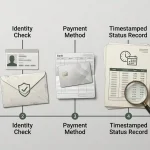
Verification Check
Identify the Operator
Find the legal company name and licence details provided by the casino.
Verify Public Records
Compare these details with the public information on the Anjouan Gaming registry.
Confirm Validity
Ensure the company name matches exactly and that the licence expiry date has not passed.
Before depositing, look for clear information about identity checks and withdrawals, and keep a copy of the terms that apply when you sign up. If the operator’s instructions are vague, or the site does not explain how to contact it about a verification request, treat that uncertainty as a reason to pause. A fresh brand can have little public track record, so you may not know how it handles an unusual case until you are already trying to access your money.
If extra documents are requested, use the operator’s stated secure process and share only what is needed for the check. Do not assume that a request for a video call or notarised paperwork is automatically legitimate; confirm it through the casino’s official support channel before sending anything. And don’t let the fact that you have already deposited push you into ignoring a process that feels unclear.
New does not mean dishonest. It does mean untested, at least from your point of view. I now count the withdrawal procedure as part of the decision to deposit, not a chore to think about after a win. That’s the bit people skip.
Crypto Payments and Other Ways Offshore Sites Take Deposits
When I first looked at Anjouan crypto casinos, I treated the payment logo as a simple promise: if a site accepts a method, I assumed I could use it without a catch. That was too quick. Offshore casinos may take deposits by card, e-wallet, bank transfer or cryptocurrency, and payments can run through alternative processors rather than the route you expect from a familiar UK merchant.
Non-UK-Registered Casinos: What the Label Means
Crypto stands apart because it can bypass the UK ban on gambling deposits funded by credit cards. That does not make a crypto deposit a credit-card payment, nor does it turn an Anjouan casino into a UK-licensed operator. It describes how the money is routed: cryptocurrency can be used without charging the gambling deposit to a credit card. The distinction matters. A payment route is not a regulatory approval.
I would check the cashier before sending anything: which currencies and networks are supported, what conversion method is used, and whether the account details match the instructions on screen. With crypto, sending assets to the wrong address or using an unsupported network can be difficult to undo. A card or bank transfer may feel more familiar, but an offshore site can use an intermediary processor, so the name appearing on a statement or payment page may not be the casino’s name.
Some sites also advertise deposits through e-wallets. The label alone does not tell you whether the provider will accept the transaction, or whether that method can later be used for a withdrawal. Do not assume the deposit and cash-out routes are interchangeable.
One source-specific point: a specialist review has reported that some offshore casinos may let customers fund an account through a mobile phone bill or prepaid balance. Treat that as a claim to verify on the individual site, not as a standard option across the market.
I’ve learned not to deposit just because a cashier offers a route I recognise. Read the payment instructions and terms first, and only send money you can afford to lose. A familiar button is no safety net.
Payment Security
- Verify supported currencies and networks in the cashier
- Check the conversion method used for deposits
- Confirm account details match the on-screen instructions
- Review withdrawal terms for any limits or specific routes
What Casino Reviews Can’t Guarantee About Player Protection
I treat Anjouan casino reviews as a starting point, not a safety certificate. A reviewer can describe what a site says it offers, but that does not prove how it will handle a gambling problem, protect personal information or respond when something goes wrong. I learned the hard way that a polished review and a reassuring-looking site can still leave important questions unanswered.
A non-UK-regulated casino may follow less demanding responsible-gambling and data-protection rules than an operator licensed by the UK Gambling Commission. That can mean fewer safeguards than you may expect from a UK-licensed site. In particular, you should not assume that UK-mandated tools, such as deposit limits or self-exclusion measures, will be available or work in the same way. Casinos outside the UK system are also not part of GamStop.
There is a practical difference when a dispute arises. If you use an offshore casino, you cannot take your case to the UK’s Financial Ombudsman Service. Nor should you expect an independent dispute route comparable to the one available through UK-approved services. That leaves you with fewer familiar ways to seek help if a complaint stalls or you feel a decision is unfair.
Reviews can still help you spot claims worth checking, but they cannot promise that your data will be handled to UK standards or that support will step in when you need it. I now look for clear explanations of safety tools and complaint handling, then treat vague reassurance as just that: reassurance. Not protection.
Before using any non-UK-regulated casino, weigh the possibility that safeguards and routes for redress may be weaker. If you need tools to manage your gambling, do not assume a review’s positive verdict means those tools are there for you. A good-looking write-up is not a backstop.
Foreign Casinos for UK Players: Rules and Risks
The UK Legal Position on Using an Offshore Casino
The legal distinction is mainly about who the rules target. Under the Gambling Act 2005, the focus is on operators supplying gambling services to the UK market, rather than on individual customers who use a service licensed abroad. That does not make an Anjouan casino authorised to serve people in Great Britain: a licence issued there is not a substitute for the UK permission an operator needs to offer gambling here.
For a player, the position is different. UK law does not specifically make it an offence for a British citizen to use gambling services licensed in another country. So the operator’s regulatory breach, where one exists, should not automatically be read as a criminal offence by the person placing a bet. I used to blur those two things together. They are not the same.
There is an important qualification: online gambling in the UK is legal when it is provided by a properly licensed operator. A foreign licence alone does not meet that standard for an operator serving Great Britain. The Gambling Act applies in England, Scotland and Wales; Northern Ireland has a separate legal framework, so anyone there should check the rules that apply locally.
In practical terms, do not treat “players are not the target” as approval or a recommendation. It does not turn a site into a UK-licensed casino, nor does it give you the protections attached to using one. Before using gambling services licensed overseas, check the law where you live and understand the consequences for yourself. That includes recognising that the operator’s permission comes from another jurisdiction, not from the UK regulator.
The distinction is narrow but worth keeping clear: the law’s focus on operators does not erase the licensing rules for businesses supplying the British market, and it does not amount to a blanket endorsement of every foreign site. Read the position carefully. No easy shortcut.
Is it legal for a UK player to gamble at an Anjouan-licensed casino?
UK law does not explicitly prohibit you from gambling with an overseas-licensed service, and players do not commit a criminal offence by using an unlicensed site. However, an Anjouan licence does not authorise the casino to serve customers in Great Britain; operators serving that market need a UK Gambling Commission licence.
What is the biggest risk of playing at a non-UK-regulated casino?
You may have little recourse if the casino fails to pay you or your funds are lost. Anjouan-licensed casinos do not have to segregate player funds, so you could be an unsecured creditor, and they do not offer a UKGC-approved independent dispute route.
Can I complain to the Anjouan regulator if a casino won’t pay me?
No. The Anjouan authority does not handle or decide player complaints, and its framework does not provide an independent dispute-resolution route comparable to UKGC-approved services. The operator is required to respond to complaints within 30 calendar days.
How do casinos outside GamStop operate?
They operate outside the UK Gambling Commission’s self-exclusion scheme, so they are not part of GamStop. Anjouan-licensed casinos are not required to integrate GAMSTOP.
Can UK players legally play at casinos licensed in Anjouan?
UK law does not explicitly prohibit you from using gambling services licensed in another country, and players do not commit a criminal offence by doing so. But an Anjouan licence does not authorise a casino to serve customers in Great Britain; operators serving that market need a UK Gambling Commission licence.
Safety

Foreign Casinos for UK Players: Rules and Risks
Foreign casinos accepting UK customers sit outside UKGC regulation, which can affect player protections, bonuses,...
International Casinos for UK Players: Rules and Risks
Foreign licences, bonus terms, player safeguards and payment delays all affect how offshore casinos differ...

Offshore casino sites in the UK: licence checks
An offshore licence is not a substitute for UKGC approval, and payment, bonus and verification...

Offshore casinos for UK players: what to check
A practical look at licensing, promotions, crypto and withdrawals, with a focus on what changes...

British Casinos Not on GamStop? What the Label Means
The label describes a casino’s distance from GamStop, not its safety, UK status or equivalent...

Casino sites not on GamStop: what UK players should know
Explore how operator participation, licensing, payment claims and bonus rules relate to the limits of...

Casino Without a Swedish Licence: UK Rules Explained
A casino’s location or international label does not establish its licensing status or whether it...

Casinos That Bypass GamStop: What to Know
GamStop applies to UKGC-licensed operators, while casinos outside that system may offer different licensing, support...

Curaçao casino licence in the UK: what it means
A Curaçao licence identifies an operator's regulatory framework, but does not mean it is regulated...

Gibraltar Casino Licence in the UK: What It Means
A Gibraltar regulatory base is not a substitute for the UK Gambling Commission licence required...

Merkur Casino Online UK: Games, Licences and Checks
Merkur branding does not identify a casino or confirm its games, so check the operator,...

Trustworthy Online Casinos in the UK: What to Check
Trust depends on the operator’s licence and terms, while even regulated sites cannot guarantee a...

Non-Gamban casinos in the UK: what it means
Gamban only indicates whether access is blocked; it does not confirm a casino’s safety, suitability...

Non-GamStop Curaçao Casino Sites: UK Licence Checks
A licence badge is not proof of UK authorisation or participation in the UK self-exclusion...

Non-GamStop European Casinos: UK Rules Explained
European branding does not establish UK licensing or GamStop participation; the distinction matters when exclusion...

Non-UK Licence Casinos: What the Licence Means
A licence identifies the regulator and oversight system, but non-UK authorisation does not mean the...
Non-UK-Registered Casinos: What the Label Means
The guide separates a casino’s licensing jurisdiction from UKGC oversight and examines protections, payments and...

Non-UK-Regulated Casinos: Licences and Risks
A licence applies under the rules of its jurisdiction; UKGC permission is required for operators...

Non-UKGC-Licensed Casinos: Rules and Risks
A look at how non-UKGC casinos are licensed, what protections may be missing and what...

Online Casinos with Malta MGA Licences in the UK
An MGA licence sets obligations for operators, but does not by itself establish that a...

Online slots not on GamStop: what it means
GamStop participation depends on a casino’s regulatory position, which can affect the protections and checks...

Safe Online Casinos in the UK: Checks Before You Play
A practical look at operator information, terms, support and payments when assessing whether a casino...

Casinos Not on GamStop UK: What Trust Really Means
A clear-eyed guide to licensing, gambling safeguards, bonuses and withdrawals at casinos outside the UKGC...

Trusted UK Casinos in 2026: Licence Checks
A practical check starts with UKGC permission, then looks at player safeguards, bonus terms, support...
USA Casinos for UK Players: Licensing and Risks
A practical guide to licensing status, cash-out routes, ownership ties and the limits of offshore...

VPN-Friendly Casinos in the UK: Rules and Risks
Understand how casino VPN policies differ from licensing, and what offshore sites may mean for...