Foreign Casinos for UK Players: Rules and Risks
 Available in GB

Foreign casinos accepting UK customers sit outside UKGC regulation, which can affect player protections, bonuses, verification and withdrawals.
Table of Contents
- What “foreign casino” means in the UK
- The legal line: the operator’s conduct, not the player’s bet
- What an offshore licence and security claims do—and don’t—tell you
- The risks that come with playing outside UKGC oversight
- Bonuses can look bigger; the wagering can be too
- When a foreign site lets UK visitors through
- Getting started: verification and depositing
- A closer look at the business ties behind offshore gambling
- GamStop does not cover casinos outside the UKGC system
- Withdrawals: speed is only part of the story
- Safety
What “foreign casino” means in the UK
When people talk about a foreign casino in the UK market, they do not simply mean a casino whose headquarters are somewhere overseas. The useful distinction is whether an online gambling operator accepts British customers without holding a licence from the UK Gambling Commission (UKGC). These operators are licensed offshore and sit outside UKGC regulation.
That makes “foreign casino” a market label, not a description of a particular building, brand style or range of games. It covers online operators that take customers in Britain but are not part of the UKGC-licensed system. You may also see them called offshore casinos or non-GamStop casinos. The wording varies; the defining feature is the missing UKGC licence.
I used to think the word “foreign” did most of the explaining. It doesn’t. A company can have an international presence and still be a different thing from an operator accepting British customers without a UKGC licence. For this topic, the key is the operator’s place in the UK regulatory system, not whether its name sounds local or its website feels familiar.
When considering foreign casinos as a UK player in 2026, payout timing is one practical detail to check. Use this list as a starting point and review each casino’s terms before deciding.
1. BeOnBet
Payout speed: 1-3 business days BeOnBet lists payouts as taking 1–3 business days, giving you a stated timeframe to consider.
2. EvoSpin
Payout speed: 1-3 business days EvoSpin lists a payout speed of 1–3 business days. You can use that estimate when considering its payment timing.
3. Revery Play
Payout speed: 1-3 business days Revery Play states that payouts take 1–3 business days, a useful timing detail for you to note.
4. NightLuck
Payout speed: 1-3 business days NightLuck gives a payout timeframe of 1–3 business days. This lets you factor the stated processing time into your choice.
5. Zombillion
Payout speed: 1-3 business days Zombillion lists payouts as taking 1–3 business days, so you have a stated estimate for payment timing.
6. Dieselwin
Payout speed: 1-3 business days Dieselwin reports a payout speed of 1–3 business days. Keep this timeframe in mind when assessing whether it suits you.
7. SpinFormula
Payout speed: 1-3 business days SpinFormula states that payouts take 1–3 business days, giving you a clear timing detail to consider.
8. NightWin
Payout speed: 1-3 business days NightWin lists a payout timeframe of 1–3 business days. You can take this stated estimate into account when reviewing the casino.
9. Britsino
Payout speed: 1-3 business days Britsino gives payouts a stated speed of 1–3 business days, which offers you a basic indication of timing.
10. WinBeast
Payout speed: 1-3 business days WinBeast lists payouts as taking 1–3 business days. This is the available timing information for you to consider.
That distinction matters because a website’s appearance can tell you very little about its regulatory status. A polished design, English-language pages or a familiar sort of casino layout do not make an operator UKGC-regulated. Nor does calling a site “international” settle the question. Those labels describe how a business presents itself; they do not change whether it holds the relevant UK licence.
The same applies to the word “casino” in everyday conversation. People often use it broadly for a gambling website, including one focused on online slots. In this context, the term means an online gambling operator serving British customers without a UKGC licence; it is not a promise that every site offers the same games or operates in the same way. The category is about regulatory status, not a shared catalogue.
“Best foreign casinos” can sound like a straightforward shopping category, as if the sites differ only in design or choice. I would be wary of that shortcut. Before comparing anything about a site, first understand what the label says: the operator is offshore-licensed and is not regulated by the UKGC. That is the boundary that separates this subject from UKGC-licensed casinos.
There is also a difference between an operator and the brand name shown on a page. A brand is what you recognise; the operator is the business providing the gambling service. For defining a foreign casino, the relevant question is not just what the homepage calls itself, but whether the business taking British customers holds a UKGC licence. The brand’s wording cannot replace that distinction.
You may encounter several phrases for the same general group: foreign online casinos, online casinos outside the UK, offshore casinos, or non-GamStop casinos. They are not always used with care, and they can invite different assumptions. “Foreign” points towards location, “offshore” towards licensing, and “non-GamStop” towards a scheme that applies within the UKGC system. In this article, the practical meaning is narrower than any one phrase: an online operator accepting British customers without a UKGC licence.
That also means the label is not a quality rating. It does not tell you that a site is good, bad, safe, unsafe, generous or poor value. It identifies the regulatory category. Treating “foreign” as a verdict in either direction is like judging a book by the colour of its cover. The word gives you a starting point, not a recommendation.
Merkur Casino Online UK: Games, Licences and Checks
I’ve learned to separate the surface language from the underlying category. “International,” “global” and “overseas” can all sound neutral, while “non-GamStop” may be used as if it were a feature. None of those terms changes the central definition. If the operator accepts British customers and does not hold a UKGC licence, it belongs to the foreign-casino category used here.
So when you see references to foreign online casinos for UK players, read them as shorthand for offshore-licensed operators that accept British customers outside UKGC regulation. That definition keeps the discussion clear without confusing a site’s branding with its status. No mystery there.
The legal line: the operator’s conduct, not the player’s bet
The legal distinction is easy to blur because the same transaction has two sides. A foreign casino may take a bet from someone in Britain, but that does not mean the customer and the operator are breaking the same rule. The key question for the operator is whether it is offering gambling to customers in Great Britain without the required UK Gambling Commission licence. The question for the player is whether placing a bet with an overseas operator is itself prohibited. Those are not the same thing.
For an online gambling site, offering services to customers in England, Scotland or Wales without a Gambling Commission licence is illegal. The rule applies to the operator even if the company is based abroad. Its location does not, by itself, remove the requirement to hold the relevant UK licence when it offers gambling to people in those countries.
That is the operator’s side of the line. Advertising an unlicensed service to people in the UK, or providing gambling facilities to UK customers without the UKGC licence, is also conduct that is illegal for the operator. The law is aimed at the business making the offer and running the service in this market. It is not simply a question of whether a website has a foreign address or whether the customer has crossed a border to reach it.
Anjouan Casino Licence in the UK: What It Means
The player’s position is different. There is no law in the United Kingdom that makes it illegal for an individual to place a bet with an overseas casino. So, while an operator may be acting unlawfully by offering its service to British customers without the licence, that does not make the customer’s bet a criminal offence. A British player is not committing a crime merely by choosing to gamble with an overseas operator.
I used to collapse those two points into one. If a site was described as “illegal”, I assumed that meant anyone who signed up was breaking the law too. It does not. The important distinction is who is doing what: the operator is offering gambling in a market where it needs authorisation; the individual is placing a bet. Same screen, different legal position.
That distinction also matters when a site appears to welcome British customers. A registration page, a British flag in a list of countries, or a payment option that seems to work does not establish that the operator is entitled to serve the UK. Nor does the customer’s ability to create an account turn an unlicensed offer into a lawful one. Access and legality are separate questions: a site can be reachable while the operator’s conduct remains unlawful.
This is why I would not use “foreign” as a synonym for “legal” or “illegal”. An overseas company could hold a licence from somewhere else, but that alone does not answer whether it may offer gambling to customers in Great Britain. The relevant issue here is whether it has the UKGC licence required to serve this market. Conversely, the fact that an operator may be acting unlawfully does not create a criminal penalty for the British player who places a bet there.
There is a practical trap in how people talk about foreign casinos accepting UK players. That phrase describes what a site appears to do; it does not describe the operator’s legal permission to do it. A casino may accept registrations or bets from British customers, yet still lack the UK licence required to offer those facilities. The customer’s presence on the site is not proof of compliance.
Legal Distinction
While it is not illegal for a British player to bet with an overseas casino, it is illegal for an operator to offer gambling services in the UK without a UKGC licence.
I would keep the wording plain: the operator may not lawfully offer gambling to UK customers without the required licence; the individual player is not prohibited from placing a bet with an overseas operator. That is the legal line. It is narrower than the advertising makes it sound, and less dramatic than some warnings suggest.
None of this turns an offshore casino into a UK-licensed one, or means that the operator is entitled to advertise its services here. It also does not say that every overseas site is offering services to British customers. The distinction is about the conduct involved: an operator offering gambling in Great Britain without the required licence is on the wrong side of the rule; a player placing a bet with an overseas casino is not, by that act alone, committing an offence.
That is the part I wish I had understood before treating “unlicensed” as a warning directed at me personally. It describes the operator’s position under the rules for serving the market. It does not change the legal status of the player’s individual bet. Different sides. Different rules.
What an offshore licence and security claims do—and don’t—tell you
A foreign casino can make its credentials look reassuring: an offshore licence badge, a padlock symbol, a statement about encryption. Those details may tell you something about what the operator says it has in place. They do not turn the site into a UK Gambling Commission-regulated casino, or give you the same protections as one.
UK Casino Safety & Regulation: Licensing Guide
I used to read a licence badge as a kind of all-clear. That was too generous. A licence is issued by a particular authority under its own rules; it is not a general certificate that every aspect of a casino is safe or that a British customer can rely on UK standards. Even when a platform has a genuine offshore licence, that does not mean the UKGC supervises it.
The distinction matters because “licensed” can sound more complete than it is. A specialist review may describe non-GamStop platforms as licensed and regulated by reputable authorities. Treat that as a description of what the review says, not proof that every site carries a licence, that every licence is current, or that the regulator’s rules match the UKGC’s. The word “reputable” is also a judgement, not a protection in itself.
If a site displays a regulator’s name or badge, the useful question is not simply whether the badge exists. It is what the licence actually covers and whether it applies to the operator behind the site. A logo on a page cannot, by itself, show the boundaries of the regulator’s role or what a customer could expect if there is a disagreement. That takes more than a polished footer.
It is much the same with security language. Non-GamStop casinos may state that they use advanced encryption to protect personal and financial information. Encryption is a meaningful security measure: it is intended to protect information as it moves between a user and a site. But seeing the word in promotional copy does not let you assess how well the whole operation handles data, who can access it, or what happens after an incident.
Security vs Regulation
Security measures like encryption protect data during transmission, but they do not provide the regulatory oversight or player protections mandated by the UKGC.
A padlock in a browser is not a verdict on the business. It does not show that the casino will treat customers fairly, pay every disputed balance, or meet UKGC requirements. Those are separate questions. Security protects information; regulation sets rules and oversight for an operator. One is not a substitute for the other.
That is the bit I wish I had understood earlier. I saw technical language and assumed it covered the wider relationship between player and casino. It doesn’t. “Secure” can describe a connection, while leaving unanswered the questions that matter when the operator makes a decision about your account.
The same limit applies to references to audits, compliance or responsible gambling. Unless you know who is making the claim and what it relates to, the terms remain broad. They may refer to a real process, but they do not establish that the UKGC is involved or that UK protections apply. A page can sound formal without creating a route to UKGC oversight.
There is also a practical point that gets lost in the reassurance: offshore casinos do not provide UKGC-mandated affordability checks. That does not mean every operator handles customers in the same way; it means you should not assume the UK system’s required checks and safeguards follow you onto a site licensed elsewhere. The absence of those checks is not a security feature.
So when you see an offshore licence and encryption claims together, read them narrowly. The licence may indicate oversight by a regulator outside the UK. The security claim may describe a measure intended to protect data. Neither establishes UKGC regulation, and neither should be treated as a promise of the same player protections available at a UK-licensed casino.
Less reassuring than it looks.
The risks that come with playing outside UKGC oversight
The hard part is not always losing a bet. It is finding that a balance shown on screen does not necessarily mean money you can get back. With an offshore casino, you are dealing with an operator outside the UK Gambling Commission’s regulatory system. If a disagreement turns into a refused withdrawal, you cannot assume the UKGC can step in and resolve it.
That gap matters most when the operator controls the account, the records and the decision about whether a payout is approved. You may have screenshots, emails and a transaction history, but those do not guarantee that the operator will change its mind. I used to treat a displayed balance as if it were already in my bank. It isn’t. Not until it arrives.
There have been reported cases of unlicensed sites refusing to pay winnings, leaving customers without legal recourse; gambling.com has described such cases. That is not proof that every foreign casino will withhold a payout, but it is a risk worth taking seriously. If the operator is based overseas and is not subject to UKGC oversight, the familiar UK complaints and enforcement framework does not apply in the same way. A customer may have few practical options if the operator simply refuses to engage.
This is where the word “licensed” can mislead. A licence from another jurisdiction does not make the operator UKGC-regulated, and it does not give you the same route for raising a complaint as you would have with a UK-licensed operator. Before depositing, I would want to know what the operator says about disputes and withdrawals. But reading those terms is not a guarantee that they will be honoured.
Payout Risks
If an offshore operator refuses a withdrawal, you cannot assume the UKGC can intervene, as these sites sit outside the UK’s regulatory and enforcement framework.
What happens if a payout is refused?
Keep any records you already have: account statements, messages with support and the relevant terms. They may help you explain what happened, but they do not create a UKGC remedy where there is no UKGC licence. Nor does a reassuring site design or a support agent’s promise make a disputed balance recoverable.
That is the practical limit. You might believe the operator owes you money, yet still have no straightforward way to compel payment. The distance between “the account says I won” and “I can recover the funds” can be considerable. I would not treat a casino balance as money available for bills or anything else until it has actually reached me.
There is another point that is easy to muddle with the payout risk: tax. Gambling winnings are not subject to income tax in the UK, whether the casino is UKGC-licensed or not. So the operator’s location does not, by itself, turn a win into taxable income. That does not make the underlying gambling safer, and it does not solve a dispute over whether the casino will pay.
The distinction is simple, even if it is not especially comforting: tax treatment and payment reliability are separate questions. A win may not be taxable, while a customer may still struggle to receive it. I have found it useful to keep those two things apart rather than letting a headline about “tax-free winnings” make the whole offer feel secure.
Playing with an offshore operator does not carry a criminal penalty for the player. But that is not the same as having the protections or practical remedies available through the UKGC system. If a payout goes wrong, the absence of UKGC oversight can leave you with a problem and very limited leverage. That’s the risk.
Bonuses can look bigger; the wagering can be too
A large welcome package is the bit designed to catch your eye. I have clicked through on that headline before, thinking the number on the banner was close to money I could actually use. It was not. With a foreign casino, the figure only tells you what the promotion advertises; the terms decide what you must do before bonus funds can become withdrawable.
Deposit matches
Bonus funds added in relation to a deposit; check the percentage and withdrawable limits.
Free spins
Spins on selected games; check how any resulting winnings are treated under the terms.
No-deposit bonuses
Offers provided without an initial deposit; funds may still be subject to conditions before withdrawal.
Cashback
Returns a portion of funds linked to play based on the promotion’s specific rules.
A specialist review attributes the larger welcome packages sometimes advertised by foreign casinos to their not being bound by UK Gambling Commission restrictions on bonus terms, wagering requirements and promotional language. That is an explanation of how these offers may be presented, not a reason to assume every offer is generous in practice. These casinos are not regulated by the UKGC, and they do not provide UKGC-mandated affordability checks.
What the offer may include
A specialist review identifies four common formats among foreign casinos serving UK players:
- Deposit matches add bonus funds in relation to a deposit. The headline percentage alone does not tell you how much of that bonus can ultimately be withdrawn.
- Free spins give you spins on selected games. Check how any resulting winnings are treated under the offer’s terms.
- No-deposit bonuses are offered without requiring a deposit first. “Free” does not necessarily mean the resulting funds can be withdrawn without conditions.
- Cashback returns some amount linked to play, according to the promotion’s rules. The wording matters: find out what activity qualifies and what happens to the cashback afterwards.
Those labels describe the format, not the value. Two offers with the same headline can leave you with different obligations. I now look past the banner and find the wagering requirement before I decide whether an offer is worth my attention.
The wagering calculation
A wagering requirement is the amount you must stake on qualifying bets before bonus funds can convert to withdrawable cash. A specialist review illustrates the maths with a 100% match bonus of £100 and a 35x requirement: the player must place £3,500 in bets before the bonus funds convert. That is turnover, not a bill you pay to the casino—but it still means repeated betting, and it does not promise that you will finish ahead.
The calculation can be easy to miss because the bonus amount and the wagering multiple are often shown separately. Put them together before you accept. A specialist review also gives a simpler illustration: a £20 bonus with a 35x requirement calls for £700 in qualifying bets. The arithmetic is the point: a modest-looking bonus can carry a much larger play-through obligation.
“Bigger” is not the same as better.
Before opting in, read the promotion’s terms for the wagering requirement and what counts towards it. Check whether the offer applies to bonus funds, winnings, or both, and whether the casino sets any other conditions. If the terms are unclear, I would not treat the advertised sum as cash I can count on. A bonus can be useful only if its rules fit the way you intend to play—and if you are comfortable with the amount of betting needed to clear it.
When a foreign site lets UK visitors through
A site opening on your phone does not necessarily mean it intends to accept customers in Britain. Some casinos licensed outside the UK are meant to block visitors from here, yet a report by gambling.com says that some fail to enforce the restriction. It also reports that a basic VPN can get around a block.
That distinction matters. A page loading is only a sign that you can reach it; it is not proof that the operator accepts British customers under its own rules, or that the site is regulated here. Offshore casinos are not regulated by the UK Gambling Commission. They also do not provide UKGC-mandated affordability checks.
I’d read the access rules before treating a working sign-up page as an invitation. Look for the operator’s terms on restricted countries and what it says about location checks. If Britain is listed as restricted, being able to browse the site does not erase that condition. The operator may still apply its rules when you try to register, deposit or use the account.
A VPN can change the location information a website receives, which may let someone get past a technical block. But bypassing a block is not the same as having permission to use the service. It can also put you at odds with the operator’s terms, depending on what those terms say. A neat workaround on screen; a much less neat position if the account is later questioned.
Do
- Read the operator’s terms on restricted countries
- Check for location checks during registration
Don’t
- Use a working sign-up page as a trust signal
- Assume a VPN bypass grants legal permission to use the service
I wouldn’t use access alone as a trust signal. A site that lets you through may simply have failed to enforce its restriction; that does not tell you whether it will accept your account or how it will treat a dispute. And if you have to disguise where you are to get in, that is a warning about the fit between the site’s rules and your situation.
So, when you see a non-UK casino accepting visitors from Britain, pause at the word “accepting”. It may describe what the website currently allows, not what the operator’s stated policy permits. Check the restriction itself, not just whether the homepage appears.
Getting started: verification and depositing
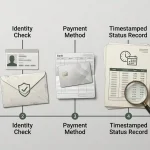
The first step on overseas casino sites aimed at UK visitors is usually account registration, followed by a request to confirm who you are. Be ready to provide identification and make sure the details match those on your account. Operators must check a customer’s age before allowing them to deposit, so verification is not just a box to tick after you start playing.
I used to treat document requests as an annoying formality and rush through them. That’s backwards. Read what the site asks for, submit clear, accurate information, and check that the account details are correct before sending anything. An offshore operator may ask for documents as part of its own checks, but it is not regulated by the UK Gambling Commission. Its process is not the same as the UKGC system.
There is another difference worth keeping in view: offshore sites do not provide the UKGC-mandated affordability checks. That does not mean depositing is harmless or that the site will help you spot when spending is becoming a problem. Set a personal limit before you pay in, and do not treat a successful deposit as evidence that the operator has assessed what you can afford.
When you reach the cashier, choose from the methods the operator actually supports. Some sites may offer cryptocurrency alongside other payment options; availability and the steps involved can vary. Check the currency, any conversion details, and whether the method you choose can also be used when you later request a withdrawal. A deposit route that looks simple at first can leave you with extra steps afterwards.
Take a moment to read the payment terms before confirming. Keep a record of the amount and method, and do not send funds if the account name or instructions do not make sense. I have learned not to confuse a smooth-looking cashier with a safeguard. It is only a way to move money.
A closer look at the business ties behind offshore gambling
When people talk about offshore casinos, it is easy to picture a site operating somewhere far away, with no meaningful connection to the UK. The Santeda and SIS case complicates that picture. It shows why I look beyond the casino’s website and ask who else has a commercial stake in the business.
Santeda held a Curaçao licence, but that licence did not authorise it to operate in the UK or the US. Under its contract with SIS, SIS received a share of revenue generated by losing bets placed through Santeda’s brands. That is a specific financial relationship: the payment was tied to customers’ losses, not simply to a service fee for providing games.
It does not, by itself, tell us everything about the arrangement or establish that anyone broke the law. But it does make the flow of money worth noticing. If a business connected to the UK earns more when customers lose, you can reasonably ask whose interests the arrangement serves and how those interests are managed.
Gibraltar Casino Licence in the UK: What It Means
That question matters when assessing claims about a foreign casino’s wider network. A brand may be offshore and outside UK Gambling Commission oversight, while its commercial relationships reach beyond the place where it holds a licence. The licence does not turn those relationships into UKGC-regulated activity, nor does it tell you whether the incentives are good for players.
I used to treat the logo on a casino site as the whole story. It isn’t. Follow the money.
GamStop does not cover casinos outside the UKGC system
I used to think a GamStop exclusion followed me everywhere. It doesn’t. GamStop covers operators licensed by the UK Gambling Commission, so registering blocks access to every UK-licensed gambling site. A casino operating outside that system is not part of the scheme and will not receive the exclusion through GamStop.
That gap matters most when you self-excluded because gambling had stopped feeling manageable. A specialist casino review reports that someone in that position may still be able to open an account with a foreign casino and deposit, without the safeguards provided through UK-licensed sites. That is not a loophole worth testing. It is a way back to gambling when you have already decided you need distance from it.
I know how easy it is to treat a new account as a separate decision. It isn’t separate from the reason you signed up for GamStop. And an offshore operator does not provide UKGC-mandated affordability checks, so you should not expect that extra barrier to step in.
If you have self-excluded, the safest practical rule is simple: don’t look for a casino outside GamStop as a workaround. Keep the exclusion in place, and use blocking tools or support from someone you trust if the urge to gamble is getting hard to sit with. No clever fix.
The restriction is there to create space between an urge and a deposit. A site beyond GamStop’s reach can remove that space, but it cannot undo the reasons you chose to self-exclude.
Withdrawals: speed is only part of the story
The time shown beside a payment method is only one part of a payout. Skrill and Neteller withdrawals are often described as clearing within 24 hours, with many processed in less than 12. That is the operator’s processing time, not a promise that the money will appear instantly in your account.
Bank transfers can take longer. A specialist review reports that they may take five to seven business days, and that some foreign casinos add an internal processing wait before the bank transfer even begins. That distinction matters: a site can say a withdrawal has been approved while the funds are still moving through separate stages.
Crypto may be quicker on paper. The reported time can be under an hour, but the amount received can change in value as the cryptocurrency fluctuates. Fast is not the same as predictable.
I used to look only at the headline speed and assume the rest would sort itself out. It didn’t. Withdrawal limits, pending periods and verification procedures differ between operators, according to specialist reviews, so read the cashier terms before depositing rather than after a win.
Identity checks can also hold things up. UKGC-licensed operators must verify a player’s identity before processing a withdrawal; an offshore casino is not regulated by the UK Gambling Commission, and that is not the same protection. These sites also do not provide UKGC-mandated affordability checks. Don’t treat a quick estimate on a payment page as a guaranteed arrival time.
One last thing: keep a copy of the withdrawal terms and any confirmation. If the stated timing changes, you will at least know what the operator said when you made your decision.
Are bonuses at foreign casinos actually better than at UKGC-licensed sites?
Often, yes: foreign casinos commonly offer larger welcome packages because they are not bound by UKGC restrictions on bonus terms and promotions. Check the wagering requirement before accepting an offer; a larger bonus may require substantial betting before you can withdraw.
Is it legal for UK residents to use casino sites that operate outside the UK’s licensing framework?
Yes, placing a bet with an overseas casino is not illegal for an individual in the UK. However, an operator offering gambling to customers in England, Scotland or Wales without a UKGC licence is acting illegally.
What should players check to assess whether an international casino is safe?
Check whether the operator holds a licence from a reputable authority and whether the site uses encryption to protect your personal and financial information. An offshore licence does not mean the casino is regulated by the UKGC.
How do I know if an online casino is safe?
Check the operator’s licensing status and whether the site uses encryption to protect your data and payments. A foreign casino is not covered by UKGC regulation, even if it holds an offshore licence.
Are gambling winnings subject to income tax in the United Kingdom?
No. Gambling winnings are not subject to UK income tax, whether they come from a UKGC-licensed casino or an overseas operator.
Is playing at an international casino legal for UK residents?
Yes, it is not illegal for a UK resident to place bets with an overseas operator. The legal issue is on the operator’s side: offering gambling to customers in England, Scotland or Wales without a UKGC licence is illegal.
Are foreign casinos safe for UK players to use?
Not necessarily. Foreign casinos operate outside UKGC regulation, and standards vary; some use encryption and hold offshore licences, but those features do not make them UKGC-regulated.
Safety

Anjouan Casino Licence in the UK: What It Means
An Anjouan licence reflects the operator’s claimed approval under its own framework, not permission to...

International Casinos for UK Players: Rules and Risks
Foreign licences, bonus terms, player safeguards and payment delays all affect how offshore casinos differ...

Offshore casino sites in the UK: licence checks
An offshore licence is not a substitute for UKGC approval, and payment, bonus and verification...

Offshore casinos for UK players: what to check
A practical look at licensing, promotions, crypto and withdrawals, with a focus on what changes...

British Casinos Not on GamStop? What the Label Means
The label describes a casino’s distance from GamStop, not its safety, UK status or equivalent...

Casino sites not on GamStop: what UK players should know
Explore how operator participation, licensing, payment claims and bonus rules relate to the limits of...

Casino Without a Swedish Licence: UK Rules Explained
A casino’s location or international label does not establish its licensing status or whether it...

Casinos That Bypass GamStop: What to Know
GamStop applies to UKGC-licensed operators, while casinos outside that system may offer different licensing, support...

Curaçao casino licence in the UK: what it means
A Curaçao licence identifies an operator's regulatory framework, but does not mean it is regulated...

Gibraltar Casino Licence in the UK: What It Means
A Gibraltar regulatory base is not a substitute for the UK Gambling Commission licence required...

Merkur Casino Online UK: Games, Licences and Checks
Merkur branding does not identify a casino or confirm its games, so check the operator,...

Trustworthy Online Casinos in the UK: What to Check
Trust depends on the operator’s licence and terms, while even regulated sites cannot guarantee a...

Non-Gamban casinos in the UK: what it means
Gamban only indicates whether access is blocked; it does not confirm a casino’s safety, suitability...

Non-GamStop Curaçao Casino Sites: UK Licence Checks
A licence badge is not proof of UK authorisation or participation in the UK self-exclusion...

Non-GamStop European Casinos: UK Rules Explained
European branding does not establish UK licensing or GamStop participation; the distinction matters when exclusion...

Non-UK Licence Casinos: What the Licence Means
A licence identifies the regulator and oversight system, but non-UK authorisation does not mean the...

Non-UK-Registered Casinos: What the Label Means
The guide separates a casino’s licensing jurisdiction from UKGC oversight and examines protections, payments and...

Non-UK-Regulated Casinos: Licences and Risks
A licence applies under the rules of its jurisdiction; UKGC permission is required for operators...

Non-UKGC-Licensed Casinos: Rules and Risks
A look at how non-UKGC casinos are licensed, what protections may be missing and what...

Online Casinos with Malta MGA Licences in the UK
An MGA licence sets obligations for operators, but does not by itself establish that a...

Online slots not on GamStop: what it means
GamStop participation depends on a casino’s regulatory position, which can affect the protections and checks...

Safe Online Casinos in the UK: Checks Before You Play
A practical look at operator information, terms, support and payments when assessing whether a casino...

Casinos Not on GamStop UK: What Trust Really Means
A clear-eyed guide to licensing, gambling safeguards, bonuses and withdrawals at casinos outside the UKGC...

Trusted UK Casinos in 2026: Licence Checks
A practical check starts with UKGC permission, then looks at player safeguards, bonus terms, support...

USA Casinos for UK Players: Licensing and Risks
A practical guide to licensing status, cash-out routes, ownership ties and the limits of offshore...

VPN-Friendly Casinos in the UK: Rules and Risks
Understand how casino VPN policies differ from licensing, and what offshore sites may mean for...