European Roulette Online in the UK: How It Works
 Available in GB
A practical guide to the European wheel, table layout, bet types and differences between digital and live online games.
Table of Contents
- European Roulette: One Zero, 37 Pockets
- Inside Bets, Outside Bets and What They Pay
- The Single-Zero Table and the Bets Around It
- Reading the European Roulette Table Layout
- RNG or Live Wheel: What Changes When You Play Online
- Live Dealers, Table Pace and Playing Limits
- Bonuses and Roulette Wagering: Read the Small Print
- Free Spins, Real Money and the UK Licence Line
- Roulette-Themed Slots Aren’t the Same Game
- European vs American Roulette: The Extra Zero Matters
- Live Games
European Roulette: One Zero, 37 Pockets
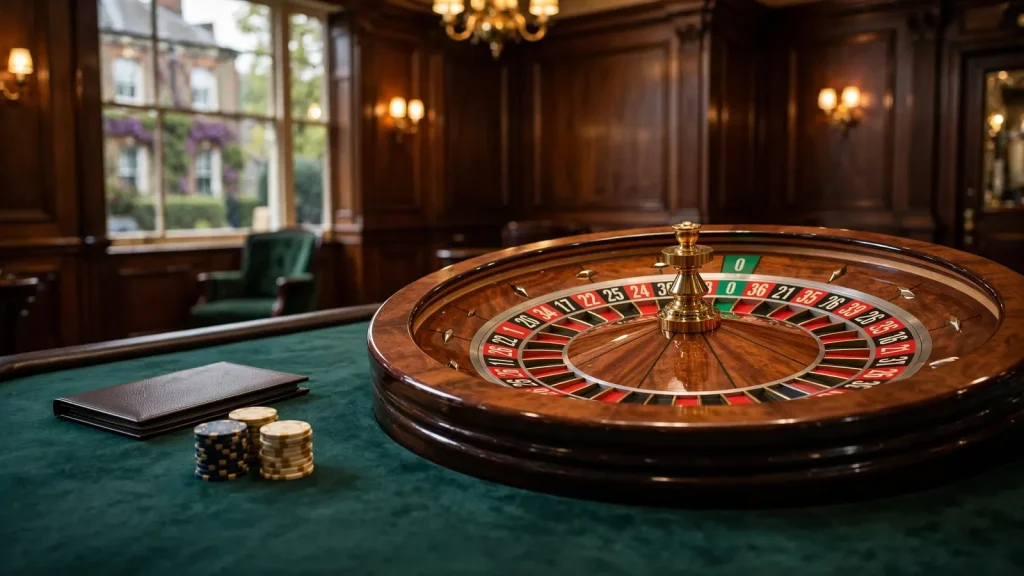
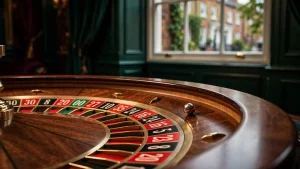
The defining detail of European roulette is easy to miss when you first open a game: the wheel has numbers from 1 to 36 and one green zero. Count those pockets and you get 37. That single zero is what gives the European version its name in everyday casino menus, and it matters more to the maths than the polished wheel, the dealer’s patter or the graphics around it.
I used to treat the zero as just another mark on the wheel, a small green interruption between the numbered pockets. It isn’t. It is a separate possible result, and it changes the chance attached to every outcome. The game may feel like a choice between colours or number ranges when you are looking at a table, but the wheel underneath has 37 possible pockets. The zero is part of that count, not a decorative space outside the game.
That is the useful starting point for anyone looking at European roulette online. Before you compare a streamed table with a digital one, or decide whether the interface feels clear, check which wheel the game uses. “European” should mean one zero and 37 pockets. A title or thumbnail can make a game look familiar, but the wheel’s pocket count is the detail that tells you what version you are actually facing.
When choosing an online casino for European roulette in the UK, you can use this list as a reference point and consider the available payout information as part of your decision.
1. BeOnBet
Payout speed: 1-3 business days BeOnBet has a stated payout speed of 1–3 business days. You can use that timeframe as one factor when considering it.
2. EvoSpin
Payout speed: 1-3 business days EvoSpin has a stated payout speed of 1–3 business days. You can take this timeframe into account when assessing it.
3. Revery Play
Payout speed: 1-3 business days Revery Play has a stated payout speed of 1–3 business days. You can consider this information when deciding whether it suits your needs.
4. NightLuck
Payout speed: 1-3 business days NightLuck has a stated payout speed of 1–3 business days. You can factor this timeframe into your assessment.
5. Zombillion
Payout speed: 1-3 business days Zombillion has a stated payout speed of 1–3 business days. You can use this as one point of reference when considering it.
6. Dieselwin
Payout speed: 1-3 business days Dieselwin has a stated payout speed of 1–3 business days. You can keep this timeframe in mind as you assess the operator.
7. SpinFormula
Payout speed: 1-3 business days SpinFormula has a stated payout speed of 1–3 business days. You can include this detail in your decision-making.
8. NightWin
Payout speed: 1-3 business days NightWin has a stated payout speed of 1–3 business days. You can consider this timeframe when weighing your options.
9. Britsino
Payout speed: 1-3 business days Britsino has a stated payout speed of 1–3 business days. You can take the stated timeframe into account when evaluating it.
10. WinBeast
Payout speed: 1-3 business days WinBeast has a stated payout speed of 1–3 business days. You can use this detail as part of your assessment.
The number of pockets also explains the house edge. In European roulette, it is 2.70%. That figure describes the mathematical advantage built into the game over time; it is not a prediction of what will happen in a particular session. A spin can land on any pocket, and a run of results does not owe you a correction. The edge is a long-run property of the rules, not a promise that a casino will take a fixed share from every player or every short visit.
I find that distinction worth holding onto because roulette encourages you to read meaning into patterns. A run of red, a cluster of numbers or a zero that has not appeared for a while can look like a clue. It is not information about what the next spin must do. The wheel has no memory. Each result is decided by chance, so the previous landing does not make another pocket due.
On an online casino screen, the physical wheel may be represented by animation or shown through a live camera, but the basic European version is still identified by its pockets: 1 through 36, plus zero. The presentation can change; the defining count does not. That is why I would start with the game details rather than the visual style. A dramatic sound or close-up can make a spin feel weightier than it is. The wheel still has the same set of possible results.
There is also a practical reason to learn the count before playing. When you know that the zero is included among the 37 pockets, you are less likely to think of it as an exception that can be ignored. It is a result in its own right. That changes the underlying chances compared with imagining a wheel made only of numbered pockets, and the 2.70% house edge reflects the European rules as a whole.
The term “single zero” is plain, but it does a lot of work. It distinguishes this wheel from versions that add another green pocket, and it tells you why two games both labelled roulette may not have identical maths. For now, the point is simply to recognise the European wheel on its own terms: thirty-six numbered pockets, one zero, 37 in all.
French Roulette Online Casinos in the UK: Rules
I would not choose a game because its name sounds familiar or its presentation looks expensive. Start with the wheel. If you are browsing European roulette casinos in the UK, that one-zero definition is a more solid point of comparison than the artwork or the dealer’s voice. It will not tell you whether a session will go well; nothing about a roulette wheel can do that. It tells you what the game is built on.
Once that part is clear, the rest of the experience is easier to place. The zero is not a feature added to make the wheel look distinctive. It is one of the outcomes that shapes the game’s odds. Remember the count, and the headline becomes straightforward: European roulette has 37 pockets, with a single zero and numbers 1 to 36. No mystery there.
Inside Bets, Outside Bets and What They Pay
A roulette bet is defined by the result you cover. It might be one particular number, or a broader group such as red or black. The narrower the selection, the fewer outcomes it covers; the payout shown for a winning bet reflects that choice. I used to look at the biggest payout first and forget to ask what I was actually backing.
Online Casinos Without ID in the UK: What to Know
A straight-up bet covers a single number. On European roulette, it pays 35:1; the same quoted payout applies on American roulette. That is the headline figure many players notice, but it is not a promise of a likely win. You have chosen one precise result, so the bet can lose whenever the ball finishes anywhere else. A large payout and a high chance of winning are not the same thing.
Outside bets cover broader categories. Red or black selects a colour, even or odd selects a parity, and high or low selects a range of numbers. Each of these pays 1:1. In plain terms, the payout matches the amount staked, with the original stake also returned on a winning bet under the standard payout convention. These bets are easier to understand at a glance, but “safer” can be misleading: they still depend on the spin, and the zero means a colour or other even-money selection does not cover every pocket.
That distinction helped me when I first tried to play European roulette online. I treated the even-money choices as if they were close to a sure thing and increased my stake after a loss. It was a bad habit, not a clever reading of the game. A bet covering more possible results can still lose, and the payout does not change that basic uncertainty.
When checking European roulette payouts, separate the bet’s coverage from its quoted return. A single-number selection has a much larger stated payout than red or black, while the outside choices pay less because they cover broader categories. Neither figure tells you what the next spin will do. Roulette outcomes are determined by chance, so a previous result does not make a particular number or colour due.
Online Bingo in the UK: Tickets, Slots and Play
The same basic choices can make sense whether you are learning with a free version or staking real money: first identify what your selection covers, then read the displayed odds before confirming it. The screen may make the payout prominent, but the coverage is the part that tells you what must happen for the bet to win. I learned that in the wrong order.
For now, it is enough to know the difference between a precise number and a wider category, and what each pays when successful. The positions of those bets on the table are another matter. Don’t chase the number.
The Single-Zero Table and the Bets Around It
The European table makes more sense once you connect its betting area to the wheel: one zero sits alongside the numbered pockets, and the layout gives that zero its own place rather than folding it into the grid. The numbered section is arranged in horizontal rows, with the betting spaces drawn on or between the numbers. That’s where the inside bets go.
I used to look at the felt as one busy patch and try to decide where a chip belonged while the betting clock was already running. Not ideal. The useful distinction is simpler: a chip placed on a number marks a narrower selection; a chip placed on a line or shared boundary can cover the numbers on either side of it.
Do
- Place a chip on a number for a narrower selection
- Use shared boundaries to cover multiple numbers
Don’t
- Treat the felt as one busy patch
- Decide where a chip belongs while the clock is running
Reading the inside-bet area
A straight-up bet sits directly on one number. A split bet goes on the line separating two adjacent numbers, so the chip represents both rather than either one alone. On a European layout, that boundary may run between numbers in the same row or between numbers in neighbouring rows. The important part is the shared edge: you’re not placing a split by guessing at a gap.
A split pays 17:1. That figure describes the payout, not the chance of winning, and it doesn’t turn the bet into a safer choice just because it covers two numbers. It simply shows how the table lets you combine neighbouring spaces in one selection.
A street bet covers a horizontal row of three numbers. Its chip goes at the end of that row, marking the group rather than one individual number. The stated payout is 11:1. Once you recognise the row as a unit, the position is easier to find; you don’t need to treat each number as a separate chip placement.
The zero is not part of those rows. It has a distinct space beside the numbered grid, so a bet involving zero uses that area or a boundary that includes it, depending on the selection. I find that distinction handy: the green pocket belongs to the same wheel, but it isn’t another square in the run of numbered rows.
Live Dream Catcher Casino UK: What to Check
Outside areas sit beyond the number grid
Outside bets are placed in marked areas around the grid, not on individual numbered spaces. Their labels refer to broader groups of outcomes, while inside bets are attached to particular numbers or compact clusters on the table. You can see the contrast at a glance: the central grid is where number-specific chips go; the surrounding boxes are for broader selections.
That’s the practical map, not a strategy. The position of a chip tells the table what you’ve selected; it can’t make a result more predictable. I’ve made the mistake of choosing a spot because it looked tidy, as if a neat arrangement had some meaning. It didn’t. The wheel still decides.
Before placing anything, locate the zero, find the numbered rows, then check whether your chosen space is a number, a shared boundary or one of the labelled areas outside the grid. That small pause beats hovering over the layout and moving a chip at the last second. Simple, but useful.
Reading the European Roulette Table Layout
The first time I sat down at an online European roulette table, I looked for the wheel and barely glanced at the betting area. That was backwards. The table is where you check what a chip will cover before the spin starts.
The main feature is a grid of numbered spaces, with the numbers running from 1 to 36. The single zero sits apart from that numbered run, usually at one end of the grid. Each number has its own box. The grid is arranged in three vertical columns, so you can orient yourself by looking across the rows and down the columns rather than scanning a jumble of individual squares.
The European table layout consists of a numbered grid (1-36) with a single zero sitting apart from the main run, typically at one end of the grid.
Around that grid are the larger outside-bet spaces. They sit along the edges of the numbered area and are marked with labels such as red, black, even, odd, low and high. On a screen, some tables use colours and icons as well as words; I still read the label rather than trusting colour alone. It is an easy way to avoid placing a chip in the wrong area when the display is small.
The even-money areas cover the broadest patches of the layout. Red and black, even and odd, and low and high are each shown in their own marked spaces. These bets pay 1:1. The labels are close to the grid, but not part of it: a chip placed on one of those broad spaces is not sitting on a single-number box.
If you want to place a chip on the numbered grid, look closely at the borders. A chip centred inside one box is different from one positioned on a line or at a corner. The table’s markings show which spaces touch, and the betting interface may highlight the covered area before you confirm. I learned to pause there. One rushed click can turn a choice of one number into a different selection.
A European roulette casino table layout may look slightly different from one game to another, especially on a phone, but the basic landmarks remain: the numbered grid, the zero at its edge, and the labelled outside areas around it. Before betting, zoom in if needed and check the highlighted selection. That is a more useful habit than trying to find a roulette strategy in the colours or arrangement. The layout tells you where the chip goes; it cannot tell you what the ball will do.
Keno Casinos in the UK: Games, Odds and Terms
RNG or Live Wheel: What Changes When You Play Online
The main difference is whether the spin is generated by software or happens on a physical wheel in a studio. Both can present European roulette, but the experience of playing is not quite the same. I used to treat the video feed as the important part. It isn’t: what matters is whether you want a quick, self-paced game or the visible ritual of a dealer releasing the ball.
With RNG roulette, a random number generator determines the result and the game displays a simulated spin. You do not wait for a camera to show a dealer setting the wheel in motion, so the rounds move along faster. The screen may show a wheel animation, but that image is a representation of the result, not a live recording of a ball landing in a physical pocket. Once the result appears, you can move on to the next round.
That quicker rhythm can make RNG a practical way to try the game at a lower stake. Some versions have minimum stakes as low as 10p. “Low stakes” does not mean the game is easier to beat; it means you can choose a smaller amount for a spin where that minimum is offered. I’ve found the pace can also make it easier to lose track of how often you are playing. A quick round is still a real round.
Live dealer roulette works differently. A camera streams a real wheel from a studio, where a human dealer spins it and the ball drops into a physical pocket. You watch the action unfold rather than seeing a software-generated animation. The dealer, wheel and ball give the game a more tangible feel, though the result is still determined by chance. A stream can add atmosphere; it cannot tell you where the next ball will land.
RNG Roulette
Software-generated results with simulated spins, offering a faster pace and often lower minimum stakes.
Live Dealer Roulette
Real wheels streamed from a studio with human dealers, providing a more tangible feel and ritual.
The wheel shown in either format may be a European roulette wheel, with its single green zero. In an RNG game, that wheel is part of the software presentation. In a live game, you see the physical wheel used for the streamed round. The distinction is easy to miss when both games share a similar table design, but it is the clearest way to tell what kind of spin you are watching.
There is no universal winner between the formats. RNG suits you if you want rounds to move quickly and would rather play without a dealer on screen. Live roulette may suit you if watching a real ball and dealer is part of the appeal. I’d compare the pace and minimum stake before opening a game, rather than assuming that “live” means more authentic in every way or that a simulated wheel is less of a roulette game.
One practical detail: check the game information for its published return-to-player figure before you play. The presentation and pace do not tell you that information, and it is worth reading separately. I learned not to confuse a good-looking stream with a better chance. Different format, same uncertainty.
Live Dealers, Table Pace and Playing Limits
With live European roulette, you see a real wheel in a studio, a dealer handling the game and the ball dropping into a pocket. It feels less like tapping through a simulation and more like sitting at a table, though you are still watching through a screen. I like that physical rhythm; I also know it can make a losing run feel oddly personal. It isn’t.
The pace depends on the format. A standard live table leaves room for the dealer to take bets, close the betting window and settle the spin. Speed roulette trims some of that pause. A specialist review puts speed games at more than 150 spins an hour, against 80–100 at a standard table; treat those as format-specific figures, not a promise about every room. Faster rounds mean less time between decisions. If I’m playing, I’d rather set my limit before the wheel starts moving.
Live Casino Lightning Roulette in the UK: How It Works
Minimum stakes vary too. A specialist review reports UK live roulette tables starting at 10p, while some auto-roulette and speed formats start at 5p. Those are starting points, not a guarantee that every table will offer them. Check the stake shown in the game before joining, especially if you have opened a new table expecting the same minimum as the last one.
There is a useful distinction between a live dealer and auto-roulette: both use a physical wheel, but auto-roulette does not have a dealer conducting the game on camera in the same way. The screen should make the format clear. Don’t mistake a quicker interface for a different set of odds.
For UK-licensed live casino operators, safer-gambling tools are part of the service, not a decorative footer. They must offer deposit limits and loss limits, session time reminders, reality checks, cool-off periods and GamStop self-exclusion. I’d set limits before play rather than trying to make a sensible decision after a run of spins. The prompts can interrupt the session; that is the point.
A live table’s studio polish doesn’t tell you whether it suits your pace or budget. Look at the minimum, the speed label and the available controls first. Then decide whether you want to join.
Bonuses and Roulette Wagering: Read the Small Print
A roulette bonus can look generous until you see how little each spin may count towards its wagering requirement. The key detail is game weighting: the share of your roulette stake that the casino credits towards clearing bonus funds. It is set by the operator and can differ between roulette formats, so the bonus headline alone tells you very little.
Monopoly Live Casino UK: How Live Tables Work
Most UK operators count roulette wagers at a rate of 10% to 20% of the requirement. In practice, that means a stake may add only a fraction of its value to the amount you still need to wager. A specialist review of casino terms reports that live roulette can be weighted at 10% or 20%, while RNG roulette may receive full weighting. Treat those figures as a guide to the differences you may encounter, not a promise about any particular offer: the terms for the bonus you are considering are what matter.
I learned to look at that line before getting excited about a match offer. A low weighting can make roulette a slow way to clear bonus funds, even if you enjoy the game and the stated requirement looks manageable. The stake you place and the progress the counter records are not necessarily the same thing.
What the weighting changes
Suppose the terms say roulette contributes at a reduced rate. Each qualifying bet then moves the wagering counter by less than the amount staked. If roulette is excluded, those bets make no progress at all. If the weighting differs between live and RNG games, switching formats may change how quickly the counter moves, even when both are labelled roulette.
That is why I check the eligible-games list as well as the general bonus terms. A page may describe a casino bonus in broad language, while the game-specific rules give the actual weighting. Look for whether European roulette is included, whether the rule applies to both live and RNG versions, and whether there are restrictions on particular tables. Do not assume that every game with a roulette wheel is treated alike.
The roulette rules themselves are not the tricky part here. The accounting is. If you cannot find a clear game-weighting rule, ask the operator before accepting the bonus rather than guessing from the banner.
Attention Roulette wagers often contribute only 10% to 20% towards wagering requirements, making them a slow way to clear bonus funds.
The wagering cap in 2026
A regulatory update reports that, from January 2026, wagering requirements for UKGC-licensed operators are limited to a maximum of 10 times. That cap concerns the multiplier attached to a bonus requirement; it does not mean every offer has the same terms, nor does it remove game weighting. A roulette wager can still count only partly, or be excluded under the offer’s rules.
So read the multiplier and the weighting together. One tells you the stated requirement; the other tells you how much your roulette play contributes towards meeting it. The practical burden depends on both. A “lower requirement” can still take longer to clear if the game you want to play has a small contribution rate.
A quick check before opting in
I use the bonus terms as a checklist, not as fine print to skim after depositing:
- Is roulette eligible, and does the rule cover the specific European roulette game?
- Is the weighting different for live and RNG roulette?
- Does the offer exclude particular tables or formats?
- When does the wagering period end, and what happens to bonus funds that remain uncleared?
The weighting may be stated in a promotions page, bonus terms or game exclusions. If those pages seem to contradict each other, get the operator to clarify which rule applies before you opt in. Keep a copy of the terms you relied on, too. It is easier to refer back to the written conditions than to remember how a promotion was described.
A bonus is not automatically useful just because roulette is available in the lobby. I compare the terms with how I actually want to play. If the weighting makes the required progress unattractive, I would rather leave the bonus unclaimed than change my game around it. No clever reading of the headline fixes a poor fit.
Free Spins, Real Money and the UK Licence Line
A free game of European roulette lets you get used to the controls without putting your own money at stake. In a demo, the balance on screen is for play only: it cannot be withdrawn, and a run of winning spins does not tell you what will happen when you switch to real funds. I learnt that distinction the hard way. A demo can show you how a game works; it cannot practise luck on your behalf.
RNG roulette is played through software that uses a random number generator to produce each spin. Because there is no physical wheel or dealer sequence to wait for, spins can come around quickly. Minimum stakes can also be low, often as little as 10p, though the amount depends on the game and operator. That makes it possible to try real-money European roulette with a small stake, but a small stake is still money at risk. I used to treat quick rounds as harmless because each one felt minor. They add up.
Fast Payouts at UK Online Casinos: What to Check
Before switching from a demo to cash play, check the game information, including its return-to-player (RTP) details where provided, and make sure you understand which balance is active. Demo and real-money versions may look almost identical; the difference is whether a losing spin affects your own funds. Free play is useful for learning the interface, not a promise of future results.
There is also a firm legal line. The UK Gambling Commission (UKGC) is the regulator for online casino activity in Great Britain. A platform without a valid UKGC licence cannot legally offer real-money live roulette to British residents. A site’s own claim that it is “safe” is not a substitute for checking its status on the Commission’s public register. The licence matters. The label does not.
Operators must verify your age before letting you deposit into a gambling account. In the UK, online gambling is for people aged 18 and over at a UKGC-licensed operator. So if a site lets you put money in before checking your age, that is not a shortcut I would trust.
If you are only trying to understand how the wheel and controls work, a free European roulette game can be a sensible first step. If you move to real money, pause and check the licence, age-verification process and game information first. I’ve skipped that pause before. It’s an expensive habit.
Roulette-Themed Slots Aren’t the Same Game
A slot with a roulette name or wheel graphic can look familiar, but it is still a slot. The difference is practical: roulette is played against the result of a numbered wheel, while a slot’s result comes from its own game mechanics and paytable. A roulette-style design does not turn reels into a roulette table.
Roulette-themed slots are not roulette; they use slot mechanics and paytables rather than wheel probabilities.
That matters if you are looking for a version of European roulette. A 3D presentation, or a title using words such as “gold” or “platinum”, may describe a slot’s theme or branding. Those labels alone do not tell you how the game works, what symbols pay, or whether it uses a physical wheel. Check the game’s rules and paytable rather than assuming it follows the familiar roulette format.
I have made that mistake in reverse: seeing a wheel on screen and expecting the same kind of choice I would have at a roulette table. In a slot, you generally set a stake and start a spin; the game then resolves according to its rules. In roulette, you are choosing where to place a bet before a wheel outcome. Similar pictures, different decisions.
The word “odds” can also mean different things in the two games. Roulette odds refer to the chances and stated returns attached to bets on wheel outcomes. A slot’s paytable describes how its symbols and combinations pay. A roulette-themed slot does not inherit European roulette’s probabilities just because its artwork shows a wheel. Read the rules for that specific game.
There is another useful distinction for UK players: the restrictions below concern online slots, not roulette tables. British online slots cannot autoplay, and each spin must last at least 2.5 seconds. Those requirements do not describe how a roulette spin works. If a game has reels and a slot paytable, treat it as a slot even if the screen borrows roulette imagery.
“Roulette-inspired” is a theme, not a promise of roulette. Before staking real money, I would check the game category, rules and paytable so I know what I am actually playing. If you want the numbered-wheel game, choose roulette; if you choose a slot dressed up with roulette styling, judge it by its own mechanics. The pictures are not the rules.
Live Baccarat Online in the UK: Tables and Rules
European vs American Roulette: The Extra Zero Matters
The difference between European and American roulette is easy to spot on the wheel, but it has a bigger effect than one extra pocket might suggest. European roulette has 37 pockets; the American version has 38, with both a single zero and a double zero alongside the numbered pockets.
That extra green pocket changes the chance of a win on each spin. The house edge is 2.70% on European roulette, compared with 5.26% on American roulette. The edge is the casino’s mathematical advantage over time, not a prediction of what will happen on your next spin. A short run can go either way. Over repeated play, though, the American wheel takes a larger share in the long-term calculation.
I used to look at the two wheels as much the same game with a slightly different layout. That was lazy thinking. The additional zero means a bet that covers a particular set of outcomes has a lower chance of landing than it would on the European wheel, while its stated payout does not rise to compensate. The maths shifts against the player.
There is an even less favourable detail on the American table: the basket bet has a house edge of 7.89%. That makes it a poor choice if your aim is to keep the built-in disadvantage lower. I would not mistake a crowded patch of the layout for extra coverage at a better price.
The distinction still matters when you play online. A simulated wheel and a streamed table can present the same variant, so look at the game’s rules or table information rather than relying on its title or artwork. If it says American roulette, check that double-zero pocket and the listed rules before placing a chip.
Neither version removes chance, and no past result tells you where the ball will land next. If you prefer the lower house edge, European roulette has the clearer mathematical case. American roulette is not automatically a bad experience; it simply charges more in its underlying odds. That’s the trade-off.
Should I play American or European roulette if I’m in the UK?
European roulette has the lower house edge: 2.70%, compared with 5.26% for American roulette. If you want the version with better odds for the player, choose European roulette.
How does roulette actually work?
You bet on where the ball will land, choosing a number or a group such as red or black. Each spin is determined by chance; the wheel’s pockets and the bet’s payout determine the odds.
What is the difference between European and American roulette wheels?
European roulette has 37 pockets: numbers 1 to 36 and one zero. American roulette has 38, adding a double zero; some UK online tables also have a 000 pocket.
Can I use a casino bonus to play American roulette?
It depends on the operator’s bonus terms and the game format. Roulette wagers may contribute at different rates—for example, RNG roulette often counts at 100%, while live roulette commonly counts at 10% to 20%—so check the bonus rules for the specific game.
Live Games
Online American Roulette in the UK: Rules and Odds
See how the 0 and 00 affect the odds, how table bets and payouts work,...

Fast-Payout Online Casinos UK: Keno vs Withdrawals
Keno paytables describe rewards for game results, while withdrawal speed concerns how long a casino...
First-Deposit Casino Bonuses in the UK: What to Check
First-deposit offers can depend on eligibility, activation, payment conditions and the rules attached to bonus...

Keno Casinos in the UK: Games, Odds and Terms
Keno rules, paytables and operator terms can vary, so the casino name alone is not...

Live Casinos in the UK: What to Check Before Playing
A practical guide to how live games work, operator regulation, table choices and terms that...

Online Slots Payout Percentages: RTP Explained
A game's stated payout describes its design, but it cannot predict the result of a...

Crazy Time Live Casino Game Show in the UK
Understand how live-casino services work, what UK licensing confirms, and which availability, demo and bonus...

Deal or No Deal Casino UK: How the Slot Works
The guide explains the briefcase format, Banker offers and final decision, alongside UK play and...

Fast Payouts at UK Online Casinos: What to Check
Keno awards depend on the game’s result and paytable, while getting money out is a...

French Roulette Online Casinos in the UK: Rules
See how the zero affects even-money bets, then compare live tables, stake levels, game-lobby listings...

Hi-Lo Casino UK: How the Card Calls Work
Each revealed winning card sets the reference for the next higher-or-lower choice, with rules varying...

Live Baccarat Online in the UK: Tables and Rules
A practical guide to live baccarat, from the dealer and betting interface to table pace,...

Live Blackjack Online Casinos in the UK: What to Check
Live blackjack choices depend on table rules, payouts and practical details, not a headline recommendation....

Live Casino Lightning Roulette in the UK: How It Works
The guide separates physical-wheel live play from RNG roulette and explains what the game title...

Live Dream Catcher Casino UK: What to Check
Live play combines a studio video stream with on-screen betting controls, so understanding the interface...

Live Roulette UK with English-Speaking Dealers
A practical guide to dealer language, roulette variants, limits and bonus terms, with a focus...

Monopoly Live Casino UK: How Live Tables Work
A practical guide to studio-streamed casino games, table rules, betting terms and the differences between...

Online Bingo in the UK: Tickets, Slots and Play
A practical guide to bingo formats, ticket costs, prize expectations, slot games, promotions and keeping...

Online Casinos Without ID in the UK: What to Know
A clear guide to registration claims, identity checks, withdrawals and what UK-licensed casinos must verify....