Deal or No Deal Casino UK: How the Slot Works
 Available in GB

The guide explains the briefcase format, Banker offers and final decision, alongside UK play and account checks.
Table of Contents
The Briefcase Showdown Behind the Slot
The enduring hook of Deal or No Deal is not simply that a contestant might leave with a prize. It is that they have to make a decision while the amount inside their own briefcase is still unknown. The Banker puts an offer on the table; the contestant has to judge it against the possibility that their case contains more. That uncertainty is the whole show in miniature.
The original game begins with 16 briefcases. Each holds a different amount of money, but contestants do not know which amount is in which case. One case is selected to remain with the contestant, while the others are opened during play. As the contents are revealed, the contestant gets a clearer picture of what might still be waiting in their own briefcase. Clearer, not certain. The missing information is what makes each offer difficult to weigh.
In the first round, three briefcases are opened. Then the Banker makes an offer, and the live host asks the question that gives the format its name: “Deal or No Deal?” The contestant can accept the amount offered or keep playing. That choice is not a simple test of nerve. The offer is set against an unknown prize, and the contestant has to decide whether the certainty in front of them is worth more than the chance still in their case.
There are three Banker offers before the final stage. The repeated question gives the game its rhythm: reveal information, receive an offer, make a choice. A case opening can make the remaining possibilities feel more promising or less so, but it cannot reveal what is inside the contestant’s own case. The Banker’s offer is therefore a separate piece of information, not a guarantee of what the case is worth.
I think that tension explains why the format translates so readily into a slot theme. The appeal is not just the briefcases or the familiar catchphrase; it is the pause before choosing. You have an offer on one side and an unknown prize on the other. Even if you know the television format well, familiarity does not turn that decision into certainty. It just makes the stakes easier to understand.
Live & Speciality Games in UK Casinos · Live Casino Lightning Roulette in the UK: How It Works
That distinction matters when you come across a Deal or No Deal slot in a casino. The show supplies a recognisable premise, but a slot is a game in its own right. The title or presentation alone does not tell you how its rounds work, what choices it includes, or whether it follows the show’s structure closely. I would not assume that every game using the name recreates the television rules. The game’s own information is what explains its mechanics.
The central show question still gives you a useful way to understand the theme. “Deal” means taking the Banker’s offer; “No Deal” means continuing without accepting it. The drama comes from comparing a known amount with an unknown one. It is a neat setup, but it can also make a choice feel more meaningful than it is: a familiar format is not a promise that the player can work out what will happen next.
That was an easy trap for me to fall into with games based on a show I already knew. When the presentation feels familiar, it is tempting to think you understand the game before checking what is actually on screen. I now separate the two ideas: the television premise tells me why the briefcases matter, while the slot’s own rules tell me what its buttons and choices do. Familiarity helps with the story. It does not replace reading the rules.
First-Deposit Casino Bonuses in the UK: What to Check
So when people talk about Deal or No Deal casino slots, they are often reaching for the same basic appeal as the show: a prize hidden from view, an offer from the Banker, and a decision about whether to stop or continue. The original show’s 16 briefcases and its sequence of offers make that idea easy to recognise. But the exact way a slot uses the theme is something to check in that game, not something to infer from the name.
The briefcase is the hook. The choice is the show. And the uncertainty is still the point.
How the Slot’s Banker Offers and Final Choice Work
The Banker’s offer is the pause that breaks up the opening of briefcases. In the bonus game, briefcases are revealed in batches; after a batch, the Banker makes an offer. You then decide whether to accept it or carry on. The pattern repeats as the game moves towards its final stage.
The Deal or No Deal slot machine game allows four Banker offers before the final stage, creating a choice to stop with the offered amount or continue playing.
That rhythm is the main thing to understand about the Deal or No Deal slot machine game. It is not simply a run of briefcases followed by one decision at the end. The offer creates a choice along the way: stop with the amount offered, or keep playing without taking that offer. The game allows four Banker offers before the final stage.
I find it helps to treat each offer as a separate decision rather than as a hint about what must happen next. The Banker is part of the game’s format, not a reliable guide to the contents of the remaining briefcases. An offer does not tell you whether continuing will bring a better result. It gives you a current amount to weigh against the chance of seeing what remains.
What happens after a batch
A batch of briefcases is opened, then the Banker makes an offer. The choice is yours: accept, or continue to the next part of the game. If you continue, more briefcases are opened and another offer follows at the appropriate point in the sequence.
The offers are therefore checkpoints, not extra prizes layered on top of the eventual result. Accepting one ends that game, and you collect the amount the Banker offered. You do not then carry on opening cases in that same game. It is a clean stop. Deal means taking the offer; no deal means declining it and staying in the game.
Fast Payouts at UK Online Casinos: What to Check · Live Casinos in the UK: What to Check Before Playing
That distinction matters if you are used to treating every bonus round as a chain of rewards. Here, the offer is an alternative to continuing, not a promise that you will receive both the offer and the result of the remaining briefcases. I would keep that in mind before clicking: once accepted, the decision is final for that round.
Four offers, then the last stage
There are four Banker offers before the final stage. The repeated structure can make the middle of a Deal or No Deal online slot game feel familiar: open a batch, hear the offer, decide whether to stop. But familiarity is not the same as certainty. Each new offer arrives after more cases have been opened; it does not guarantee that the next one will be larger, or that continuing will be worthwhile.
The game also lets you switch the two remaining briefcases before they are opened. That is a separate decision point, after the fourth offer. It changes which of those two cases you keep, but it does not turn an earlier rejected offer into an available one again. The last stage is where the remaining choice plays out.
I used to read a rising offer as a kind of nod from the game, as if it were quietly saying I was on the right track. That is an easy story to tell yourself when the screen makes a decision feel dramatic. But the mechanic is simpler: an offer is put in front of you, and you choose whether to take it or continue. The game does not make the future certain.
Do
- Treat each offer as a separate decision
- Weigh the current offer against the chance of remaining cases
- Follow the on-screen sequence of openings and offers
Don’t
- Treat the Banker as a reliable guide to case contents
- Read a rising offer as a guarantee of a better result
- Assume a fixed answer exists for the offer sequence
Deal or continue
For anyone looking at a Deal or No Deal online slot machine, the useful question is not “What should I always choose?” There is no fixed answer built into the offer sequence. The choice depends on whether you prefer the amount currently offered or want to keep the round going. If you take the offer, the game ends and that amount is collected. If you refuse it, play continues through the remaining sequence.
That can be less flashy than the host’s famous question, but it is the practical meaning of the prompt. “Deal” means closing the round for the Banker’s stated amount. “No deal” means leaving that amount behind and proceeding. There is no need to dress either choice up as a system. A confident-looking offer does not remove the uncertainty of continuing, and declining one does not guarantee a better outcome.
So when you play a Deal or No Deal slot online, follow the sequence on screen: batches of openings, a Banker offer, then your decision. The four offers lead towards the final stage, where the two remaining briefcases can be switched before they are opened. Keep the difference between accepting and continuing clear, and the bonus round is much easier to follow.
Playing Online in the UK: Licence and Account Checks
A Deal or No Deal title can look familiar before you even open it, but that tells you nothing about whether the site offering it is authorised to take your money. I learned to separate the game from the place hosting it. For an online casino, the licence is the first thing I check—not the banner, the logo or a claim that the site is “trusted”.
Keno Casinos in the UK: Games, Odds and Terms
In Great Britain, the UK Gambling Commission regulates commercial gambling, including remote gambling offered to consumers there. Its remit does not depend on where an operator keeps the equipment running its website or app. The Commission is the sole regulator for commercial gambling in Great Britain, issuing operating licences to businesses and personal licences to individuals working in regulated roles. The Gambling Act 2005 governs gambling in England, Wales and Scotland; Northern Ireland has a separate legal position.
That distinction matters when a casino site is based abroad. A foreign address does not exempt an operator from the requirement to hold the relevant UK Gambling Commission licence when it offers remote gambling to customers in Great Britain. A licence issued by another jurisdiction is not a substitute for a UKGC licence. If I am considering a real-money casino deal or no deal game, I want to see that the operator is authorised for the service it is offering to British customers.
Live Dream Catcher Casino UK: What to Check
Check the register, not just the badge
A licence badge on a website is a starting point, not proof by itself. I go to the Gambling Commission’s public register and check the operator’s licence information there before depositing. The operator’s name and the details shown on its site should make it possible to identify the business behind the casino. If the name on the register does not match the company named on the site, or I cannot find the relevant licence information, I stop and resolve that before creating a gambling account.
This is a simple check, but it cuts through some of the glossy presentation. A page may use British wording, show pounds, or advertise a Deal or No Deal slot machine; none of those details establishes that it is licensed to serve the market. Nor does a familiar-looking game title. The question is whether the business taking the bets holds the appropriate operating licence.
Licence Verification
A licence badge on a website is not proof by itself; always verify the operator on the Gambling Commission’s public register before depositing.
Licensed operators serving Great Britain must display information about their licence and link to their public register details. I use that link as a route to verify the information independently rather than treating the site’s own statement as the final word. Keep the register page handy if you need to query who operates the casino later. Basic housekeeping. Worth doing.
What a licensed account should involve
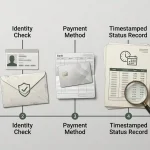
Before a customer can deposit, the operator must verify their age. Online gambling in the UK is for adults aged 18 and over when it takes place with a UK Gambling Commission-licensed operator. If an account process lets someone deposit without the operator carrying out the required age check, that is a serious warning sign, not a shortcut to celebrate.
A licensed remote operator must also prompt a new customer to set a financial limit before the first deposit and make account-level limit controls accessible. I would look for those controls in the account area and take a moment to understand what they do before adding funds. That is more useful than clicking through every screen just to reach a game. You can encounter the same account safeguards whether you are looking for Deal or No Deal online slots or another casino game; they are part of the regulated service, not a feature of one title.
Monopoly Live Casino UK: How Live Tables Work
There are also specific rules for online slots. The maximum stake in a game cycle is £2 for customers aged 18 to 24 and £5 for customers aged 25 or older. A game cycle must last at least 2.5 seconds before another can begin, and autoplay is banned for online slots in Britain. These are regulatory requirements, not optional settings that a casino can remove because a player prefers a quicker pace.
Payment options can be another useful clue about how a site operates. UK-licensed casinos cannot accept credit cards for gambling, including credit-card funding routed through a money service business. They also cannot accept wallet payments where the wallet permits credit-card funds to be used for gambling. If a casino offers a way to fund gambling with a credit card, I would not treat that as a clever workaround. I would step back and check the operator’s status and payment arrangements.
Protections after you sign up
A licence is not a promise that every gambling decision will go well. It does mean the operator is within the UK regulatory system and subject to its requirements. UKGC-licensed casinos must provide responsible gambling tools, including self-exclusion. They must also offer an internal complaints process and access to an approved Alternative Dispute Resolution service. If something goes wrong, note the casino’s stated process and keep relevant account correspondence rather than relying on a chat conversation you cannot later find.
Operators are also required to contribute to the Research, Education and Treatment levy. That obligation sits with the regulated businesses; it is not a reason to assume a particular site or game is safe for every person. I still set my own boundaries and use the tools available. The licence is a baseline, not a personal guarantee.
Account Safety Check
- Confirm the operator on the Gambling Commission register
- Verify that licence details are easily accessible
- Complete the required age verification steps
- Set a financial limit before the first deposit
- Check that payment methods do not use credit cards
When I check an online casino deal or no deal offer, I try not to let the game’s familiar format distract me from the account behind it. Confirm the operator on the Gambling Commission register, make sure the licence details are accessible, and look for the required age and financial-limit steps before depositing. Then check that the payment and slot features fit the rules. If those basics do not line up, there is no need to press on just because the game is ready to load.
Trying the Game for Free: What to Check First
A free-play version can be useful for learning a game’s layout, but it is not something I’d assume is available just because a search result or casino page mentions Deal or No Deal. Availability depends on the particular title and the site displaying it. Before you start, check whether the game itself offers a demo, whether the casino provides a free-play option, and whether the screen clearly says that no real-money stake is involved.
That distinction matters. “Free” can describe a demo, a promotional feature, or a game that still requires an account. Those are not the same thing. I’ve clicked through pages that made a free option sound obvious, only to find that the actual game opened in a different mode. Take a moment to confirm what is on screen before you play.
Check the game, not just the name
Deal or No Deal is a familiar label, but it does not tell you which slot you are opening or what its features are. If you are looking for a Deal or No Deal slot demo, start with the title shown in the game window and open its help or information panel. That is where you can check the rules and see whether the game offers a practice mode.
Live Baccarat Online in the UK: Tables and Rules
If there is no demo button or free-play setting, do not treat that as a glitch or assume a different version will behave the same way. Close the game and check the casino’s own description, or move on. A title page can describe the theme without confirming that you can play it for free.
I would also be wary of treating a similar name as proof of matching features. Searches for a Deal or No Deal Megaways slot, or for a Megaways casino game with the same branding, do not establish that a particular title exists at a site or that its rules match another version. The same goes for a title someone describes as a Box Clever slot. Check the exact game name and help file rather than relying on a familiar phrase.
That small check saves confusion. No assumptions.
What a demo can and cannot tell you
Free play may let you get comfortable with the controls and follow how a game presents its features. It does not show that you would have the same experience with a real-money stake, and it cannot tell you whether a particular session will produce a win. A demo is a way to inspect the game, not a forecast.
The expected return figure needs the same care. An affiliate review reports that the game help file states an expected return of 95.42%. Treat that as a figure reported for the game described there, not as a general return for every Deal or No Deal title, every casino, or every version with a similar name. The help file for the exact game you open is the relevant place to check its stated information.
Attention: Expected return figures are game statistics, not a promise of a personal outcome for an individual session.
Even then, expected return is not a promise about what happens in an individual session. It is a game statistic, not a personal outcome. I used to see a percentage and let it do too much persuasive work in my head. It cannot tell you what the next play will bring.
If the help file does not match the title on screen, or the details are unclear, pause instead of filling in the gaps yourself. It is better to know which game you are looking at than to carry over a figure from another page.
Free spins are not the same as free play
A search for Deal or No Deal free spins may lead to an offer or promotion, but that is different from opening a demo. Free spins can come with conditions, and the presence of the words on a page does not tell you what those conditions are. Read the specific offer terms before relying on it; don’t assume that free spins mean unrestricted practice or that they are available for every game.
Likewise, “play for free” can mean different things depending on where you see it. It might mean a demo mode, a promotional route, or simply a link to a game page. Check what the button does before continuing, and make sure the game is not asking you to move into real-money play when you intended only to explore.
Live Blackjack Online Casinos in the UK: What to Check
If your aim is to try the game without depositing, look for an explicit demo or free-play label on the game itself. If you cannot find one, the title may not offer that option in the version you have reached. No need to chase it.
A quick check before you start
I’d keep the check simple: confirm the exact title, open its help file, and look for a clearly labelled free-play mode. Read the displayed rules rather than assuming that another Deal or No Deal game shares them. If the game shows an expected return, note which title the figure belongs to and where it is stated. Then decide whether the mode on screen is actually the kind of free play you wanted.
That is less exciting than a banner promising a “free” game, but it is more useful. A demo can help you understand what you are looking at; it cannot establish how a real-money session would go, and a related title’s details should not be borrowed as a substitute. Check first. Then choose.
Qualification, Top Up and the Prize Game
If you’re considering a deal-or-no-deal casino in the UK in 2026, payout timing is one practical detail to check. This reference card gives the stated withdrawal timeframe for each listed operator.
1. BeOnBet
Payout speed: 1-3 business days BeOnBet lists a payout speed of 1–3 business days. If you’re weighing your options, this is the stated timeframe to keep in mind.
2. EvoSpin
Payout speed: 1-3 business days EvoSpin lists a payout speed of 1–3 business days. Use this stated timeframe as one detail when considering the operator.
3. Revery Play
Payout speed: 1-3 business days Revery Play lists a payout speed of 1–3 business days. If payout timing matters to you, that is the timeframe provided.
4. NightLuck
Payout speed: 1-3 business days NightLuck lists a payout speed of 1–3 business days. This gives you a stated timeframe to consider for payouts.
5. Zombillion
Payout speed: 1-3 business days Zombillion lists a payout speed of 1–3 business days. If you’re checking withdrawal timing, this is the information provided.
6. Dieselwin
Payout speed: 1-3 business days Dieselwin lists a payout speed of 1–3 business days. Keep this stated timeframe in mind if payout timing is important to you.
7. SpinFormula
Payout speed: 1-3 business days SpinFormula lists a payout speed of 1–3 business days. This is the stated payout timeframe available for your consideration.
8. NightWin
Payout speed: 1-3 business days NightWin lists a payout speed of 1–3 business days. If you’re looking at payout timing, this is the timeframe given.
9. Britsino
Payout speed: 1-3 business days Britsino lists a payout speed of 1–3 business days. You can use this stated timeframe as one point to consider.
10. WinBeast
Payout speed: 1-3 business days WinBeast lists a payout speed of 1–3 business days. If payout timing is relevant to you, this is the stated timeframe.
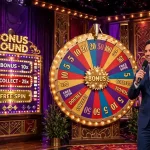
The route into the Deal or No Deal prize game starts before the briefcases appear. First comes qualification: all three rings must land on a gold slice. Only after qualifying does the player reach the choice of whether to use Top Up, followed by the main game. That order matters. Top Up is not the qualification step, and it is not the prize game itself.
I find it easier to keep those stages separate than to treat the whole feature as one big bonus. Qualification is a condition to enter. Top Up is an optional step that can add to prizes. The Deal or No Deal game follows. If you blur them together, it is easy to assume that a choice presented before the game is part of the game’s central deal decision. It is not: it comes earlier in the sequence.
Qualification comes first
The qualification condition is specific: all three rings have to land on a gold slice. If they do not, the player has not qualified for the next stage. That is the gate. It is worth noticing because a feature’s name or artwork can make it feel as though the prize game is immediately available, when the actual route depends on meeting this condition first.
Qualification Process
Step 1: Ring Spin
Three rings are spun to determine if the player qualifies for the feature.
Step 2: Result Check
All three rings must land on a gold slice to proceed.
Step 3: Access Granted
Only after all three rings hit gold does the player move to the Top Up and prize game stages.
I would read that requirement literally, rather than filling in the gaps with assumptions. The relevant point is the outcome for each of the three rings. The condition does not mean that one gold result is enough, nor does it describe a separate route into the game. All three need to land on gold.
This also helps distinguish qualification from the later choices. At this point, the player is not weighing a Banker offer or deciding whether to keep a case. Those decisions belong to the prize game. Qualification is simply what has to happen before the later stages are reached.
That distinction may sound fussy. It isn’t. If you are trying to understand a feature before playing, knowing which step controls access and which step affects prizes is more useful than treating every screen as part of a single bonus round.
Top Up is optional
After qualifying, the player may use Top Up to add to prizes. The word “optional” is doing real work here: it is a choice in the sequence, not another requirement for qualification. A player can qualify and then decide whether to take this step before playing the Deal or No Deal game.
I would not read “Top Up” as a promise that every prize will be increased, or that the feature guarantees a better result. The stated role is to add to prizes; what that means for a particular play should be understood from the game’s own screen and help information. The name alone does not tell you how the addition is applied, or what any particular prize will be.
French Roulette Online Casinos in the UK: Rules
That is where promotional language can trip you up. “Extra” sounds simple, but it can encourage you to stop checking what the choice actually does. I try to separate the label from the function: Top Up is an optional step that can add to prizes, and it happens after qualification but before the main game. That is the useful outline. Anything more specific should come from the explanation shown for the game you are playing, not from guesswork based on the name.
The order is straightforward: qualify first, consider Top Up second, then enter the prize game. You do not have to treat Top Up as though it were the deal decision within the main game. It is a separate point in the sequence, made before that game begins.
Then the prize game begins
Once those earlier stages are behind you, the Deal or No Deal game itself starts. This is the point at which the feature moves from qualifying and the optional prize addition into the named game. The sequence gives each part a different job: the rings determine whether you proceed, Top Up may add to prizes, and the prize game is what follows.
That order is useful when you are reading about a casino bonus or a no-deposit offer, too. Those phrases describe promotions or ways a player might access casino play; they do not, by themselves, explain this game’s internal sequence. A no-deposit bonus should not be mistaken for Top Up, and Top Up should not be assumed to be a bonus offer from a casino. The labels refer to different things.
Feature Sequence
- All three rings must land on a gold slice to qualify
- Top Up is an optional step to add to prizes after qualification
- The Deal or No Deal prize game begins only after these previous stages
- Game mechanics can vary between different themed titles
I would be wary of any description that jumps straight from a promotional claim to a promised prize. The known sequence has a qualification condition and an optional step before the main game. Neither the word “bonus” nor a game title tells you whether a promotion is available, who can claim it, or what conditions apply. Those details need to be checked in the actual promotion terms rather than inferred from the game’s feature names.
Don’t assume every version works alike
There are several Deal or No Deal-themed slot names and variations that players may come across. A shared theme is not enough to establish that each one uses the same qualification condition, Top Up option or prize-game sequence. I would check the rules for the specific game on screen instead of transferring one title’s mechanics to another.
That matters especially when a name adds words suggesting a different format or feature. A familiar logo can make two games seem interchangeable, but it does not prove that the same steps appear in both.
Live Roulette UK with English-Speaking Dealers
A review can help explain what a particular version shows, but I would still look for the game’s own help file when a mechanic affects how play proceeds. The sequence is easier to follow when the game’s terms define what qualifies, what Top Up does, and when the prize game starts. A review headline is not a substitute for that detail.
The same caution applies to RTP searches. A return figure, when published for a particular game, is not the qualification rule and does not explain Top Up. Keep those questions separate: the feature sequence tells you how the player reaches the prize game; the game information addresses its stated return. Mixing them together makes a feature sound clearer than it is.
The cleanest way I know to read this part is to take it one stage at a time. First, all three rings must land on a gold slice. Then Top Up is available as an option to add to prizes. After that, the player enters the Deal or No Deal game. No magic shortcut.
Fast-Payout Online Casinos UK: Keno vs Withdrawals
Your Last Briefcase: Deal, No Deal or Switch?
At the end of the game, the choice is stark: accept the Banker’s offer, reject it and keep the prize in your briefcase, or switch to the last unopened briefcase. It can feel as though one option must be the clever one. I don’t think the choice itself gives you a reliable way to make the outcome go your way.
Taking the offer means the game ends and you collect the amount offered. That trades the uncertainty of the remaining briefcases for a known result. Keeping your own case leaves its prize in play; switching means you take the other unopened case instead. Neither choice guarantees a better result. The game does not make the contents visible just because you are at the final decision.
That is why I’m wary of talk about “perfect play”. It sounds like there must be a decision rule that turns the final choice into a sure advantage. But these are three different ways to settle the game, not a promise that one will pay more. If you prefer certainty over the chance of a different case prize, accepting is the clear distinction. If you would rather leave the outcome to the case, you can reject the offer and keep yours or switch.
I used to treat the final choice as a test of nerve, as if hesitating meant I was missing a trick. That framing just made the moment feel more important than it was. Decide what you are comfortable with before choosing, and don’t read a result afterwards as proof that the other option would have been the “right” one. A result can be better or worse without showing that your decision was flawed.
There’s no secret answer in the switch button. The endgame gives you control over which settlement you accept, not knowledge of what the unopened briefcases contain. Choose knowingly. Then let it stand.
Live Games

Online American Roulette in the UK: Rules and Odds
See how the 0 and 00 affect the odds, how table bets and payouts work,...

Fast-Payout Online Casinos UK: Keno vs Withdrawals
Keno paytables describe rewards for game results, while withdrawal speed concerns how long a casino...

First-Deposit Casino Bonuses in the UK: What to Check
First-deposit offers can depend on eligibility, activation, payment conditions and the rules attached to bonus...

Keno Casinos in the UK: Games, Odds and Terms
Keno rules, paytables and operator terms can vary, so the casino name alone is not...

Live Casinos in the UK: What to Check Before Playing
A practical guide to how live games work, operator regulation, table choices and terms that...

Online Slots Payout Percentages: RTP Explained
A game's stated payout describes its design, but it cannot predict the result of a...

Crazy Time Live Casino Game Show in the UK
Understand how live-casino services work, what UK licensing confirms, and which availability, demo and bonus...
European Roulette Online in the UK: How It Works
A practical guide to the European wheel, table layout, bet types and differences between digital...

Fast Payouts at UK Online Casinos: What to Check
Keno awards depend on the game’s result and paytable, while getting money out is a...

French Roulette Online Casinos in the UK: Rules
See how the zero affects even-money bets, then compare live tables, stake levels, game-lobby listings...

Hi-Lo Casino UK: How the Card Calls Work
Each revealed winning card sets the reference for the next higher-or-lower choice, with rules varying...

Live Baccarat Online in the UK: Tables and Rules
A practical guide to live baccarat, from the dealer and betting interface to table pace,...

Live Blackjack Online Casinos in the UK: What to Check
Live blackjack choices depend on table rules, payouts and practical details, not a headline recommendation....

Live Casino Lightning Roulette in the UK: How It Works
The guide separates physical-wheel live play from RNG roulette and explains what the game title...

Live Dream Catcher Casino UK: What to Check
Live play combines a studio video stream with on-screen betting controls, so understanding the interface...

Live Roulette UK with English-Speaking Dealers
A practical guide to dealer language, roulette variants, limits and bonus terms, with a focus...

Monopoly Live Casino UK: How Live Tables Work
A practical guide to studio-streamed casino games, table rules, betting terms and the differences between...

Online Bingo in the UK: Tickets, Slots and Play
A practical guide to bingo formats, ticket costs, prize expectations, slot games, promotions and keeping...

Online Casinos Without ID in the UK: What to Know
A clear guide to registration claims, identity checks, withdrawals and what UK-licensed casinos must verify....