Curaçao casino licence in the UK: what it means
 Available in GB

A Curaçao licence identifies an operator’s regulatory framework, but does not mean it is regulated by the UK Gambling Commission.
Table of Contents
- What a Curaçao Casino Means for UK Players
- Curaçao Casinos and GamStop: What Is—and Isn’t—Connected
- The Legal Position for UK Players Using Offshore Casinos
- How to Read a Curaçao Casino Licence Claim
- UK Players, Offshore Sites and the Risk of Access
- Slots and Bonuses: Read the Terms Before You Play
- What a Gaming Licence Does—and Does Not—Tell You
- Why Offshore Licence Checks Need More Than a Badge
- Payments and Withdrawals: Expect Terms, Delays and Checks
- Are Curaçao Casinos Safe or Legit? The Protection Gap
- Safety
What a Curaçao Casino Means for UK Players
When people say “Curaçao casino”, they usually mean an online gambling site whose operator claims to be licensed in Curaçao. It describes the jurisdiction associated with the operator’s licence, not a type of casino game or a special version of a website. The phrase can sound like a simple label. It is worth separating that label from the question of who regulates a site for customers in Great Britain.
A non-UK-regulated casino operates without oversight from the UK Gambling Commission (UKGC). Such sites may be licensed in places including Curaçao, Malta, Gibraltar or Anjouan. So “Curaçao” is one possible clue to the regulatory framework behind a casino, but it does not by itself tell you that the operator is regulated by the UKGC. Those are different things.
I used to read a licence label as if it were a general stamp of approval. That was too easy. A licence belongs to a particular regulatory system; it does not turn an operator into a UK-licensed business or make every rule the same across jurisdictions. The useful first question is not whether a site looks familiar, but which regulator oversees the operator.
If you are checking casino options in the context of Curaçao licensing and the UK, use this list as a starting point, not as confirmation of any operator’s licence status. The available detail for each entry is limited to its stated payout speed.
1. BeOnBet
Payout speed: 1-3 business days BeOnBet lists a payout speed of 1–3 business days. This is the only operator-specific detail available here.
2. EvoSpin
Payout speed: 1-3 business days EvoSpin lists a payout speed of 1–3 business days. No licensing details are provided in the available information.
3. Revery Play
Payout speed: 1-3 business days Revery Play lists a payout speed of 1–3 business days. The available information does not establish its licence status.
4. NightLuck
Payout speed: 1-3 business days NightLuck lists a payout speed of 1–3 business days. That is the only specific feature provided for this entry.
5. Zombillion
Payout speed: 1-3 business days Zombillion lists a payout speed of 1–3 business days. No further operator details are available here.
6. Dieselwin
Payout speed: 1-3 business days Dieselwin lists a payout speed of 1–3 business days. The supplied information does not say whether it holds a Curaçao licence.
7. SpinFormula
Payout speed: 1-3 business days SpinFormula lists a payout speed of 1–3 business days. No other specific information is provided for you to assess.
8. NightWin
Payout speed: 1-3 business days NightWin lists a payout speed of 1–3 business days. Its licence status is not stated in the available details.
9. Britsino
Payout speed: 1-3 business days Britsino lists a payout speed of 1–3 business days. This is the only specific detail supplied about the operator.
10. WinBeast
Payout speed: 1-3 business days WinBeast lists a payout speed of 1–3 business days. The available information does not provide details about its licensing.
The UKGC distinction
The UKGC is the regulator for operators serving customers in Great Britain. An operator’s physical base does not change that requirement: businesses offering gambling services to Great Britain customers need a UKGC licence, wherever they are based. A company being located abroad, or describing itself as a Curaçao casino, does not replace that licence.
That distinction can be obscured by the way websites present themselves. A site might use British currency, refer to UK customers, or have a polished English-language design. None of those details tells you which regulator is responsible. Equally, an overseas licence claim is not the same as UKGC oversight. The terms can appear side by side in casual conversation, but they do not mean the same thing.
“Offshore” is often used as shorthand for a business operating outside the UK regulatory system. In this context, it is clearer to say “non-UK-regulated casino”: the phrase describes the relationship with the UKGC without suggesting that every such site has the same location, licence, or operating model. A Curaçao online casino may fit that description if it is not overseen by the UKGC.
This is a distinction about the operator and its regulatory status, not a verdict on a particular website. The word “licensed” can sound reassuring, but it needs a jurisdiction attached to it. A licence from a non-UK regulator and a UKGC licence are not interchangeable labels. I’ve learned not to let one broad word do the work of two separate checks.
Casino Without a Swedish Licence: UK Rules Explained
What the Curaçao label does—and doesn’t—say
The phrase “Curaçao casino” is commonly used as a category name for online casinos associated with Curaçao licensing. It does not tell you where every part of the business is based, what games it offers, or what rules apply to a player in every situation. Nor does it mean that all casinos described this way are one company or operate identically.
Searches for the best Curaçao casinos can make the category feel like a shortlist of similar products. In reality, the shared label only points towards a licensing jurisdiction. It cannot, on its own, establish that two operators offer the same protections or answer who handles a dispute. Those questions depend on the operator and the regulatory arrangements it falls under.
The same applies when a site describes itself as international or uses broad wording about being regulated. I would not treat those phrases as substitutes for naming the regulator. “International” says little about which authority oversees the business. “Licensed” is incomplete unless you know who issued the licence and whether the operator also holds the licence required to serve Great Britain.
For UK readers, the key distinction is therefore straightforward: a Curaçao association is not UKGC regulation. Operators serving Great Britain need a UKGC licence regardless of where they are based. A non-UK-regulated casino, by definition, sits outside UKGC oversight. Keeping those categories apart makes the rest of the terminology less slippery.
That still leaves room for different kinds of non-UK regulation. Curaçao is one jurisdiction associated with online casinos; Malta, Gibraltar and Anjouan are others. Naming those places does not mean their systems are identical, and it does not make them part of the UKGC framework. The country or territory named in a licence claim matters because it tells you which regulatory system the claim refers to.
A Curaçao association is not UKGC regulation. Operators serving Great Britain need a UKGC licence regardless of where they are based.
I’d start with that plain-language distinction whenever I see “Curaçao” used as a selling point: it tells me the claimed licensing connection, not that the casino is regulated in the UK. The label is a starting point, not the whole story.
Curaçao Casinos and GamStop: What Is—and Isn’t—Connected
A Curaçao casino is not automatically part of GamStop. GamStop is the UK Gambling Commission’s self-exclusion scheme, and casinos outside that regulatory system do not join it. So if you have excluded yourself through GamStop, that exclusion does not block you from opening or using an account at a Curaçao casino.
That distinction is easy to miss. “Self-exclusion” sounds comprehensive, as if one decision closes every route to online gambling. In practice, GamStop applies to participating operators. A non-UK-regulated casino sits outside that scheme, so it does not receive or act on a GamStop exclusion in the same way. Curaçao branding does not create a connection to the service.
I used to assume that signing up to a central scheme meant I had put a proper barrier between myself and gambling. It is a useful barrier where it applies; it is not a universal lock. That matters most when you are looking for a way back in during a moment you had expected to pass.
What “not on GamStop” really means
When people describe Curaçao casinos as “not on GamStop”, they mean the casinos are not participants in the UK scheme. It does not mean GamStop has reviewed the casino and granted it an exemption, or that the casino is somehow an alternative version of GamStop. There is no shared exclusion record that makes your existing registration follow you there.
Merkur Casino Online UK: Games, Licences and Checks
The wording can make the situation sound more reassuring than it is. “Outside GamStop” is a description of the gap, not a player-protection feature. A casino being outside the scheme does not make self-exclusion stronger, and it does not tell you what controls the operator might offer separately. Most importantly, you cannot rely on your GamStop registration to stop access at a site that is not part of the scheme.
If you have excluded yourself because gambling is becoming difficult to control, treating a non-participating site as a harmless exception can undo the boundary you were trying to set. I have made the mistake of bargaining with a rule I had put in place for a reason. It tends to sound clever only in the moment.
The limit of a GamStop exclusion
GamStop can only apply across the operators that belong to its scheme. It does not block the internet, prevent every gambling account from being created, or make a Curaçao casino recognise your exclusion. Searching for “Curaçao casinos not on GamStop” may bring up sites described in exactly those terms, but that label is simply pointing to the lack of a GamStop connection.
This is why the phrase “not regulated by GamStop” can confuse things. GamStop is a self-exclusion service, not the regulator. A casino outside the scheme is not “regulated by” GamStop in the first place. The relevant point for someone who has self-excluded is narrower: the casino does not form part of the network where that exclusion is applied.
Nor should you assume that a casino will add you to GamStop because you ask it to. Your exclusion through GamStop does not itself send an instruction to an operator outside the scheme. If you are trying to avoid gambling, relying on that registration alone leaves a gap.
GamStop Loophole
If you have self-excluded, treating a non-participating site as a harmless exception can undo the boundary you were trying to set.
If you have already self-excluded
Take the exclusion seriously even when a site is easy to reach. You can put distance between yourself and the temptation by avoiding searches and promotions that lead to non-participating casinos, and by asking someone you trust to help you stick to the boundary you set. Those steps do not turn GamStop into a universal block; they are ways to avoid testing its limits.
Playing at an offshore casino also means giving up access to the UK’s Financial Ombudsman Service and the mandatory responsible-gambling tools available through the UK system. That is relevant here because GamStop is only one part of a wider set of protections that does not travel with you to an offshore account.
The practical takeaway is plain: a GamStop exclusion does not cover Curaçao casinos outside the scheme. If you registered to stop yourself gambling, do not treat “not on GamStop” as a loophole worth testing. It is the boundary ending—not proof that the risk has ended.
The Legal Position for UK Players Using Offshore Casinos
The legal question around a Curaçao casino has two sides, and they are easy to blur together: what an operator is allowed to do, and whether a player is committing an offence by using its service. They are not the same thing.
In Great Britain, a remote gambling operator that serves customers in the market needs a licence from the UK Gambling Commission. That requirement applies even when the business is based abroad. A Curaçao licence, or a licence from another jurisdiction, does not take the place of a UKGC licence for an operator targeting British customers.
USA Casinos for UK Players: Licensing and Risks
The Gambling Act 2005 is directed at the operators supplying gambling services into the UK market. It does not make an individual player the target simply for placing a bet with an unlicensed site. UK law also does not expressly bar British citizens from using gambling services licensed overseas. So, if you have been trying to work out whether a UK Curacao casino automatically makes you a criminal for playing there, that is not what the law says.
But I would not turn that into “it is legal, then.” That skips the important distinction. An operator may be breaking the rules by serving the British market without the required UKGC permission, while the player does not commit a criminal offence merely by gambling on an unlicensed site. Those statements can both be true at once.
There is another distinction worth keeping clear: the fact that a player is not committing a criminal offence does not mean an offshore service is authorised to offer gambling in Great Britain. Nor does it mean that a Curaçao casino licence gives the site permission to serve British customers. The operator’s obligations and the player’s potential criminal liability are separate questions.
I have seen the word “licensed” do too much work in casino advertising. It can sound like a broad stamp of approval, when it only tells you that the operator claims some form of permission from a particular jurisdiction. It does not, by itself, answer whether the operator is entitled to supply gambling services in Great Britain. Different question.
Do
- Distinguish between operator obligations and player liability
- Check local laws if you live in Northern Ireland
Don’t
- Assume a Curaçao licence permits an operator to serve the UK
- Rely on a site’s own legal wording as a final conclusion
The United Kingdom is not one uniform legal jurisdiction for every gambling rule: the Gambling Act 2005 governs England, Wales and Scotland, but not Northern Ireland. If you live in Northern Ireland, do not assume that a summary of the law for Great Britain settles your position. Check the rules that apply where you are, and get qualified legal advice if you need an answer about your own circumstances.
That is the practical point I would keep in mind before using any offshore gambling service, whether it describes itself as a Curaçao casino or a Bitcoin casino licensed in Curaçao. Check local law and think through the implications of dealing with a business outside the UK regulatory system. “The player is not prosecuted” is not the same as “there is nothing to consider.”
I would not rely on a headline, a site’s own legal wording, or the fact that a casino accepts registrations from Britain as a legal conclusion. Those details do not change the basic split: UK rules place licensing duties on operators supplying the market, while the facts above do not make ordinary players criminally liable merely for gambling on an unlicensed site. Keep those ideas separate.
How to Read a Curaçao Casino Licence Claim
A licence badge in a website footer is a claim, not proof. I used to treat a polished seal as if someone had already checked it for me. That was optimistic. If you are comparing Curaçao-licensed casinos, start with the operator’s exact legal company name and the regulator it says issued the licence. A brand name on a homepage may not be the name that appears in official records.
Then look for a public register entry and compare the details rather than stopping at a logo or certificate image. The company name should match the entity running the casino, and the entry should show a current status and an expiry date that has not passed. If the site gives a licence number, check whether that number appears with the same company details. A mismatch is a reason to pause, not something to explain away because the games load or the site looks professional.
There is an important limit here: a claim that a casino is Curaçao-licensed is not, by itself, confirmation that the claim is genuine or current. Nor should you treat one jurisdiction’s name as interchangeable with another’s. An Anjouan casino licence, for instance, does not permit an operator to serve markets that its rules restrict, including the United Kingdom. Casinos under that framework are also not obliged to connect to GAMSTOP or offer an independent dispute route comparable to UKGC-approved services. Different licence, different terms.
If you cannot find a matching public entry, or the details are unclear, do not fill the gap with assumptions. Ask the operator for the legal entity name and the relevant register record. If the answer points you back to the same badge, gives a different company name, or avoids the expiry details, you still have not verified the claim. I would not rely on an unsupported statement just because several Curacao casino reviews repeat it; reviews can echo marketing rather than independently establish a licence.
The same care applies to a Curacao casino list. A directory may help you identify names to investigate, but inclusion on a list is not a regulatory check, and a list can become out of date. Treat claims such as “fully licensed” as something to verify against the underlying record. If you are looking for a Curaçao slot site or casinos that mention Paysafecard, those features do not confirm who holds the licence. Payment options, game titles and a licence claim are separate things.
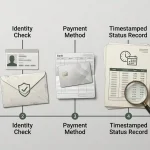
Verify a Licence
Find the legal name
Identify the operator’s exact legal company name and the regulator they claim issued the licence.
Check the public register
Search for the company in the regulator’s public register to match the name and licence number.
Confirm status and expiry
Verify that the registration status is current and the expiry date has not passed.
So, is a Curaçao casino safe? A matching register entry can help establish that a particular licence claim corresponds to a named company; it cannot settle every question about the site. Keep the task narrow: confirm the regulator, match the legal company name, and check the record’s status and expiry. If any part does not line up, step back before trusting the claim. Badges are easy. Matching details matter.
UK Players, Offshore Sites and the Risk of Access
A Curaçao casino may appear to be open to UK customers, then say otherwise when you try to register. That uncertainty is easy to miss if you judge access by a site’s homepage, a search result or the fact that its games load. None of those tells you whether the operator will accept a customer in Great Britain.
The practical question is whether the operator permits registration and real-money play from your location under its current terms. Look for a list of restricted countries and any wording about where the service is available. A country selector on a sign-up form can be a clue, but it is not a promise that an account will be accepted or remain usable. Terms can change, and a site may apply checks later in the account process.
There is a separate regulatory point. An operator serving customers in Great Britain needs a UK Gambling Commission licence, wherever the company itself is based. A Curaçao licence does not replace that requirement. Whether a site’s registration page happens to accept a British address is therefore not the same question as whether it is authorised to serve the British market.
I would not treat “UK players welcome” as proof of anything by itself. It is marketing language until the actual terms and the operator’s regulatory position support it. Nor does a working website settle the matter: access can depend on the operator’s rules and the location from which you are connecting. A page that opens today may not offer the same access tomorrow.
The same caution applies if you are looking for a Curaçao crypto casino. A cryptocurrency option concerns how a site handles payments; it does not establish that the operator accepts customers from Britain or is licensed to serve them there. Don’t let a payment logo answer an eligibility question.
If you are considering a site, check its current customer restrictions before sharing details or attempting to open an account. If the wording is unclear, treat that as uncertainty, not an invitation to guess. You are responsible for checking the laws that apply to you and understanding the implications of using an offshore gambling service. That is distinct from the practical matter of whether the operator will let you in.
Access is not approval. A register button, an English-language site or a crypto option cannot turn an offshore operator into a UK-licensed one.
Slots and Bonuses: Read the Terms Before You Play
Book of Dead and Starburst are familiar examples of online slots, but a game title tells you very little about the offer attached to it. On Curaçao casino sites, the bonus terms can matter more to your balance than the slot you choose. I used to see “free spins” and focus on the word free. That was the wrong bit to read first.
Attention: A large spin count can be less useful than it looks if winnings are capped or the offer expires quickly.
Start with the wagering requirement. It says how much qualifying play is needed before bonus-related winnings can be withdrawn. A specialist review of offshore offers reported welcome bonuses with requirements of 35x or more. That is a reported example, not a promise that every offer works the same way. The wording can also define what the multiplier applies to: the bonus, the deposit as well, or winnings from spins. Those differences change the calculation. Check the exact offer terms, not just the banner.
Free spins have their own rules. A specialist review described offers where winnings were subject to wagering of 30–50 times the winnings, alongside withdrawal caps of £5–£50. It also reported packages expiring within 24–72 hours. These are details from a review, not fixed conditions across Curaçao casino bonuses; an operator’s terms may differ or change. Still, they show why a large spin count can be less useful than it looks. If the spins expire before you use them, or winnings are capped, the headline number does not tell the whole story.
Look for the expiry time and when the clock starts. It may begin when the offer is claimed, rather than when you first open the game. Then check which slots qualify, whether each spin has a maximum stake, and whether a game contributes fully towards wagering. A slot you enjoy may be excluded or count differently. Annoying, but worth knowing before you opt in.
Also check whether accepting a bonus changes the rules for your balance. Some offers keep cash and bonus funds separate; others combine them, with restrictions applying until the wagering is complete. If the terms are hard to find or leave basic details unclear, I treat that as a reason to pause—not as a puzzle I need to solve after depositing.
The useful comparison is not “big bonus” against “small bonus”. It is the amount you can realistically use against the conditions attached. For Curacao casino slots, read the offer before you play, and decide whether the restrictions suit you. No banner is worth guessing.
What a Gaming Licence Does—and Does Not—Tell You
A licence badge can look like a short answer to a complicated question. I used to treat it that way: see a regulator’s name, assume the protections would be much the same wherever the casino was based. That was too simple. A licence identifies a regulatory framework; it does not, by itself, tell you what help is available if something goes wrong.
That distinction matters when comparing Curaçao-licensed sites with casinos operating under a UK Gambling Commission licence. The two should not be treated as interchangeable just because both display a licence claim. In Britain, the UKGC framework sets the rules for operators serving the market. A foreign licence does not turn a non-UK-regulated casino into a UKGC-licensed one, or automatically give its customers the same complaint routes.
It is also worth separating Curaçao from Anjouan rather than using “offshore licence” as if it described one common system. The details and protections depend on the relevant regulator and framework. In particular, the limits set out for an Anjouan casino licence should not be assumed to describe every Curaçao licence—or vice versa.
Under Anjouan’s framework, casinos are not required to have their random number generators tested, undergo audits, or keep player funds segregated. Those omissions matter because the licence alone does not establish that independent checks have taken place or that player balances are protected if the operator fails. A badge is not proof of those safeguards.
UKGC Licence
Provides a framework of rules for operators and established complaint routes for players in the UK.
Curaçao Licence
Identifies a specific regulatory framework but does not automatically provide UK-style protections.
Anjouan Licence
Does not require RNG testing, fund segregation, or independent dispute-resolution services.
The complaint route is another important difference. Anjouan’s authority does not take up, mediate or decide individual player complaints. Anjouan-licensed casinos also do not provide an independent dispute-resolution route comparable to the approved services available under UK regulation. That does not tell you how a particular dispute will end; it tells you not to assume that a UK-style external route is waiting in the background.
So, if you are asking whether a Curaçao casino is legal in the UK, a licence from another jurisdiction does not answer that by itself. Nor can a Curaçao gaming licence, or a rating attached to a casino, stand in for the protections tied to UK regulation. Treat the licence as one piece of information, not a promise about testing, funds or complaints.
“Licensed” sounds reassuring. It is not the whole story. The practical question is what the regulator and the operator are actually required to do—and what options you have if they do not.
Why Offshore Licence Checks Need More Than a Badge
A licence badge can look reassuring, but it does not answer the questions that matter when something goes wrong. When I assess a claim about a Curaçao casino licence, I separate the label on the page from the protections the operator actually provides. And I don’t assume rules attached to one jurisdiction apply to another.
Start with the money. Are player funds kept separate from the operator’s own business funds? If the operator fails, that distinction can matter. Under the Anjouan framework, casinos are not guaranteed to segregate player funds; players may instead rank as unsecured creditors. In plain English, you could be owed money without having a protected pot of player funds set aside for repayment. Check what the operator says about fund handling, and don’t treat silence or a vague promise as proof of protection.
Then look at what happens if you and the casino disagree. Is there an independent dispute-resolution service you can approach, or does the complaint stay between you and the operator? Anjouan-licensed casinos do not provide an independent route comparable to UK Gambling Commission-approved ADR services. The Anjouan authority does not adjudicate player complaints either. That leaves the operator’s own complaint process doing much of the work. Not much of a backstop.
Read the complaint policy before depositing, not after a disputed balance appears. Under Anjouan’s framework, operators must respond to complaints within 30 calendar days. That is a response rule, not a promise that the outcome will favour you, that the dispute will be settled, or that you will recover money. Keep copies of messages, transaction records and the version of the terms you accepted; a clear paper trail is more useful than relying on a chat conversation you cannot retrieve.
These checks are worth making whether a site presents itself as a Curaçao-licensed casino or promotes another licence. Don’t blur the jurisdictions: the specific protections described here concern Anjouan, not every offshore licence. If the operator cannot explain how funds are handled, who reviews disputes, and how complaints are processed, the badge has not filled in those gaps. I’d count that uncertainty as part of the risk, not as a minor detail.
Offshore Licence Check
- Verify if player funds are kept separate from business funds
- Identify if an independent dispute-resolution service exists
- Review the operator’s complaint policy and response timelines
- Check the requirements for identity verification before withdrawing
Payments and Withdrawals: Expect Terms, Delays and Checks
A deposit button tells you how money can go in, not necessarily how it can come back out. Offshore sites may accept credit cards, e-wallets, bank transfers and cryptocurrency, sometimes using payment processors you may not recognise. Skrill, Neteller and Trustly are names people may look for, but seeing a familiar method advertised does not prove it is available for every account or withdrawal.
I learned to check the cashier before treating a payment option as useful. Read the withdrawal terms, not just the deposit page: an operator may require you to withdraw through a particular route, and a method available for deposits may not be offered for payouts. Crypto can also involve a separate wallet and exchange process, so the displayed balance is not the same thing as money in your bank account.
Published time estimates do not settle the matter. One account puts withdrawals at non-GamStop casinos in a range from 24 hours to five business days, depending on the method; another warns that a payout can take three or four weeks. Those estimates conflict, and there may be no regulatory clock forcing an operator to meet the quicker one. Treat a stated processing time as an expectation in the terms, not a promise. Delays matter.
The withdrawal rules can also shape how quickly you can access a larger win. Some non-UK-regulated casinos set daily, weekly or monthly caps, which can mean receiving money in instalments rather than in one payment. A specialist review has reported such limits at particular operators; that is a reason to inspect the current cashier terms, not evidence that every site applies them.
Verification can add another pause. A site may ask for identity or payment documents before releasing funds, and a specialist review has described cases involving notarised documents or video calls. I would want to know what documents may be requested and when, before depositing—not after a withdrawal is already pending.
Keep copies of the payment terms and any confirmation screens. If the cashier, account rules and support replies do not agree, you may have trouble working out what to expect. Familiar logo, unfamiliar rules.
Trustworthy Online Casinos in the UK: What to Check
Are Curaçao Casinos Safe or Legit? The Protection Gap
“Legit” and “safe” are not the same thing. A site may be a real business that accepts bets and pays some customers, yet still leave you with fewer protections if something goes wrong. I learned to distrust the tidy badge-and-banner version of safety. What matters is what happens when you need help, want to pause, or have to hand over personal information.
Non-UK-regulated casinos may apply less demanding standards for responsible gambling and data protection than operators licensed by the UK Gambling Commission. That does not prove that every site will misuse your information or treat you badly. It does mean you should not assume UK-level safeguards apply. Read the privacy terms to understand what information the operator collects and how it says it will use it. If those terms are vague, that uncertainty is part of the risk.
The practical gap is significant. By playing at an offshore casino, you give up access to the UK’s Financial Ombudsman Service and to mandatory responsible-gambling tools available through the UK system. There may be no equivalent route or set of tools waiting if you need to restrict your play or challenge how you have been treated. That matters most when you are already under pressure.
I also treat demands for unusually burdensome identity checks as a warning sign, not routine reassurance. A specialist review has reported cases where offshore operators sought notarised documents or video calls before withdrawals. That is not evidence that every operator does this, but it is a reminder that a request for more paperwork can become another obstacle when you are trying to access your money.
So, are Curaçao casinos regulated, safe or legitimate? Those are different questions, and a licence claim alone cannot settle whether a particular operator will protect your data or handle a complaint fairly. I would weigh the missing UK safeguards before depositing, not after a problem appears. If losing access to familiar complaint channels or mandatory tools would leave you uneasy, that unease is worth listening to.
Are sites that are not on GamStop legal for players in the UK to access?
Yes, UK law does not explicitly prohibit you from using gambling services licensed in another country, and players do not commit a criminal offence by gambling on an unlicensed site. However, operators serving customers in Great Britain need a UK Gambling Commission licence.
Are gaming sites not on GamStop permitted for UK players?
Yes, you are not committing a criminal offence by using a site that is not on GamStop. But an operator serving customers in Great Britain must hold a UK Gambling Commission licence.
What is the biggest risk of playing at a non UK regulated casino?
You have fewer protections if something goes wrong: you may lack access to UK-approved independent dispute resolution and the Financial Ombudsman Service. At Anjouan-licensed casinos, player funds are not guaranteed to be segregated, so you may be an unsecured creditor if the operator fails.
Are Anjouan casinos connected to the GamStop self-exclusion scheme?
No, Anjouan-licensed casinos are not required to integrate GAMSTOP. A GamStop exclusion therefore does not block you from using those sites.
What happens if I have a dispute with an Anjouan-licensed casino as a UK player?
The Anjouan authority does not handle or decide player complaints, and these casinos do not provide an independent dispute-resolution route comparable to UKGC-approved services. The operator must respond to your complaint within 30 calendar days.
Safety

Anjouan Casino Licence in the UK: What It Means
An Anjouan licence reflects the operator’s claimed approval under its own framework, not permission to...

Foreign Casinos for UK Players: Rules and Risks
Foreign casinos accepting UK customers sit outside UKGC regulation, which can affect player protections, bonuses,...
International Casinos for UK Players: Rules and Risks
Foreign licences, bonus terms, player safeguards and payment delays all affect how offshore casinos differ...

Offshore casino sites in the UK: licence checks
An offshore licence is not a substitute for UKGC approval, and payment, bonus and verification...

Offshore casinos for UK players: what to check
A practical look at licensing, promotions, crypto and withdrawals, with a focus on what changes...

British Casinos Not on GamStop? What the Label Means
The label describes a casino’s distance from GamStop, not its safety, UK status or equivalent...

Casino sites not on GamStop: what UK players should know
Explore how operator participation, licensing, payment claims and bonus rules relate to the limits of...

Casino Without a Swedish Licence: UK Rules Explained
A casino’s location or international label does not establish its licensing status or whether it...

Casinos That Bypass GamStop: What to Know
GamStop applies to UKGC-licensed operators, while casinos outside that system may offer different licensing, support...

Gibraltar Casino Licence in the UK: What It Means
A Gibraltar regulatory base is not a substitute for the UK Gambling Commission licence required...

Merkur Casino Online UK: Games, Licences and Checks
Merkur branding does not identify a casino or confirm its games, so check the operator,...

Trustworthy Online Casinos in the UK: What to Check
Trust depends on the operator’s licence and terms, while even regulated sites cannot guarantee a...

Non-Gamban casinos in the UK: what it means
Gamban only indicates whether access is blocked; it does not confirm a casino’s safety, suitability...

Non-GamStop Curaçao Casino Sites: UK Licence Checks
A licence badge is not proof of UK authorisation or participation in the UK self-exclusion...

Non-GamStop European Casinos: UK Rules Explained
European branding does not establish UK licensing or GamStop participation; the distinction matters when exclusion...

Non-UK Licence Casinos: What the Licence Means
A licence identifies the regulator and oversight system, but non-UK authorisation does not mean the...
Non-UK-Registered Casinos: What the Label Means
The guide separates a casino’s licensing jurisdiction from UKGC oversight and examines protections, payments and...

Non-UK-Regulated Casinos: Licences and Risks
A licence applies under the rules of its jurisdiction; UKGC permission is required for operators...

Non-UKGC-Licensed Casinos: Rules and Risks
A look at how non-UKGC casinos are licensed, what protections may be missing and what...

Online Casinos with Malta MGA Licences in the UK
An MGA licence sets obligations for operators, but does not by itself establish that a...

Online slots not on GamStop: what it means
GamStop participation depends on a casino’s regulatory position, which can affect the protections and checks...

Safe Online Casinos in the UK: Checks Before You Play
A practical look at operator information, terms, support and payments when assessing whether a casino...

Casinos Not on GamStop UK: What Trust Really Means
A clear-eyed guide to licensing, gambling safeguards, bonuses and withdrawals at casinos outside the UKGC...

Trusted UK Casinos in 2026: Licence Checks
A practical check starts with UKGC permission, then looks at player safeguards, bonus terms, support...
USA Casinos for UK Players: Licensing and Risks
A practical guide to licensing status, cash-out routes, ownership ties and the limits of offshore...
VPN-Friendly Casinos in the UK: Rules and Risks
Understand how casino VPN policies differ from licensing, and what offshore sites may mean for...