Casinos That Accept E-Checks in the UK: How to Check
 Available in GB

Payment labels can be ambiguous, so availability and the deposit and withdrawal route need checking in the operator’s cashier.
Table of Contents
- Does “E-check” Mean the Same Thing in a UK Casino Cashier?
- How to Check Whether a Casino Accepts Your Payment Method
- Check Both Sides of the Transaction Before Depositing
- Deposits, Minimums and Limits: What the Cashier Can Tell You
- When an “Instant” Deposit Is Only Half the Story
- A Sensible Way to Compare E-Check Casino Options
- Using a Casino App Without Guessing About Payment Support
- Payment Security: Keep the Account and Payment Route Aligned
- E-Check Withdrawals: Confirm the Route and Allow for Checks
- Payments
Does “E-check” Mean the Same Thing in a UK Casino Cashier?
“E-check” can sound like a clear payment category, but the label alone does not tell you what a UK casino means by it. I would not assume it refers to a standard UK payment option, or that a site accepts it just because the phrase appears in a guide or on a search result.
That distinction matters. Payment names can be used loosely, and a general description may not match the options available to a UK customer. I can’t point you to a UK casino and say it accepts e-checks without confirmation from that operator’s current cashier. The term is a starting point for checking, not proof that a deposit route is available.
The cashier is the useful reality check. Once you are logged in, look at the payment methods the operator actually presents for your account. If “e-check” is listed, read the accompanying details rather than treating the name as self-explanatory. If it is not listed, don’t infer that another option with a vaguely similar description is the same thing.
If you’re looking for a UK casino that accepts echeck, check the available payment methods directly before choosing. The details here provide a payout-speed reference, but don’t confirm echeck availability.
1. BeOnBet
Payout speed: 1-3 business days BeOnBet has a stated payout speed of 1–3 business days. You’ll need to check directly whether echeck is available.
2. EvoSpin
Payout speed: 1-3 business days EvoSpin has a stated payout speed of 1–3 business days. You’ll need to check directly whether echeck is available.
3. Revery Play
Payout speed: 1-3 business days Revery Play has a stated payout speed of 1–3 business days. You’ll need to check directly whether echeck is available.
4. NightLuck
Payout speed: 1-3 business days NightLuck has a stated payout speed of 1–3 business days. You’ll need to check directly whether echeck is available.
5. Zombillion
Payout speed: 1-3 business days Zombillion has a stated payout speed of 1–3 business days. You’ll need to check directly whether echeck is available.
6. Dieselwin
Payout speed: 1-3 business days Dieselwin has a stated payout speed of 1–3 business days. You’ll need to check directly whether echeck is available.
7. SpinFormula
Payout speed: 1-3 business days SpinFormula has a stated payout speed of 1–3 business days. You’ll need to check directly whether echeck is available.
8. NightWin
Payout speed: 1-3 business days NightWin has a stated payout speed of 1–3 business days. You’ll need to check directly whether echeck is available.
9. Britsino
Payout speed: 1-3 business days Britsino has a stated payout speed of 1–3 business days. You’ll need to check directly whether echeck is available.
10. WinBeast
Payout speed: 1-3 business days WinBeast has a stated payout speed of 1–3 business days. You’ll need to check directly whether echeck is available.
Even familiar names are not a guarantee of current availability. A specialist review may list Visa or Mastercard, for instance, but that does not establish that either card product is available to you at that moment. The cashier is where to confirm what the operator currently supports and which products it will accept.
I’ve learned to be wary of tidy labels. “Accepted” can look definitive on a general page, while the actual choices shown to a particular customer may be narrower. So, if you are looking for an e-check option, keep the question precise: does this UK casino’s cashier currently offer a payment method identified as e-check? If the answer is unclear, ask the operator before relying on it.
No guesswork.
How to Check Whether a Casino Accepts Your Payment Method
A payment method counts as available only when you can find it in that casino’s own cashier and meet its conditions. A page describing an e-check option, or a payment logo elsewhere on the site, is not enough to show that it is available to every UK customer. I’ve learned to treat payment labels as a starting point, not a promise.
For e-checks, check the cashier directly rather than relying on a general claim that a casino takes them. The term can be used differently in different payment contexts, so look for the exact option the operator presents and any explanation beside it. If you cannot find an e-check choice, or the wording does not make clear what it means, ask the operator before entering payment details. Don’t substitute a different bank payment method on the assumption that it works the same way.
Casinos That Accept Tether in the UK: Payment Checks
Check the cashier, not just the payment logos
A site may show payment brands on an information page, but the options displayed to you in the cashier are the practical test. Payment availability can depend on the operator and the account, and a method mentioned in a general guide may not appear when you sign in. Even a familiar name is not enough to confirm that your particular card or payment product will work.
A specialist review may list Visa and Mastercard as options, but that does not establish that either is currently available to every UK player or that every card product is eligible. Open the cashier and check what it actually offers. If you are using a card, distinguish debit from credit: credit-card payments for gambling are prohibited at UK-licensed casinos. A logo alone does not tell you which card types the operator accepts.
This is a small check, but it can save a frustrating detour. I used to assume that a familiar logo meant “ready to use”. It doesn’t.
Match the option to your own payment product
Read the method name and its conditions carefully. “Bank transfer”, an e-wallet, a prepaid voucher and a card are not interchangeable just because they all move money. If the cashier names a provider you do not use, or describes a route you cannot identify, pause and check the operator’s help information. If that still leaves you guessing, contact support with a plain question: is this exact payment product available to customers in the UK?
Credit Card Ban
Credit-card payments for gambling are prohibited at UK-licensed casinos, including funds routed through a money service business or wallets.
For cards, confirm that the option is for a debit card, not a credit card. UK rules prohibit credit-card payments for gambling, including when credit-card funds are routed through a money service business. A wallet route is not a workaround if the wallet allows credit-card funds to be used for gambling. If you are unsure how your card or wallet is funded, check with the provider rather than assuming the casino will accept it.
The same care applies to other named methods. A casino’s general payment page may mention several brands, but only the cashier can show which choices are currently presented to your account. If your preferred method is missing, don’t infer that another method with a similar description will be compatible.
Check the account currency before proceeding
A payment option can appear in the cashier while the account is set to a currency that does not suit you. A specialist review may describe GBP support, but your own account currency still needs checking before your first transaction. Look for the currency shown in the account or cashier and confirm that it is the one you intend to use. Otherwise, a conversion may be involved.
That check is separate from whether a particular payment method is listed. First establish that the option is actually available; then confirm the currency displayed for your account. If either point is unclear, ask support before proceeding. There is no value in guessing and finding out only after you have started a transaction.
Casinos That Accept Ethereum in the UK
Keep the decision narrow
When you are checking compatibility, answer just these questions: is the exact method named in the cashier, is your specific payment product eligible, and is the account currency clear? For an e-check, ask the operator to confirm the exact route rather than treating the phrase as proof that a compatible option exists. Don’t rely on a list of payment logos or on wording copied from a general casino page.
This check is about whether you can use a method at all. It does not tell you what happens if you later want to withdraw, and seeing an option in one part of the cashier does not settle that separate issue. Keep those questions separate; it makes the decision less muddled.
Check Both Sides of the Transaction Before Depositing
A payment option appearing in a casino’s deposit menu answers one question: can you try to fund your account with it? It does not, by itself, tell you whether you can receive a withdrawal through the same method. I used to treat those as two sides of one button. They are separate checks.
That distinction matters if you are looking for an e-check option. A cashier label or a page mentioning a payment method is not enough to establish that it works for both deposits and withdrawals. I would want the operator to state clearly what the method can do before putting money through it. If the withdrawal side is unclear, pause there rather than assuming it will sort itself out later.
Deposit support is not payout support
Casinos can make a method available for deposits without making it available for withdrawals. Paysafecard, for instance, is a deposit-only voucher. That is a useful reminder: seeing a payment brand in a cashier does not automatically mean it provides a complete route in both directions.
Some payment methods, such as Paysafecard, are deposit-only vouchers and cannot be used for withdrawals.
For any method you are considering, look for explicit wording about both functions. Is it listed under deposits, withdrawals, or both? Does the operator describe it as deposit-only? Are there conditions attached to receiving funds through it? A general page that says a casino “accepts” a method may not answer those questions. The wording can be broad; the actual cashier options are more specific.
I would also check the casino’s payment terms, not just a logo or a short promotional line. If those pages do not make the withdrawal position clear, ask customer support before depositing and keep the answer. A direct response that names the method and confirms its withdrawal status is more useful than a generic assurance that the casino supports online payments.
No guesswork.
Closed-loop rules can shape the route
UK anti-money laundering rules commonly mean that a payout is returned to the original payment source. Returning funds to that source is also a familiar anti-fraud control. So a method that accepts your deposit may be relevant to how a later payout is handled—but that does not mean every deposit method can receive one.
If the original route cannot be used for a payout, the casino may offer an alternative. That alternative can involve additional verification. This is why I would not deposit first and only then ask whether the route works both ways. It is easier to understand the conditions before the transaction than to discover them while trying to access funds.
Keep the check narrow and practical: confirm that the method can be used for deposits, then confirm whether it can also be used for withdrawals under the casino’s rules. If the operator says a different route may be needed, ask what that means for your account before proceeding. Don’t read “accepted” as “available for everything”.
Casinos That Accept Click2Pay in the UK: What to Check
Be precise about e-check claims
The same care applies when a casino page describes itself as accepting e-checks. That label does not, on its own, establish whether the option is available to a UK customer, whether it is a deposit route only, or whether it can also be used for a payout. Those are separate details to confirm with the operator.
I would not call a site an e-check option for a complete payment journey based only on a deposit mention. The useful confirmation is not just “yes, we accept it”; it is whether the method is available for the transaction you intend to make, including withdrawals. If the reply only confirms deposits, treat it as deposit support and nothing more.
This is not about predicting how quickly money will arrive or which payout route is fastest. It is simply about knowing whether the payment method covers both ends at all. Check the cashier and terms, and ask support if they leave a gap. One clear answer now can save an avoidable surprise later.
Deposits, Minimums and Limits: What the Cashier Can Tell You
A payment option can look workable until you reach the amount box. That is where the cashier becomes more useful than a headline: it shows the minimum for the selected route and, where the operator displays them, the maximums that apply. I’d check those before deciding how much to deposit, rather than assuming the same figures apply across every method or account.
Casinos That Accept E-cheques in the UK
A specialist review gives a broad indication that minimum deposits may fall somewhere between £10 and £20, depending on the payment method. Treat that as a rough pointer from that kind of source, not a promise about a particular casino or an e-check deposit. The figure that matters is the one the cashier presents for your account and chosen method at the time you are about to pay.
That small distinction can save a frustrating loop. If the amount you intended to deposit sits below the displayed minimum, you may have to change it or choose another route. If it is above a transaction cap, you may need to enter a smaller amount. Neither outcome tells you whether the method is right for you; it just shows whether the amount fits the rules currently shown.
Check more than the per-payment maximum
Maximum deposit limits can be set per transaction, per day or per month. They can also vary according to the payment method and account status. So a single maximum shown beside the deposit box may not tell the whole story: look for any separate daily or monthly cap, and check whether the cashier explains what happens when a limit has already been reached.
I used to think “maximum deposit” meant one clear ceiling. It can be less tidy than that. A payment route may have its own cap, while the account may also have a broader limit. If the cashier gives separate figures, keep them separate in your head: one concerns the individual payment, another can restrict the total deposited across a period.
Casinos that accept Boku in the UK: what to check
Account status matters too. If a limit changes after account checks or other account activity, an old note or screenshot may no longer reflect what you can deposit now. Use the live cashier, not a remembered figure from a review. And if the terms are unclear, ask the operator before trying to work around a rejected amount.
Set a financial limit before depositing
For new customers, UKGC rules require remote gambling operators to prompt them to set a financial limit before their first deposit. Operators must also make account-level limit controls accessible. That is not just another payment cap to skim past. It gives you a way to decide in advance how much you are comfortable putting into the account, rather than making that decision on impulse while the deposit screen is open.
I find it easier to make that call before choosing a payment method. The cashier’s minimum and maximum tell you what the transaction permits; your account-level limit is about what you have chosen for yourself. They are different controls. A payment could fall within the cashier’s range and still be beyond the limit you set.
Take a moment to locate the controls in the account area and read what the operator says about applying them. If you set a limit, check that the account confirms it. Don’t assume a value has taken effect just because you clicked a button; look for a saved setting or confirmation. No drama. Just check.
Make the amount fit the rules, not the other way round
Before submitting, compare the amount you plan to deposit with the displayed minimum, any per-transaction maximum, and the account controls you have set. If the cashier also presents a daily or monthly maximum, account for that too. A rejected payment can be a sign that the amount does not fit one of these conditions, rather than evidence that the payment option itself is unavailable.
Do
- Compare your planned deposit with the displayed minimum
- Check for per-transaction, daily, or monthly maximums
- Respect your own account-level financial limits
Don’t
- Raise a deposit amount just to clear a minimum
- Split large deposits to bypass a cap
- Rely on general estimates to plan a deposit
For someone looking specifically for an e-check deposit, the same amount checks apply only if that route is actually offered in the cashier. Seeing a payment label is not a reason to assume its minimum or limits match another method. Read the figures beside the selected option, and avoid relying on a general estimate to plan a deposit.
It can be tempting to raise an amount just to clear a minimum, or split a larger deposit into several transactions to get around a cap. I wouldn’t treat either as an automatic fix. First check the operator’s terms and the account controls; a limit is there to be respected, not guessed around. If the permitted amount doesn’t suit your budget, stop and reconsider rather than forcing the transaction.
The useful takeaway is plain: the cashier can show what a particular deposit allows, while your account controls help keep the amount within the boundary you chose. Check both before paying. No guesswork needed.
When an “Instant” Deposit Is Only Half the Story
“Instant” sounds like a promise about the whole payment, but it may describe only the moment money reaches your casino balance. A specialist review notes that a card deposit can arrive instantly while a payout takes several business days. That is not a contradiction: paying in and receiving money back are separate stages, and the word on a deposit button does not tell you how quickly the other stage will run.
Casinos That Accept USDC in the UK: What to Check
I used to read a quick deposit as a sign that the money would move just as quickly in both directions. It was an easy assumption to make—and a poor one to budget around. A balance appearing on screen tells you that the deposit has been credited. It does not mean a withdrawal has been approved, sent or received at the same pace.
What “instant” actually tells you
For a deposit, “instant” generally refers to how soon the casino credits the payment after you authorise it. It is not a useful promise about the entire time your money may be away from your bank account. A payout has its own steps, so a quick start does not settle how long the return journey takes.
That distinction matters when you are choosing a payment method for convenience. If you need funds to be available again promptly, the deposit speed alone is the wrong measure. Look at the casino’s stated payout timing as a separate piece of information, and treat it as an estimate rather than a mirror image of the deposit experience.
A fast balance update. A different clock.
Bank payments can be quick too
Open banking and bank transfers can provide instant deposits and fast withdrawals at many sites, according to a specialist review. That is useful context if you are comparing ways to move money, but it is not a guarantee that every site offers the same service or that every transfer will move at the same pace.
“Bank transfer” can sound like one uniform route. In practice, what matters is the option actually presented to you and the timing the casino gives for that specific route. The broad description does not tell you whether a particular transaction will be instant, nor does it make the deposit and withdrawal clocks identical.
Attention: An "instant" label usually describes the deposit speed only and is not a guarantee that payouts will be processed at the same pace.
The same caution applies to a payment labelled “instant”. Read it as a description of the deposit leg unless the site clearly states otherwise. A brief label can be true and still leave out the part you care about most.
Don’t let the label do the thinking
When you see an e-check described as fast, separate the claim into two questions: how quickly is a deposit credited, and how long might a payout take? The word “instant” on its own answers neither question fully. It may refer to authorisation, processing or the casino balance update; those are not necessarily the same event.
I would not treat the speed of a card, open banking or bank transfer as evidence about an e-check. Payment routes are not interchangeable just because they all move money electronically. A speed claim needs to apply to the exact method and transaction you intend to use.
This is where promotional wording can trip you up. “Fast” may mean one stage is quick; it does not automatically mean the whole journey is. If timing matters, keep the deposit estimate and payout estimate separate in your head. No clever wording can make them the same thing.
Ukash casinos in the UK: availability and alternatives
Plan around the slower stage
If you are depositing for a particular reason, think beyond the moment the funds appear. A payment may be credited quickly, while getting money back can take longer. Avoid counting on a fast deposit as proof that a payout will be available on your own schedule.
There is no need to assume that every payment will be slow, either. The point is simply that a quick deposit and a quick withdrawal are different claims. Open banking and bank transfers may offer speed at both ends at many sites, while a card deposit may be immediate even when its payout takes several business days, as a specialist review reports. Those descriptions are useful starting points, not a universal timetable.
For e-checks, the label alone is especially thin evidence. Don’t infer instant deposits from the name of the method or from the way another payment route behaves. Treat the speed of the deposit as one part of the decision, and the return journey as another.
Fast in. Not necessarily fast out.
Casinos That Accept Interac in the UK
A Sensible Way to Compare E-Check Casino Options
I would not pick a casino payment route because a page calls it “cheap”. That word can describe one visible charge while leaving the rest of the cost out of view. For an e-check route, compare what the cashier and payment provider actually show before you decide whether it suits you. The name alone tells you nothing about the total cost.
A specialist payment review identifies several places a charge can come from: the casino, the payment provider, your bank or card issuer, currency conversion, and the payment network. Not every route will involve each one, and the amounts can depend on the transaction. So I’d look at the terms attached to the specific option in the cashier, then check the provider’s own fee information where it applies. A fee-free label is not the same as a fee-free transaction.
Look beyond the obvious charge
The flat fee is easy to spot. The exchange rate can be harder. A specialist payment review warns that the conversion spread may cost more than a clearly stated fee, so I would not compare routes by the headline charge alone. Check what currency the casino account uses and what currency the payment route will charge or transfer in. If those do not match, conversion may enter the calculation.
Casinos That Accept Dogecoin in the UK
Specialist review pages list GBP as a supported account currency, but that does not settle what a particular cashier will offer you. Confirm the account currency before your first transaction. If you find it is not set to GBP, work out whether the casino, provider or bank will convert the funds and what rate or margin applies. It is a small check that can prevent a cost you did not expect.
When comparing two routes, look at the same transaction amount and count every cost that applies: casino charge, provider charge, bank or issuer fee, conversion spread and network fee. A route with no visible casino fee may still cost more after conversion. There is no single cheapest method for every player or transaction.
Compare the route, not the sales pitch
I’d make a short comparison using the details actually shown to me:
- Currency: What currency is the casino account in, and will the payment arrive in that currency?
- Visible fees: Does the cashier or provider list a charge for this route?
- Conversion: Is an exchange rate or conversion margin involved?
- Other charges: Could the bank, issuer or network apply a separate fee?
Keep the wording precise. If the cashier says a charge may apply, treat it as a possible cost and check who sets it. If the rate is not displayed until later in the process, do not assume it matches a published market rate. The useful comparison is the amount you expect to leave your account against the amount credited, after any stated deductions—not the label beside the payment button.
That comparison is about cost, not a recommendation to use a particular casino or payment method. Payment options and terms can change, so check again when you are ready to make a transaction rather than relying on an old description. An e-check label, by itself, does not tell you whether the route is available to your account or what it will cost.
I’ve learned to distrust the neat “low-cost” tag until I can see the currency and charges together. If those details are unclear, pause and ask the casino or provider before proceeding. No guesswork.
Using a Casino App Without Guessing About Payment Support
A casino app can make the cashier feel like a settled part of the setup: open it, tap deposit, and expect the same options you saw mentioned elsewhere. I’ve learned not to make that leap. Payment support needs checking in the app you intend to use, not inferred from a general payment list or a page describing the casino.
Casinos That Accept MuchBetter in the UK: Payment Checks
If you’re looking for an e-check casino app in the UK, open the app’s cashier and inspect the payment methods it actually presents for your account. Don’t treat an e-check label in a review, a search result or a casino’s general information as confirmation that the option is available in the app.
There’s another small trap: a payment brand can appear in a specialist review without telling you whether it works for your particular account or card product. Visa and Mastercard are mentioned on casino information pages, but current UK availability and eligibility still need checking in the cashier. The app’s own options are the useful evidence; a familiar logo elsewhere is not.
I also check that I’m in the right account before drawing conclusions from what the cashier shows. An app may ask you to sign in before displaying payment choices, and what you see after signing in is more relevant than a generic page. If a method isn’t listed, I don’t assume that installing a different version of the app will make it appear. I’d check the casino’s own help information or ask its support team whether the method is supported for UK customers through that app.
That’s not glamorous. It is better than entering payment details and finding out late that the route you expected is not offered. For e-checks in particular, keep the distinction simple: a casino having an app does not establish that the app accepts e-checks. Check the cashier itself, and don’t deposit until the displayed option matches the payment route you meant to use.
Casinos That Accept E-Wallets in the UK
Payment Security: Keep the Account and Payment Route Aligned
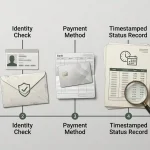
When I’m checking e-check casino payments in the UK, I pay attention to whose name is attached to the casino account and whose name is attached to the payment route. If those details point to different people, a straightforward transaction can become harder to resolve. Matching ownership details helps avoid that particular source of friction; it does not guarantee that a payment will be accepted or make an account immune to fraud.
The cleanest approach is often to use one named account consistently for deposits and withdrawals. That gives the casino and payment provider a clearer connection between the customer and the funds. I’ve learned not to treat a payment option as a workaround for an account detail that does not match. “Easy” can mean one extra complication later.
Before using a route, check that the account is in your own name and that the details you provide to the casino are accurate. If you share access to a payment account, or are considering a route held by someone else, pause and check the operator’s terms rather than assuming it will pass. Basic ownership checks can matter even when the payment itself appears to go through.
Keep access details private, too. A matching name is about reducing avoidable ownership questions, not a substitute for protecting your login or checking activity on your account. I keep those ideas separate: identity alignment helps make the route clearer; it is not a security guarantee.
That’s the sensible baseline. No clever detour.
Casinos That Accept iDEAL in the UK: Payment Checks
E-Check Withdrawals: Confirm the Route and Allow for Checks
An e-check appearing beside a deposit option does not tell you how a payout would work. Before relying on it, look for a withdrawal route shown for your account, or ask the casino how funds deposited that way can be returned. Payment options can differ between the deposit and withdrawal screens.
UK anti-money laundering controls commonly direct a payout back to the original payment source. That is part of the closed-loop approach: money goes back through the route used to fund the account. If that route cannot receive a withdrawal, the casino may offer an alternative, but expect it to request additional verification before sending funds elsewhere. A name mismatch can add avoidable friction, so keep the casino account and payment details aligned.
Then there is the waiting time. A specialist review describes withdrawal processing as including the casino’s own approval, not just the time taken by the payment provider to deliver funds. That distinction matters: a payout marked as requested may still be under review. The same kind of review notes that a first withdrawal can take longer when KYC checks are still being completed. The casino’s approval process and whether your account is fully verified both affect the wait.
I used to read a payment label as a promise about the whole journey. It isn’t. Check the cashier’s withdrawal instructions and the casino’s stated processing information before treating any e-check route as a workable payout method. If the route is unclear, get the answer from the operator before depositing rather than trying to sort it out after a win.
Slow part first.
What is the fastest withdrawal method for UK casinos?
PayPal, open banking and debit cards linked to fast payout systems are generally among the quickest options. The casino’s approval process and your verification status also affect how soon you receive the money.
Why must withdrawals return to the deposit method?
Returning funds to the original payment source is a common anti-fraud and anti-money-laundering control. An alternative payout route may require additional verification.
Why can a fast payout casino still delay my withdrawal?
The casino must approve the withdrawal, and first payouts can take longer while verification is completed. An account that is not fully verified can also slow payment.
Which method has the lowest fees?
There is no universally cheapest method. Compare casino and provider charges, bank or issuer fees, currency conversion spreads and any network costs for your transaction.
Are Visa and Mastercard deposits definitely debit cards?
No. A Visa or Mastercard logo does not confirm which card products the cashier accepts, so check the listed option and its conditions. UK-licensed casinos cannot accept credit-card payments for gambling.
Do UK casino withdrawals require verification?
Verification may be required, especially for a first withdrawal, and payouts can take longer while it is completed. Keeping your account details and payment method in your own name can help avoid basic ownership-related delays.
What is the current minimum deposit?
Minimum deposits usually start at £10–£20, depending on the payment method.
Payments

Anonymous Crypto Casinos in the UK: What to Know
A practical look at crypto payments, verification requests, bonus terms and the UK rules that...

BNB Casino Comparison UK: Payments and Safety
BNB availability can differ from general crypto claims; UK-licensed operators are prohibited from accepting cryptocurrency....

Bitcoin Cash casino comparison for the UK
The guide separates BCH payment access from UK licensing and explains what to check before...
Cardano ADA Casino Comparison: UK Rules Explained
UK rules separate licensed gambling from offshore sites advertising ADA payments; a payment claim does...

UK Casino Sites That Accept Credit Cards: The Rules
The UK credit-card gambling ban applies to online casino deposits, even when a cashier displays...

UK Casinos That Accept Debit Cards: Deposits
Card deposits pass through the casino, its payment processor and the card issuer, so acceptance...
Casino Sites That Accept EcoPayz in the UK
A payment logo can be outdated; confirm whether the UK cashier supports Payz and how...

Casino Sites That Accept Jeton in the UK
Jeton availability can vary by casino and account, so verify the cashier listing and payment...

UK casino sites that accept Skrill: payment guide
Skrill may be listed as a deposit route, but availability, account suitability and casino rules...

Casinos That Accept Apple Pay in the UK: What to Check
Boku charges a mobile account or prepaid phone credit; that is not an Apple Pay...

Casinos That Accept AstroPay in the UK: What to Check
Casino payment availability, bonus eligibility and withdrawal handling can differ, so each needs checking separately....

Casinos accepting bank cheques in the UK: payment facts
Boku and similar services charge through a mobile account, so they do not confirm that...

Casinos That Accept Bank Transfers in the UK
Payment labels can be misleading: bank transfers, Boku and other pay-by-phone options follow different routes...

Casinos That Accept Bitcoin in the UK: What to Check
Bitcoin labels can be misleading: payment availability, bonus conditions, conversion costs and withdrawal checks all...
Casinos that accept Boku in the UK: what to check
Boku availability depends on each casino, and using it to deposit does not mean it...

Casinos That Accept CashToCode in the UK
CashToCode availability can vary by account, while deposit support does not necessarily confirm how withdrawals...

Casinos That Accept Citadel in the UK
Payment availability can depend on the casino account and transaction, so a general mention of...

Casinos That Accept Click2Pay in the UK: What to Check
Payment availability can vary by account, and a listed deposit method does not guarantee that...

Casinos That Accept ClickandBuy in the UK
A payment method may appear on a general page yet be unavailable for a specific...
Casinos That Accept Debit Cards in the UK
See how card deposits and withdrawals work, what to check in the cashier, and why...

Diners Club at UK Casinos: Deposit Rules
UK rules bar credit-card gambling deposits, while card-brand acceptance and individual product eligibility are separate...

Casinos That Accept Dogecoin in the UK
A general crypto label is not proof: Dogecoin should be listed as an available payment...

Casinos That Accept E-cheques in the UK
E-cheque availability can vary by casino and account, so confirm the cashier’s options and payment...

Casinos That Accept Entropay in the UK: What to Check
Availability can depend on the UK account and payment product, while deposit support does not...

Casinos That Accept Ethereum in the UK
Payment listings, account conditions, costs, bonuses and cash-outs help distinguish an Ethereum route from a...
Casinos That Accept E-Wallets in the UK
E-wallets can simplify deposits, but bonus eligibility, withdrawals, limits and fees depend on the casino...

Casinos That Accept Giropay in the UK: How to Check
Giropay availability can vary by casino and account, and a deposit option does not guarantee...
Casinos That Accept Google Pay in the UK
Google Pay availability, bonus terms and withdrawal options are separate checks, so a successful deposit...
Casinos That Accept iDEAL in the UK: Payment Checks
A payment option shown in the cashier and a promotion’s eligible deposit rules are separate...

Casinos That Accept Instadebit in the UK: What to Check
Instadebit availability can vary by account, so the cashier is the practical place to confirm...

Casinos That Accept Interac in the UK
Interac availability, bonus eligibility and withdrawal options can differ, so each needs checking in the...

Casinos That Accept Klarna in the UK: What to Check
Klarna availability can depend on the account and transaction, while UK gambling rules restrict credit-card-funded...

Casinos That Accept Litecoin in the UK: What to Check
Litecoin support does not guarantee bonus eligibility, and deposit limits, payment routes and withdrawal rules...

Casinos That Accept Maestro in the UK: What to Check
Card products are not interchangeable, so the cashier’s available payment routes matter more than a...

Casinos That Accept Mastercard in the UK: Deposits
A successful card deposit does not guarantee bonus eligibility, and cashier acceptance may differ from...

UK Casinos That Accept MiFinity: Slots and Payments
MiFinity acceptance, promotion eligibility and cashier rules are separate checks, with payment and withdrawal conditions...
Casinos That Accept Monzo in the UK: Payment Guide
Monzo cards and Boku phone-billed deposits are separate routes, and a cashier listing one does...

Casinos That Accept MuchBetter in the UK: Payment Checks
MuchBetter availability can vary by casino, while bonus terms, verification and withdrawal rules determine whether...
Casinos That Accept Neosurf in the UK: What to Check
Neosurf availability, bonus eligibility and withdrawal rules are separate checks, so confirm the casino’s terms...

Casinos That Accept Neteller in the UK: Payment Guide
Payment acceptance does not guarantee bonus eligibility, and deposit, withdrawal and currency conditions can vary...
UK casinos accepting pay by phone: what to know
Some UK operators accept Boku deposits through a mobile network, but the label “pay n...
PayPal at UK Casinos: What the Evidence Confirms
The available evidence confirms details about Boku, while PayPal availability, bonuses and withdrawals require separate...

POLi Casinos in the UK: Payment and Bonus Checks
Payment availability does not confirm bonus eligibility, so check the cashier and promotion terms before...

Casinos That Accept Revolut in the UK: Payments
A casino’s cashier may show account-specific payment options, and accepting Visa or Mastercard does not...

Casinos That Accept Ripple XRP in the UK
A general cryptocurrency label does not confirm XRP support, and a deposit option may not...

Casinos that accept Siru Mobile in the UK
Siru Mobile is one Pay by Phone option, and its availability can vary by operator...

Casinos That Accept Solana in the UK: What to Check
A crypto label alone does not verify UK access, SOL deposits, bonus eligibility or the...

Casinos That Accept Tether in the UK: Payment Checks
A crypto-friendly label is not proof that Tether appears in a UK account’s cashier or...

Ukash casinos in the UK: availability and alternatives
Ukash availability is uncertain, so compare the payment routes shown in each casino cashier, from...

Upaycard casinos in the UK: payment and bonus checks
A casino may accept a payment method while excluding it from a promotion, so cashier...

Casinos That Accept USDC in the UK: What to Check
A cashier option, a slot and a bonus are separate parts of an account, so...
Casinos That Accept Visa in the UK: Payment Guide
Visa availability, bonus eligibility and withdrawal handling are separate checks; UK casinos commonly accept debit...

Casinos That Accept WebMoney in the UK: Payment Checks
WebMoney and Boku are separate payment methods, so a casino’s cashier needs to show the...

Casinos That Accept Wire Transfers in the UK
Manual bank transfers and open-banking payments can both appear in a casino cashier, but the...

Casinos That Accept Wirecard in the UK: Payment Guide
A cashier listing shows whether a payment route is offered, while promotion terms determine bonus...
Casinos That Accept Zimpler in the UK
Payment availability, bonus eligibility, limits, currency and withdrawal approval can vary by casino. Zimpler, Slots...

Instant Bank Transfer Casinos in the UK
Availability can vary by operator and account, so the cashier is the clearest place to...

iPad Casinos in the UK: Browser, Apps and Games
Browser access, app compatibility, game formats and cashier checks all shape how an iPad casino...

Mobile Top-Up Casino UK: How Phone Billing Works
Payforit links a casino deposit to a mobile account or prepaid balance, with charges and...

Online Casinos That Accept SMS Deposits: What to Know
SMS deposits can be convenient, but low limits, network availability, bonus rules and withdrawal restrictions...

Pay by Mobile Casinos UK: Payments and Bonus Terms
Phone payments can fund a casino account, but bonus eligibility, deposit limits and withdrawal options...

Pay by Phone Bill at UK Casinos: Payforit Explained
Payforit links a casino deposit to a mobile account, with the amount charged to a...
Pay by Phone Casinos UK: Deposits and Limits
The guide explains how Payforit charges reach a mobile account and why deposit methods, eligibility...

Payforit Mobile Casinos in the UK: How It Works
A clear distinction between accessing casino games on a phone and having Payforit available as...

UK Casinos Accepting Direct Banking: What to Check
Open Banking links casino deposits to bank authorisation, while cashier rules, payout checks and payment-specific...

TRON TRX Casino Comparison for UK Players
TRX payment availability does not establish UK licensing, and the comparison explains what players can...

UK crypto casino no KYC: licensing and BCH risks
A practical look at UK regulatory status, identity checks, BCH payments and bonus terms at...