Casino sites not on GamStop: what UK players should know
 Available in GB

Explore how operator participation, licensing, payment claims and bonus rules relate to the limits of self-exclusion protection.
Table of Contents
- What “Not on GamStop” Means for UK Players
- Why Some Overseas Sites Don’t Apply GamStop
- Online Play, Payments and Getting Your Money Out
- How to Read a Non-GamStop Casino Listing
- Which Casinos Fall Outside GamStop’s Reach?
- “Reputable” and “PayPal”: Claims to Check, Not Guarantees
- Malta, Gibraltar and Curaçao: A Licence Is Not a UKGC Licence
- Non-GamStop Online Casinos and the Limits of Their Safety Tools
- Playing Slots: Check the Bonus Rules Before You Start
- If You’ve Self-Excluded, Don’t Treat a Workaround as a Fresh Start
- Safety
What “Not on GamStop” Means for UK Players
GamStop is a self-exclusion service for people who want to block themselves from gambling with participating operators. UK Gambling Commission-licensed operators are required to take part. When someone registers with GamStop, the service restricts that person from gambling at those sites for the selected exclusion period.
So when a site is described as “not on GamStop”, the phrase means it does not apply GamStop’s exclusion to its customers. It does not mean that the site has found a way to cancel someone’s registration or that their self-exclusion has ended. The boundary is about which operators participate in the service.
That distinction matters. If you have registered with GamStop, a site outside the scheme may not recognise your exclusion. Finding a casino not registered with GamStop is therefore not a fresh start in any meaningful sense. The original reason for self-excluding may still be there, while one of the barriers you chose to put in place no longer applies.
I used to treat a label like “not on GamStop” as if it described a useful feature. It is more honest to see it as a warning about a gap: the site is not enforcing the same exclusion. That can make it easier to gamble when you had decided not to. Not a small detail.
If you are considering a casino site outside GamStop, check its licensing and whether it is suitable for you before playing. The payout information below is a limited reference point, not a guarantee.
1. BeOnBet
Payout speed: 1-3 business days BeOnBet lists a payout speed of 1–3 business days. You can use this as a stated timeframe, not a guarantee.
2. EvoSpin
Payout speed: 1-3 business days EvoSpin lists a payout speed of 1–3 business days. You can use this as a stated timeframe, not a guarantee.
3. Revery Play
Payout speed: 1-3 business days Revery Play lists a payout speed of 1–3 business days. You can use this as a stated timeframe, not a guarantee.
4. NightLuck
Payout speed: 1-3 business days NightLuck lists a payout speed of 1–3 business days. You can use this as a stated timeframe, not a guarantee.
5. Zombillion
Payout speed: 1-3 business days Zombillion lists a payout speed of 1–3 business days. You can use this as a stated timeframe, not a guarantee.
6. Dieselwin
Payout speed: 1-3 business days Dieselwin lists a payout speed of 1–3 business days. You can use this as a stated timeframe, not a guarantee.
7. SpinFormula
Payout speed: 1-3 business days SpinFormula lists a payout speed of 1–3 business days. You can use this as a stated timeframe, not a guarantee.
8. NightWin
Payout speed: 1-3 business days NightWin lists a payout speed of 1–3 business days. You can use this as a stated timeframe, not a guarantee.
9. Britsino
Payout speed: 1-3 business days Britsino lists a payout speed of 1–3 business days. You can use this as a stated timeframe, not a guarantee.
10. WinBeast
Payout speed: 1-3 business days WinBeast lists a payout speed of 1–3 business days. You can use this as a stated timeframe, not a guarantee.
The phrase can also be confusing because “UK casino” sounds like a straightforward category. A site may be aimed at UK players, or be described online as a UK casino, without being licensed by the UKGC. Those things are not the same. Remote operators offering gambling to people in Great Britain must hold the relevant UKGC licence; a site without one is not a legally licensed UK operator serving the British market. That does not make the player’s act of using a non-GamStop site a criminal offence, but it does mean the operator is outside the UKGC framework.
And that changes what you can rely on. A UKGC licence comes with consumer protections that do not automatically follow a site simply because it accepts customers from the UK or uses familiar wording in its advertising. Casinos not on GamStop do not provide the protections associated with a UKGC licence. A site may describe itself as “safe” or “trusted”; those words do not make it part of the UK system or give it the same obligations.
I would not read “not registered” as a quality mark, either. It says something about the exclusion system, not whether a casino is suitable for you, how it handles a dispute, or what protections apply. The same goes for phrases such as “unrestricted online casino”. A catchy label can make a difference in tone while leaving the important question untouched: what oversight and protections are actually in place?
Casino Without a Swedish Licence: UK Rules Explained
People may search for a casino site not registered with GamStop because they want to understand the term, compare what they have heard, or find somewhere to play. But there is no responsible way to turn that wording into a recommendation to get around an active self-exclusion. If you chose to register, that decision deserves more weight than an advert promising fewer barriers. I have made enough poor calls while gambling to know that “I can, so I should” is a costly bit of logic.
This applies whether the page talks about casino games, slots, or an entire casino site. A game does not have its own separate GamStop status: the relevant distinction is whether the operator is covered by the scheme. If the operator is outside it, the exclusion may not be applied there. That is the practical meaning behind searches for slots or slot sites not registered with GamStop.
There is a legal distinction here, but it should not be mistaken for an endorsement. Playing on a site outside GamStop is not itself a criminal offence for the player. At the same time, an operator offering real-money gambling to people in Great Britain without the required UKGC licence is not a legally licensed UK operator. Those points can both be true. Neither turns a non-GamStop site into a UK-regulated alternative.
If you are already self-excluded, I would pause before treating any “best” or “safe” label as an answer. A site’s absence from GamStop tells you that the scheme’s block may not apply; it does not tell you that the risks behind your decision to self-exclude have gone away. More access is not more protection.
Regulatory Warning
A site not registered with GamStop does not provide the consumer protections associated with a UKGC licence, and using such a site is not a safe way to bypass an active self-exclusion.
Why Some Overseas Sites Don’t Apply GamStop
The key distinction is not whether a casino has a licence somewhere. It is which regulator governs the operator’s activity. GamStop is part of the UK Gambling Commission’s system, and operators licensed by the Commission must participate. A casino regulated elsewhere is outside that particular requirement, so it is not obliged to apply GamStop exclusions.
That boundary is about the operator’s regulatory obligations. It does not mean a player’s exclusion has been lifted, transferred or checked by another regulator. A site outside the UK Gambling Commission’s reach does not share its customer-exclusion data with GamStop and does not apply GamStop’s blocking measures. From the operator’s side, there is no connection to that system.
I find this distinction easy to lose when a page describes a casino as “licensed”. The word can sound like a general stamp of approval, but a licence is issued under a particular jurisdiction’s rules. A licence from outside the UK does not make the operator UKGC-licensed, and it does not create a duty to join GamStop. Different regulator, different obligations. That’s the boundary.
The operator’s position is not the player’s position
There is a separate issue: whether an operator is allowed to offer gambling to people in Great Britain. Remote operators serving the British market must hold the relevant UK Gambling Commission licence. So a casino may have a licence in another jurisdiction and still be acting illegally if it offers services to UK residents without the required UKGC licence.
Foreign Casinos for UK Players: Rules and Risks
Those two points can sound contradictory until you separate them. The overseas licence may explain why the casino is not required by its own licensing arrangements to participate in GamStop. It does not, by itself, authorise the casino to serve customers in Great Britain. The question of GamStop participation and the question of lawful UK market access are related, but they are not the same question.
The player’s position is distinct again. A UK player using an overseas site is not thereby committing a criminal offence. That does not turn the operator’s activity into a lawful UK service, or give the player the protections attached to a UKGC-regulated operator. The regulatory duty described here falls on the business offering gambling to the British market.
I used to treat these things as one big question: “Is it legal?” That was too blunt. You have to ask whose conduct you mean. The player’s act and the operator’s decision to offer a service are not assessed in the same way.
Why the exclusion does not follow you
GamStop works through participating operators. Where an operator is not under UKGC regulation, it is not required to integrate with GamStop, and it does not receive the exclusion information through that system. The absence of a block on an overseas site therefore says nothing about whether your GamStop registration is active. It only tells you that the site sits outside the system’s reach.
That is not a loophole I would describe as a fresh start. If you registered with GamStop because gambling had become difficult to control, a separate site failing to recognise the exclusion does not remove the reason you set it. It can mean you are dealing with a business that is not bound by the UK framework you may have expected to apply.
Licensing Boundary
A licence from outside the UK does not make an operator UKGC-licensed, and it does not create a duty to join the GamStop system.
There is also a practical cost to that separation: a UKGC licence is the basis for the Commission’s oversight of operators serving the British market. A site outside that framework does not provide the consumer protections associated with that licence. A foreign licence and GamStop participation are not interchangeable safeguards.
So, when you see a site described as “not on GamStop”, read that as a statement about its relationship with the exclusion scheme—not as proof that it is authorised to serve UK customers, or that it offers equivalent oversight. The regulator behind the operator’s licence determines its GamStop obligations; UK market rules determine whether it may offer services to people here. Two different tests.
Online Play, Payments and Getting Your Money Out
A deposit is the easy part to focus on. The awkward questions tend to arrive later: what checks will the operator ask for, how long can a withdrawal sit in review, and what happens if the value of a crypto payout moves before you convert it? I have learned not to treat the cashier page as a promise about the whole journey.
Before depositing, read the withdrawal rules and check which payment methods are available for both deposits and withdrawals. A method shown for paying in does not automatically mean you can use it to cash out. The same applies to paying by mobile: don’t assume an online casino supports that option just because you can play on a phone. The device you use and the way you fund an account are separate things.
Casinos Not on GamStop UK: What Trust Really Means
Verification can become the bottleneck
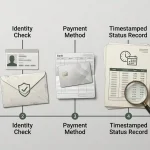
KYC means identity checks. An operator may ask you to confirm who you are and verify details associated with your account. A specialist casino review advises completing those checks early, rather than waiting until you request a withdrawal. That can help reduce avoidable delays, but it is not a guarantee that a payout will be approved or released by a particular time.
I would check what documents are required, how they must be submitted, and whether the name and details on the payment method need to match the account. Don’t send documents through a channel you cannot verify as belonging to the operator. And don’t assume that an account being open or a deposit being accepted means the checks are finished. That assumption can bite.
Processing time is not the whole wait
A specialist payment review describes e-wallet withdrawals as generally faster than card withdrawals, while noting that casino processing may take up to 24 hours. Treat that as a reported pattern, not a deadline for every operator or transaction. A casino’s own review stage and the payment provider’s transfer time are separate parts of the process; a delay at either end can affect when money reaches you.
Look for the operator’s stated withdrawal procedure before you play, including whether it describes pending requests or additional checks. Save a copy of the relevant terms. If the explanation is vague, that is useful information in itself: you have less certainty about what happens after you ask for your money.
Do
- Read withdrawal rules before depositing
- Complete KYC verification early
- Save a copy of the operator’s terms
Don’t
- Assume a deposit method allows withdrawals
- Trust a cashier page as a full promise
- Assume KYC is finished if a deposit is accepted
For UK customers, there is a more basic point than speed. Remote operators offering real-money gambling to people in Great Britain need the relevant UK Gambling Commission licence. A site being reachable, or showing a payment option, does not establish that it is authorised to serve you. Sites outside the UKGC framework also do not offer the same UK consumer protections. A quick cashier is no substitute for that.
Crypto adds a different kind of risk
A specialist casino review reports that cryptocurrency withdrawals can be fast, but the value of the winnings can change with the cryptocurrency’s market price. A fast transfer does not lock in what the funds will be worth when you exchange or spend them.
Crypto transfers can also be irreversible. Check the wallet address and network carefully before sending: a mistake may mean a permanent loss, with no ordinary card-payment process to reverse it. Keep that risk separate from the casino’s own withdrawal timing. Fast does not mean protected.
How to Read a Non-GamStop Casino Listing
A directory can tell you what its publisher claims about a casino. It cannot, by itself, prove that the operator is authorised to offer gambling to people in Great Britain. That distinction matters more than a tidy profile, a polished badge or a line saying “not on GamStop”.
I’ve learned to separate those claims instead of treating them as one big stamp of approval. GamStop participation and permission to serve the British market are different questions. A site may be outside GamStop, but that does not make it legally authorised to serve UK customers.
Start with the operator, not the listing
Look for the legal name of the company that runs the site, rather than relying on a brand name alone. Then check whether the listing gives a licence number and identifies the licensing authority. Those details should be specific enough to compare with the regulator’s own records. If the page gives only a logo, a vague “licensed” claim or no operator identity, you have little to verify.
A licence from a jurisdiction outside Great Britain is not a UK Gambling Commission licence. And for operators offering gambling services to UK residents, the relevant UKGC authorisation matters: a directory entry or foreign licence does not replace it. UK players may encounter casinos licensed elsewhere, but an operator offering services to UK residents without a UKGC licence is acting illegally. The legal responsibility described there is about the operator, not a reason to treat a directory listing as permission.
Check the wording closely
Listings sometimes blur together claims such as “accepts UK players”, “licensed” and “not on GamStop”. Read each one separately. “Not on GamStop” describes a relationship with a self-exclusion service; it does not establish that the operator can legally serve customers in Britain. “Licensed” is incomplete unless you can identify who issued the licence and which company it covers.
Be wary of information that is hard to reconcile. A listed company name that differs from the one in the licence details, a licence number that is absent from the regulator’s records, or a page that avoids saying where the operator is based are reasons to stop and verify—not reasons to fill in the gaps yourself.
Verify Casino Listing
- Check for the legal company name
- Verify the licence number with the regulator
- Identify the specific licensing authority
- Confirm the operator identity beyond a logo
Treat lists as leads, not endorsements
A list of casinos not registered with GamStop is not a government register, and appearing on one is not a regulator’s approval. A directory may summarise details supplied by an operator, and its commercial relationship with the sites it covers may affect what it highlights. Check whether the page explains how it earns money and whether any promotion is clearly labelled.
Even a carefully presented listing can become outdated. The site, company or licensing details may change, while the directory page remains untouched. So check the operator’s current details against the relevant official regulator record rather than relying on a copied profile or a screenshot.
I’ve made the mistake of reading a confident label as if someone had checked the hard part for me. They hadn’t. A badge is not a check.
If you cannot establish who operates the site and whether that operator holds the UKGC licence needed to serve the British market, don’t treat its presence in a directory as proof that it is authorised. The useful question is not whether a listing looks complete. It is whether its claims can be independently verified.
Which Casinos Fall Outside GamStop’s Reach?
GamStop’s reach is tied to the UK Gambling Commission (UKGC): casinos operating within its jurisdiction are within the scheme. So, when people talk about casinos not registered with GamStop, they generally mean gambling sites operating outside that UK system. Some may hold a licence in another jurisdiction, such as Malta, Gibraltar or Curaçao.
That describes a regulatory category, not a list of casinos I’d point you towards. A site’s location, branding or use of the phrase “not on GamStop” does not tell you whether it is authorised to serve people in Britain. Those are separate questions.
International Casinos for UK Players: Rules and Risks
Here’s the part that matters. Remote gambling operators offering services to customers in Great Britain must hold the relevant UKGC licence, regardless of where the business is based. A foreign licence does not replace that requirement. A casino can be outside GamStop’s reach and still be acting unlawfully if it offers online gambling to British customers without the required UK licence.
The wording can make this sound like a neat choice between two kinds of casino. It isn’t. GamStop participation follows the UKGC framework; an overseas licence belongs to another jurisdiction and does not bring a site under UKGC oversight. The label tells you what the site claims about GamStop, not whether it is legally entitled to operate in Britain.
I’ve learned not to treat a licence badge as a shortcut. Even where a site names an overseas regulator, that fact alone does not make it equivalent to a UKGC-licensed casino or establish what protection you would have if something went wrong. And a casino appearing in a directory or being easy to access does not change the licensing rule.
So the honest answer to “which casinos?” is a category, not a recommendation: sites outside the UKGC system may not be connected to GamStop, and some may be licensed elsewhere. No particular casino should be assumed to fit that description accurately—or to be suitable—just because it uses the label. Keep the legal distinction clear: the scheme’s reach is one thing; permission to offer gambling to people in Britain is another.
Not the same thing.
Legal Distinctions
- GamStop participation follows the UKGC framework
- Overseas licences do not replace the need for a UKGC licence for serving UK customers
- A site’s accessibility does not prove it is legally authorised to operate in Britain
- Foreign licences do not provide equivalent UKGC protections
“Reputable” and “PayPal”: Claims to Check, Not Guarantees
“Reputable” sounds reassuring, but it is a description, not a licence or a protection scheme. I’ve learned not to let a confident label do the checking for me. A casino outside the UK Gambling Commission’s system does not gain UKGC oversight just because a review calls it reputable. And an operator offering real-money gambling to people in Great Britain without the required UKGC licence is not operating legally in that market. The risk is not just whether a site looks polished; it is what recourse and protections you have if something goes wrong.
The same goes for “PayPal casino” claims. A payment method mentioned in a headline or shown in promotional material does not establish that PayPal is currently available for deposits or withdrawals at a particular site. Availability can depend on the operator’s terms and the account, so check the site’s own payment information before relying on the claim. Don’t treat a logo as confirmation. Small detail; big difference.
Bonus language deserves the same scepticism. A large welcome offer can look generous while its conditions make it difficult to withdraw winnings. Read the full terms before accepting anything: check the wagering requirement, which games count, the maximum permitted bet while wagering, the deadline, and whether a withdrawal cap applies to bonus winnings. These conditions can change the value of an offer more than its headline figure does.
A specialist review gives a rough industry comparison of wagering requirements as around 30x to 40x, and describes anything above 50x as generally predatory. Treat that as a review’s assessment, not a guarantee or a universal rule. The practical point is to understand exactly what the stated multiple applies to, and what happens if you miss a deadline or breach a condition. If the wording is unclear, pause rather than assume it will be interpreted in your favour.
Trustworthy Online Casinos in the UK: What to Check
Game weighting matters too. Slots may count towards wagering while table games contribute less or do not count at all. So a bonus that appears playable across the casino may in practice leave you with fewer eligible games than expected. Check the game list and contribution rules, not just the banner.
None of these checks makes a non-UKGC site equivalent to a UK-licensed operator, and a positive review cannot supply the protections that come with UKGC regulation. Keep the claims separate: “reputable” is an opinion, “PayPal accepted” needs confirmation in the operator’s current terms, and bonus conditions are binding details to read before you opt in. No shortcut around the fine print.
Malta, Gibraltar and Curaçao: A Licence Is Not a UKGC Licence
A casino may name Malta, Gibraltar or Curaçao as its licensing jurisdiction. That tells you where it claims to be authorised; it does not mean the UK Gambling Commission (UKGC) oversees it. The distinction matters more than the wording on a banner. A foreign licence is not a UK licence in another form.
I used to treat a licence badge as a kind of safety stamp. It isn’t. Even where a casino holds a licence outside the UK, that does not give it the UKGC’s rules or make it part of the UK system. Casinos licensed outside the UK are not legally required to connect to GamStop, so a GamStop exclusion may not be applied there. That is a description of the boundary, not a reason to look for a way around it.
Attention: Playing at a non-GamStop site is not a criminal offence for the player, but the operator may be acting illegally if they lack a UKGC licence.
There is a separate point about legality that often gets muddled. Playing at a site that is not on GamStop is not, by itself, a criminal offence for a player. But remote operators offering gambling to customers in Great Britain must hold the relevant UKGC licence. A licence from Malta, Gibraltar or Curaçao does not replace that requirement. The fact that a site can be accessed does not establish that it is authorised to serve UK customers.
What the jurisdiction label does—and does not—tell you
A jurisdiction name alone cannot show what protection you would receive if something went wrong. It does not establish that a site offers protections equivalent to those associated with a UKGC licence, or that you would have the same routes for raising a complaint. Do not assume an overseas regulator’s standards or procedures match the UK system; the label is not proof of that.
Nor should “European” be treated as a synonym for “UK-regulated”. Malta and Gibraltar are European jurisdictions, but a licence from either still is not a UKGC licence. Curaçao is another jurisdiction that may appear in casino licensing claims, but its name does not change the UK requirement for operators serving Great Britain.
If you are checking a site, separate two questions: which jurisdiction does it say licensed it, and does the operator hold the UKGC licence required to serve the British market? The first answer does not settle the second. Don’t let a polished badge do the thinking for you.
For anyone choosing to gamble, the practical downside is not abstract: protections associated with a UKGC licence may not apply, and UK-based support services may not be accessible through a site operating outside that framework. That is a real difference, not fine print.
UK Casino Safety & Regulation: Licensing Guide
Non-GamStop Online Casinos and the Limits of Their Safety Tools
A non-GamStop casino may display controls that look familiar: deposit or loss limits, session time limits, reality checks, reminders, or an option to self-exclude. A specialist review has reported that some non-UK sites offer measures like these voluntarily, even where their regulator does not require them. That is not the same as a consistent, mandatory standard across all sites.
The distinction matters. UKGC-licensed operators must participate in GamStop, and operate within the UK regulatory framework. Casinos not on GamStop sit outside that framework; a responsible-gambling feature on a page does not bring the operator under UKGC oversight. It also does not establish that every tool is available, works as described, or is enforced in the same way. Read the terms for each control, not just the labels.
A limit is useful only if you can understand what it covers and what happens when you try to change it. Check whether the site explains how to set or adjust limits, how session reminders work, and what its self-exclusion option actually applies to. If those details are vague, assume less—not more—about the protection you will receive. Looks reassuring. Not proof.
I would also separate account controls from outside support. A non-UK site may not provide access to UK-based gambling support services, and its own tools are not a substitute for independent help. If gambling is causing harm, don’t rely on a casino’s settings as your only safeguard.
Safety Tools
Voluntary responsible-gambling features on a non-GamStop site do not bring the operator under UKGC oversight or guarantee a mandatory standard of protection.
The plain version: voluntary tools can be better than none, but their presence does not make a non-GamStop site equivalent to a UK-licensed one. In Great Britain, remote operators serving customers must hold a UK Gambling Commission licence. A site’s safety-tool claims cannot change that regulatory boundary—or tell you, by themselves, how much protection you can count on.
Playing Slots: Check the Bonus Rules Before You Start
A large bonus figure can look like extra money in your balance. It isn’t quite that simple. Before playing slots with a casino not on GamStop, I’d read the bonus terms first, because the headline offer tells you little about what you must do before winnings can be withdrawn.
The key phrase is wagering requirement: the amount of qualifying play required to meet the offer’s conditions. A specialist casino review describes requirements around 30x to 40x as an industry benchmark and anything above 50x as generally predatory. Treat that as a review’s assessment, not a guarantee that a particular offer is fair. Check how the operator defines the calculation, and whether it applies to the bonus, the deposit, or both.
Then look at game weighting. Slots may count towards wagering, while table games can contribute less or not count at all. A game that appears eligible may therefore move the requirement more slowly than you expect. The terms should say which games count and how much; if that is unclear, don’t assume every spin advances the offer.
A specialist review also flags three conditions worth finding in the small print: a maximum bet while wagering, a deadline to complete the requirement, and a cap on withdrawals from bonus winnings. Each can change the practical value of the offer. You might meet the wagering condition but still find that a rule about bet size or cash-out limits affects what you can keep.
I used to glance at the bonus amount and skip the rules. That was backwards. Read the full terms before opting in, especially the definitions of eligible games, qualifying wagers and bonus winnings. If a condition is buried, vague or hard to reconcile with the promotional wording, set the offer aside rather than guessing.
Non-GamStop Curaçao Casino Sites: UK Licence Checks
The bonus is only as useful as its rules allow. Read them first. Then decide.
If You’ve Self-Excluded, Don’t Treat a Workaround as a Fresh Start
If you registered with GamStop, the point was to put distance between you and gambling. A site that does not cooperate with the service may not apply your exclusion, but that gap does not make it a safe reset. I’ve learned the hard way that a new account can feel like a clean slate while leaving the reason you self-excluded untouched.
GamStop blocks registered users from gambling with participating UK Gambling Commission-licensed operators. Casinos outside that system are not required to check or enforce a GamStop exclusion. That does not mean they offer the same safeguards: they sit outside the UKGC framework, and a remote operator serving British customers without the required UKGC licence is acting illegally. A lack of a GamStop block is not reassurance.
There is also no way to bring your selected GamStop period to an early end. Once it is in place, it cannot be shortened or cancelled before it expires. Trying to get around it does not change that decision or remove the risks that led you to make it.
Casinos That Bypass GamStop: What to Know
Before acting on an urge to gamble, give yourself time and put another barrier between the urge and your money. Tell someone you trust what is happening, and look for UK-based support independently rather than assuming a casino outside the UK system can provide it. Such sites may not give you access to UK-based support services, and their own help options are not a substitute for them.
I’m not saying this to scold you. Self-exclusion can be a difficult step, and wanting to undo it in a rough moment is understandable. But a site that does not recognise your exclusion cannot make that choice harmless. Keep the barrier in place and seek support away from the casino. That is the safer next move.
Are casinos that bypass GamStop illegal for UK players to use?
No, using a non-GamStop site is not a criminal offence for you. However, an operator offering gambling to UK residents without a UK Gambling Commission licence is not legally licensed to serve the British market.
Is it safe to play at non-Gamstop gambling sites?
You cannot assume they offer the protections of a UKGC-licensed casino. A site’s claims that it is safe or trusted do not make it part of the UK regulatory system.
Can I reverse a self-exclusion from GamStop early?
No, you cannot shorten or cancel a GamStop exclusion before the period you selected has ended.
What are casinos not on GamStop?
They are casinos whose operators do not participate in GamStop, so the service’s self-exclusion block may not apply there. Non-UK casinos are not required to join GamStop, but a licence from another jurisdiction is not a UKGC licence.
How can players get around Gamstop?
A site outside GamStop may not apply your exclusion, but using one does not end or reverse it. If you registered to stop gambling, avoid seeking ways around that protection.
Is it legal to play in casinos not blocked by Game Stop?
Using a non-GamStop casino is not itself a criminal offence for you. But an operator offering gambling to UK residents without the required UKGC licence is not legally licensed to serve the British market.
Safety

Anjouan Casino Licence in the UK: What It Means
An Anjouan licence reflects the operator’s claimed approval under its own framework, not permission to...

Foreign Casinos for UK Players: Rules and Risks
Foreign casinos accepting UK customers sit outside UKGC regulation, which can affect player protections, bonuses,...

International Casinos for UK Players: Rules and Risks
Foreign licences, bonus terms, player safeguards and payment delays all affect how offshore casinos differ...

Offshore casino sites in the UK: licence checks
An offshore licence is not a substitute for UKGC approval, and payment, bonus and verification...

Offshore casinos for UK players: what to check
A practical look at licensing, promotions, crypto and withdrawals, with a focus on what changes...

British Casinos Not on GamStop? What the Label Means
The label describes a casino’s distance from GamStop, not its safety, UK status or equivalent...

Casino Without a Swedish Licence: UK Rules Explained
A casino’s location or international label does not establish its licensing status or whether it...

Casinos That Bypass GamStop: What to Know
GamStop applies to UKGC-licensed operators, while casinos outside that system may offer different licensing, support...

Curaçao casino licence in the UK: what it means
A Curaçao licence identifies an operator's regulatory framework, but does not mean it is regulated...

Gibraltar Casino Licence in the UK: What It Means
A Gibraltar regulatory base is not a substitute for the UK Gambling Commission licence required...

Merkur Casino Online UK: Games, Licences and Checks
Merkur branding does not identify a casino or confirm its games, so check the operator,...

Trustworthy Online Casinos in the UK: What to Check
Trust depends on the operator’s licence and terms, while even regulated sites cannot guarantee a...

Non-Gamban casinos in the UK: what it means
Gamban only indicates whether access is blocked; it does not confirm a casino’s safety, suitability...

Non-GamStop Curaçao Casino Sites: UK Licence Checks
A licence badge is not proof of UK authorisation or participation in the UK self-exclusion...

Non-GamStop European Casinos: UK Rules Explained
European branding does not establish UK licensing or GamStop participation; the distinction matters when exclusion...

Non-UK Licence Casinos: What the Licence Means
A licence identifies the regulator and oversight system, but non-UK authorisation does not mean the...

Non-UK-Registered Casinos: What the Label Means
The guide separates a casino’s licensing jurisdiction from UKGC oversight and examines protections, payments and...

Non-UK-Regulated Casinos: Licences and Risks
A licence applies under the rules of its jurisdiction; UKGC permission is required for operators...

Non-UKGC-Licensed Casinos: Rules and Risks
A look at how non-UKGC casinos are licensed, what protections may be missing and what...

Online Casinos with Malta MGA Licences in the UK
An MGA licence sets obligations for operators, but does not by itself establish that a...

Online slots not on GamStop: what it means
GamStop participation depends on a casino’s regulatory position, which can affect the protections and checks...

Safe Online Casinos in the UK: Checks Before You Play
A practical look at operator information, terms, support and payments when assessing whether a casino...

Casinos Not on GamStop UK: What Trust Really Means
A clear-eyed guide to licensing, gambling safeguards, bonuses and withdrawals at casinos outside the UKGC...

Trusted UK Casinos in 2026: Licence Checks
A practical check starts with UKGC permission, then looks at player safeguards, bonus terms, support...

USA Casinos for UK Players: Licensing and Risks
A practical guide to licensing status, cash-out routes, ownership ties and the limits of offshore...

VPN-Friendly Casinos in the UK: Rules and Risks
Understand how casino VPN policies differ from licensing, and what offshore sites may mean for...