Plinko Casino UK: Licensing, Play and Payments
 Available in GB

A practical guide to finding the game, understanding random outcomes and checking licensing, terms and payment options.
Table of Contents
- Finding Plinko on a UK Casino Site
- What Kind of Casino Game Is Plinko?
- Playing Plinko for Real Money: Know the Trade-Off
- Free Plinko Play: What You Can—and Can’t—Assume
- How Random Outcomes Fit Into Plinko
- Plinko Sites, Bonuses and the Fine Print
- Judging a Plinko Option Without a ‘Best’ List
- Plinko Demo and Slot Searches: What’s Verified
- Withdrawals and Getting Money In or Out
- Crypto Payments and Plinko Casinos
- Games
Finding Plinko on a UK Casino Site
Looking for Plinko on a UK casino site is not just a matter of spotting a game name in a lobby. The first thing to understand is what kind of operator you are looking at. Online casino games can be offered where the law permits them, but a site being reachable from Britain does not, by itself, mean it is authorised to serve British customers.
For Great Britain, the key distinction is between casinos operating under a UK Gambling Commission (UKGC) licence and offshore platforms that accept UK players while remaining outside the UKGC system. A specialist market review has described the 2026 landscape as having these two parallel sides. The practical difference matters more than the label on a homepage: a foreign licence is not a UKGC licence.
The UKGC side
The Gambling Act 2005 sets the main framework for gambling in England, Wales and Scotland. Since the Gambling (Licensing and Advertising) Act 2014, an operator that wants to take bets from British residents needs the appropriate British licence, even if its business is based elsewhere. So an online casino offering real-money gambling to customers in Great Britain should be licensed by the UKGC.
When choosing a UK Plinko casino for 2026, payout timing is one practical detail to consider alongside the game itself. Use these concise verdicts as a reference when deciding what matters to you.
1. BeOnBet
Payout speed: 1-3 business days BeOnBet lists a payout speed of 1–3 business days. You can use that as one factor when considering this option.
2. EvoSpin
Payout speed: 1-3 business days EvoSpin lists a payout speed of 1–3 business days. Consider whether that timing suits your preferences.
3. Revery Play
Payout speed: 1-3 business days Revery Play lists a payout speed of 1–3 business days. You can weigh this practical detail as you consider your options.
4. NightLuck
Payout speed: 1-3 business days NightLuck lists a payout speed of 1–3 business days. This gives you a stated timeframe to factor into your choice.
5. Zombillion
Payout speed: 1-3 business days Zombillion lists a payout speed of 1–3 business days. You can take that timing into account when reviewing this option.
6. Dieselwin
Payout speed: 1-3 business days Dieselwin lists a payout speed of 1–3 business days. Consider whether the stated timeframe works for you.
7. SpinFormula
Payout speed: 1-3 business days SpinFormula lists a payout speed of 1–3 business days. You can use this information as one part of your decision.
8. NightWin
Payout speed: 1-3 business days NightWin lists a payout speed of 1–3 business days. Keep this stated timeframe in mind as you assess the option.
9. Britsino
Payout speed: 1-3 business days Britsino lists a payout speed of 1–3 business days. You can consider this timing when deciding whether it fits your needs.
10. WinBeast
Payout speed: 1-3 business days WinBeast lists a payout speed of 1–3 business days. This is a useful timing detail for you to consider.
That does not confirm that a particular lobby carries Plinko, or that every game with that name is the same product. It does establish the regulatory starting point for checking a UK-facing casino. I would look for the operator’s licensing information and make sure it identifies a current UKGC licence, rather than treating a polished site, a British-themed promotion or a familiar payment logo as proof of regulation. Branding is easy. Licensing is the point.
The distinction also affects what a player can expect from the operator. UKGC licensees must provide responsible-gambling tools, including self-exclusion, and access to a complaints process with an approved alternative dispute resolution service. Operators must verify a customer’s age before allowing deposits, and participation in gambling offers is for UK residents aged 18 or over. These are not decorative promises; they are part of the regulated framework.
Offshore platforms are a different category
Some offshore casinos accept UK players, but they operate outside the UKGC regulatory system and do not hold a UKGC licence. They may display a licence from another jurisdiction, but that does not turn them into UK-licensed casinos. A player can encounter both kinds of site while looking for Plinko; they should not be mistaken for two versions of the same regulated service.
I used to read “international” as if it meant broader choice with the same protections. That was too quick. The important question is not whether a site says it welcomes UK visitors, but whether it is authorised to provide gambling to customers here. UK rules require remote operators serving Great Britain to hold the relevant UKGC licence. Accessibility and authorisation are different things.
Progressive Slots Online in the UK: How Jackpots Work
There is a further boundary: the Gambling Act 2005 does not cover Northern Ireland. The rules discussed here concern Great Britain, so anyone in Northern Ireland should not assume that the same legal position applies without checking the relevant local requirements.
Read offers as part of the site’s status
Bonuses can make a casino look more inviting, but an offer does not tell you whether the operator is properly licensed. In the UKGC-regulated market, incentives are subject to specific restrictions. From 19 January 2026, a gambling incentive cannot require wagering of more than ten times the bonus funds. An offer also cannot make a reward conditional on gambling across different product types, such as casino games and sports betting.
Those rules give you concrete details to check when an offer is presented as a reason to join. Look for terms that explain what the promotion applies to and what must be done before any reward can be withdrawn. If the wording is vague, or the offer appears to combine unrelated gambling products, do not let the headline amount do the thinking for you. “Generous” is marketing. The conditions are what count.
I would keep the order simple: establish whether the casino is licensed for Great Britain, then assess the game and any promotion on their own terms. Searching for an online Plinko casino in the UK can bring up sites with very different regulatory positions, even when they use similar language. A UKGC licence is the dividing line to keep in view—not the appearance of a Plinko tile in a game menu.
Do
- Verify the current UKGC licence
- Check for responsible-gambling tools
- Read full promotion conditions
Don’t
- Trust British-themed branding alone
- Accept vague bonus terms
- Mistake accessibility for authorisation
What Kind of Casino Game Is Plinko?
The simplest way to place Plinko is alongside other casino games, not to assume it behaves like a table game or a slot just because it appears on a casino site. Casino games share a basic feature: a player stakes cash or chips on an outcome, or a combination of outcomes, that may be random. The format around that outcome can vary considerably.
I find it helps to separate three things that casino pages often blur together: the game’s presentation, the way a player interacts with it, and the system that determines its result. A board-like screen, a quick round, or a button to start play tells you something about the interface. It does not, on its own, tell you how the game is categorised or how its outcome is produced.
Casino games do not all work alike
Some casino games are organised around a table. In that setting, players compete against the casino rather than against one another, and a croupier or dealer commonly conducts the game. The familiar table format is only one part of the wider casino category, though.
Gambling machines are another broad type. They are usually played by one person at a time, without a casino employee needing to run each play. That is a description of the format, not a promise about a particular game’s rules. A screen can make a game feel self-contained and simple to operate, while the underlying rules still determine what counts as a result.
Plinko is best considered in that wider landscape: a casino-style game presented for individual play, rather than something that obviously belongs to a dealer-led table. But I would be careful about stretching that label too far. Calling something a “machine game” does not prove it is a slot, and a visual board does not establish the details of its mechanics. Categories help orient you; they are not a substitute for the game’s own rules.
That distinction matters because names and visuals can invite assumptions. A game may look like a familiar physical pastime, yet its online version can be presented through software and have its own rules. Conversely, a casino app is simply a way to access games; the word “app” says nothing by itself about whether a particular title is a slot, a random-number game, or another kind of casino product.
Online Slot Tournaments in the UK: Entry and Rules
Where random-number games fit
A random-number game is defined by how its outcome is generated: selected random numbers are produced by a computer or other gaming equipment. That broad description is useful when you are trying to understand an online casino game without mistaking its graphics for proof of what happens underneath.
It does not mean every game with movement on screen belongs to the same category. Nor does it establish that a particular Plinko version uses one specific system. To know how an individual title works, you need the description and rules supplied for that game. The category gives you a framework, not a hidden technical specification.
I used to treat a familiar-looking screen as an explanation. It isn’t. The picture shows the presentation; the rules and game information are what tell you how the product is described. If those are vague, I would not fill the gaps with assumptions based on the name.
There is a difference between saying “this is a casino game” and claiming detailed knowledge of its software. The first places it in context. The second needs evidence about that particular version. That is why I would not infer a game’s exact mechanics from a title, a board graphic, or the fact that it appears beside other casino products.
A practical way to think about the category
When you see Plinko described as a casino game, think of the broad casino definition: someone stakes cash or chips on possible outcomes. Then keep the format question separate. Is it presented as individual machine-style play, or as a dealer-run table? What do the game rules actually say? Does its description identify a random-number system, or merely show a visual theme?
Those are different questions, and answering one does not automatically answer the others. A game can be played alone without that fact revealing how its result is generated. Likewise, an online game can use random outcomes without looking like a traditional slot. The categories overlap in ordinary casino language, but they are not interchangeable technical labels.
Penny Slot Machines in the UK: Stakes and Costs
I also wouldn’t treat “Plinko slot” as a settled classification just because the phrase sounds plausible. A casino might use familiar wording loosely, but the label alone does not establish what type of product a particular title is. Read the game information rather than letting a search-friendly name do the explaining.
So the useful takeaway is modest: Plinko belongs in the conversation about casino games, while its precise classification depends on the version and its stated rules. Separate the look of the game from how it is described and how its result is determined. Less guesswork.
Playing Plinko for Real Money: Know the Trade-Off
Putting money on a casino game changes what is at stake. With real-money Plinko, a result can affect your balance; it is not just a way to pass the time or see what happens. That sounds obvious, but I’ve caught myself treating a few small bets as if they were only a test. They weren’t. Money was on the line, so the outcome mattered.
The plain answer to “is Plinko for real money real?” is that a casino may offer a real-money version, but the label alone tells you little about the experience. A game’s name does not promise a win, and a run of positive results is not proof that more are due. I’ve made that mistake with casino games before: I read a short streak as a signal and then kept playing as though I’d worked something out.
A chance of winning is not an edge
Casino games can give players short-term gains while still being structured to favour the casino over the long run. Those ideas are not contradictory. You might come away ahead on a particular session; over repeated play, the overall design can still give the operator the advantage.
That is the trade-off behind playing Plinko with cash. A win can happen, and a player may finish a session with more than they started with. Neither possibility makes a positive result reliable or repeatable. If you’re asking how to win real money at Plinko, there is no dependable method I can point to. Treating a lucky result as a strategy is how I’ve talked myself into staying longer than I meant to.
Short-term luck happens. It isn’t a plan.
Financial Risk
Casino games are structured to favour the operator over the long run; never treat a lucky streak as a reliable strategy or income.
I’d also separate “real money” from “realistic income”. A casino game is not a paycheque, and a win is not evidence that the next session will go the same way. The possibility of a gain is part of the appeal, but the casino’s long-term advantage is the part that gets easy to ignore when you’re focused on the latest result.
Keep the session decision separate from the game result
Before staking cash, I try to make the decision about the money first, not after seeing how a round goes. Once I’m watching results, it’s tempting to decide that another go will recover a loss or turn a small win into something larger. That reasoning feels persuasive in the moment. It does not change the underlying trade-off.
A real-money Plinko casino game should be approached as gambling, not as a reliable way to make money. If you do play, decide what you are comfortable risking before you start, and don’t treat a win as permission to raise that amount. Equally, don’t chase losses because you feel a result is owed. A previous outcome does not make the next one a sure thing.
That’s the part I had to learn the expensive way. A balance can move in your favour for a while, but that does not remove the casino’s advantage over longer play. The honest expectation is uncertainty, not a guaranteed return.
So, if you’re weighing up a real-money Plinko game, focus less on whether a review calls it exciting and more on what you’re actually choosing: a chance of short-term gains, with the possibility of losing the money you stake. I’ve had winning sessions. I’ve also stayed too long because I mistook those sessions for proof I had an edge. I didn’t.
Free Plinko Play: What You Can—and Can’t—Assume
A free-play label can sound straightforward: try Plinko without putting your own money at risk. But the label alone doesn’t tell you what a particular game provides. I wouldn’t assume that every Plinko game has a free mode, or that two free modes work alike.
RTP Casino Slots in the UK: What the Figure Means
That matters if you want to play a Plinko casino game without making a deposit. A page might describe a game, show promotional wording or invite you to open it, but that does not by itself explain whether you can play without staking cash, what any on-screen balance represents, or whether the option is available to you. The detail has to come from the game or operator’s own information.
Nor should “free” be read as a promise of a cashable win. Without clear terms, you can’t tell whether a free activity is simply for trying the game, whether it uses a separate balance, or whether any reward is attached. Those are different arrangements. Don’t fill in the gaps from the label.
Free play is not real-money play
That’s a different question from the real-money trade-off. When cash is staked, a casino game can offer the possibility of short-term gains while retaining a long-term advantage for the casino. A free activity does not tell you what would happen with a cash stake, and it should not be treated as evidence about payouts.
I’ve learned not to let a practice-like screen blur that distinction. Seeing a game operate without an obvious cash stake doesn’t establish that the same conditions apply when money is involved. If your interest is in playing without financial risk, first make sure the activity really is free and understand what its terms say. If the terms are vague, don’t guess.
“Free” is a label. The details matter.
The same caution applies to wording about spins or bonuses. A mention of free spins does not, on its own, establish that a Plinko game offers them, that they apply to that game, or that any resulting balance can be withdrawn. Free spins and a free way to try a game are not interchangeable ideas. Read the specific offer rather than treating one phrase as proof of another.
What you can reasonably take from it
You can look for a clear explanation of whether play requires a cash stake and what happens to any balance or reward. You can also distinguish an offer from ordinary access to a game: promotional language may have conditions, while the word “free” by itself gives you no useful detail about them. If an operator does not explain the arrangement plainly, it is sensible to stop before treating it as risk-free.
Chicken Road Game Casino UK: What to Know
I wouldn’t choose a place to play on the promise of free access alone. The phrase doesn’t establish that a particular Plinko game is available, that a no-cost option exists, or that the option suits what you want to do. It also cannot tell you how a game would behave for real money. Those need separate, specific answers.
So, if you’re hoping to try Plinko without paying, keep the expectation modest: free play may be something a particular game or operator offers, but the label is not enough to confirm it or explain its rules. Check what is actually stated before proceeding. If it isn’t clear, leave it there.
How Random Outcomes Fit Into Plinko
When I try to understand what sits behind a casino game’s animation, I separate what I can see from what determines the result. In a random-number game, selected numbers are generated by a computer or other gaming equipment. The visible action may make an outcome feel physical or easy to follow, but the important point is that the game uses generated numbers to produce random outcomes.
That describes the general mechanism, not the exact design of every Plinko game. A particular version may present its result as a ball travelling through pegs, but the animation alone does not tell you how the game generates or assigns that result. I would not assume that every game labelled Plinko uses the same process behind the screen.
The distinction matters because the animation can be persuasive. You watch a ball bounce and may start reading meaning into its route: it seemed to drift left, it nearly landed elsewhere, or a previous result might somehow influence the next one. Those impressions belong to the presentation. In a random-number game, the relevant underlying mechanism is the generation of selected random numbers, not a story you can reliably infer from the animation.
I used to give visual patterns more credit than they deserved. A run of similar-looking outcomes felt like a clue, even when I had no basis for treating it as one. That is an easy trap: a moving graphic gives your attention something to follow, and your mind starts turning movement into an explanation. It does not make that explanation part of the game’s random-number process.
In random-number games, the visual animation of a ball is purely presentation; the actual result is determined by numbers generated by a computer or gaming equipment.
So, how does a Plinko casino game work? The honest general answer is that random-number games use numbers generated by a computer or other gaming equipment. The exact link between a generated number and the displayed result depends on the individual game. Without details about that implementation, it would be guesswork to describe a particular Plinko board’s internal sequence or claim that a visible path determines the result.
This also puts “how to win” claims in perspective. A supposed system based on reading the animation is not an explanation of how random numbers are generated. I would be wary of anyone treating a few visible outcomes as proof of a repeatable pattern. Randomness can produce sequences that look striking or uneven; appearance alone does not establish a hidden rule.
There is a limit to what the general mechanism can tell you. It explains that selected random numbers are generated by computer or gaming equipment, but it does not reveal the precise implementation of a specific game. For that, you would need information about that game itself. I keep the distinction simple: what the screen shows is presentation; what generates the result is the mechanism. Don’t confuse them.
Highest RTP Slots in the UK: What RTP Really Means
Plinko Sites, Bonuses and the Fine Print
A Plinko offer can look generous at first glance. I’ve learned to ignore the headline until I know what the bonus actually asks me to do. The important detail is often the wagering requirement: how much you must stake before bonus funds, or winnings linked to them, can be withdrawn.
The calculation can make a large difference. A £100 bonus with a 35x wagering requirement would mean placing £3,500 in bets before cashing out. That is a simple illustration of the maths, not a compliant offer under the current UK cap. Since 19 January 2026, a specialist market review reports, gambling incentives cannot require more than 10x wagering of bonus funds. Even at the permitted ceiling, read the full terms rather than treating the bonus value as cash in your account.
Check what the requirement applies to: the bonus amount, the deposit, or another stated total. Also look for which games count, whether the offer has an expiry, and what happens if you withdraw before completing the requirement. Those conditions should be set out clearly and fairly. If the wording leaves you guessing, the “free” part may come with more strings than you expected.
Mines Casino Game UK: Rules, Risks and Randomness
In 2026, an incentive must not combine different gambling product types, such as casino play and sports betting, as a condition of unlocking a reward. So an offer tied to Plinko should not require you to place bets on another product to qualify. Read the terms, not just the banner.
A no-deposit bonus means you can receive a bonus without spending money; the label alone does not tell you what restrictions apply. I would still check the wagering requirement and withdrawal conditions before accepting one. And if a site presents an offer as proof that its Plinko game is “legit”, treat that as marketing, not evidence. The offer’s terms can tell you how the promotion works, but they do not by themselves establish the game’s quality. Plainly put: read the small print.
Judging a Plinko Option Without a ‘Best’ List
I’m wary of any page that calls a Plinko casino the “best” without showing what that judgement rests on. Best for whom? A confident label can make a game or platform sound settled and dependable when it is only a sales pitch.
I wouldn’t turn that into a league table. Without a sound basis for comparing specific Plinko games and operators, naming a winner would be guesswork dressed up as advice. That doesn’t mean every option is identical; it means a ranking needs evidence, not just a bold badge or a polished page.
A more useful starting point is to separate claims you can assess from claims that merely sound reassuring. “Popular”, “premium” and “player-friendly” are descriptions, not proof that a game gives you better odds or that a casino is a better choice. I’ve been taken in by confident wording before. It’s easy to mistake certainty in the copy for certainty in the outcome.
The basic casino-game trade-off still matters here: over time, casino games are structured to give the casino an advantage, while a player can still come out ahead in the short term. Those two things can both be true. A short run of wins doesn’t establish that a game is favourable, and a casino’s marketing doesn’t overturn the long-term structure.
Classic Slots Online in the UK: What to Know
So when someone presents a Plinko option as the best in the UK, I’d ask what measurable comparison supports that claim and whether it relates to the actual game rather than the surrounding promotion. If the answer is vague, I’d treat “best” as advertising language, not a verdict.
No magic shortcut. A careful reader can still reject flimsy claims without pretending to know which option wins a comparison that hasn’t been properly made. I’d rather leave a ranking blank than fill it with confidence I can’t justify.
Plinko Demo and Slot Searches: What’s Verified
A demo label sounds straightforward, but it does not tell you by itself what is being offered. I would want to see the exact game named and a clear indication that a playable demonstration is available, rather than relying on a page title or a promotional claim. That is a basic distinction: a mention of Plinko is not proof that a demo version of a particular game exists.
The same applies when the wording calls it a slot. Casino games cover different formats, and the word “slot” should not be treated as a reliable description of every game involving a board, falling pieces or chance-based results. I can’t point to a specific Plinko slot or confirm a Plinko slot demo. So if a page uses those labels, read them as its own description unless it identifies the actual game.
That may sound picky. It matters.
When I check a demo claim, I look for something concrete: the game’s full title, who provides it, and an actual demo option attached to that game. If the page only uses “demo” in a heading, or moves quickly from that promise to a registration prompt, I would not assume I had seen a working demonstration. Clear labelling lets you tell what you are opening before you commit to anything.
This is separate from looking for free play. A demo claim is about whether a particular game can be previewed in a demonstration format; the phrase alone does not establish how that mode works, or whether it is available. Nor does calling something a slot settle what game it is. Those details need to be stated plainly.
Verify Plinko Demo
- Confirm the full game title and provider
- Locate the actual playable demo button
- Verify the demo is not just a registration prompt
- Check if the demo version is available for your region
My rule is modest: treat “Plinko demo” and “Plinko slot demo” as descriptions to verify, not as proof. If a site gives the game a different title, names no provider, or leaves the demo status vague, there is not enough there for me to say what is actually being offered. No guesswork needed.
Withdrawals and Getting Money In or Out
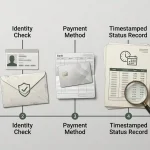
When you look at a Plinko casino in the UK, it is easy to focus on the game and leave the payment details until later. I have done that, then discovered that moving money out is a separate part of the experience. The payment method, the casino’s processing and your bank can all affect how the journey feels; a game title alone tells you none of that.
Open Banking and Faster Payments have made transfers between bank accounts and online casinos less cumbersome. That can help with deposits as well as withdrawals, but it does not mean every payment is instant. The route depends on the platform and the method you use.
Some platforms advertise instant deposits and say withdrawals can be completed within hours rather than days. That is a possibility, not a promise for every account or transaction. A withdrawal may take longer, so read the payment information before you put money in and check whether the stated timing refers to the casino’s processing or the full transfer to your account.
I now check the cashier page before treating a payment claim as useful. Look for the methods available, any stated processing times and whether the same options work in both directions. If a page says “fast” but gives no usable detail, I do not assume that means money will reach me quickly. Marketing gloss.
For anyone comparing casinos with Plinko, keep the game and the payment route separate in your mind. General information about bank transfers across online casinos does not establish how a particular Plinko game or platform handles a withdrawal. Check the details for the casino you are considering, rather than relying on a broad claim about the game.
Aviator Casino Game in the UK: What to Check
A little checking first can spare you an avoidable surprise later. I would rather spend a moment understanding the cashier than find out after a win that I had assumed more than the page actually said.
Crypto Payments and Plinko Casinos
Some alternative platforms may list cryptocurrency alongside conventional payment methods. A specialist casino review describes Bitcoin, Ethereum and Litecoin as options that may be available, with cards and e-wallets also appearing on some payment menus. That is not a promise that every platform accepts each currency, or that a particular Plinko game can be funded this way. Payment options vary by operator.
The distinction matters in the UK. Taking cryptocurrency does not give a casino permission to serve British customers: remote gambling operators selling into the British market must hold a UKGC licence. Offshore platforms operate outside that system, so a crypto payment option should not be mistaken for evidence that a site is licensed for UK players.
Nor does “crypto-friendly” tell you what happens after you send funds. Before making any decision, look for the operator’s own explanation of which currencies it accepts, how deposits are credited and what conversion rules apply. If those details are vague, that is a reason to pause—not to assume the process will work in your favour. I have learned the hard way that a payment label can sound more reassuring than the terms behind it.
For UKGC-licensed casinos, credit cards cannot be used for gambling. A reference to cards on an alternative platform’s menu does not override that restriction, and it should not be read as a recommendation to use an offshore site. E-wallets are a separate payment type, but the relevant terms and rules still matter.
Crypto is simply another possible way to move value; it does not make Plinko safer, change the game, or establish that a site is suitable for people in the UK. Check the platform’s status and payment terms independently, rather than treating a familiar coin name as a quality mark. Familiar name. Different risks.
Games

Aviator Casino Game in the UK: What to Check
Licensing, demo access, game terms, bonuses and payment options can all affect how an Aviator...
3-reel slots in the UK: how to find them
A practical guide to checking reel layout, trying free play and understanding limits, odds and...

5-Reel Slots in the UK: Free Play and How They Work
A practical guide to grid bets, free browser play, bonus features, volatility and the difference...

Bonus-Buy Slots in the UK: Demo Play and Safer Use
See how demo play, game volatility and UK stake limits affect the way bonus-buy features...

High-Volatility Slots in the UK: How They Work
High-volatility slots tend to pay less often, with potentially larger wins, but that pattern cannot...
Low Volatility Slots in the UK: How They Play
Low volatility describes how often and how much slots tend to pay, not what will...

Progressive Jackpot Slots: Availability and Rules
Progressive slots can differ by operator, with jackpot networks, game rules and qualifying bets affecting...

RTP Casino Slots in the UK: What the Figure Means
RTP describes a slot’s theoretical return across repeated play, not the result any individual session...

Video Slots in the UK: How Online Play Works
Each spin follows a simple cycle: a stake is set, the game produces an outcome,...

Casino Dice Games in the UK: Rules and Checks
Online dice can resemble slots or table games, but the wager, rules, demo options and...

Chicken Road Game Casino UK: What to Know
The guide separates slot labels from confirmed game formats and explains how casino access, demo...

Classic Slots Online in the UK: What to Know
A practical guide to testing reels in demo mode, understanding features and checking play options...

Crash Casino Games in the UK: How They Work
Crash games are one part of an online casino, and their fast rounds bring distinct...

Fruit Machine Slots UK: How Online Games Work
A practical guide to reel layouts, paylines, game features and the checks that matter when...

Highest RTP Slots in the UK: What RTP Really Means
RTP describes a game’s theoretical long-run relationship between stakes and payouts, while individual sessions can...

JetX Casino Game in the UK: Format and Checks
JetX is examined as a crash game, with attention to what a demo can show...

Mines Casino Game UK: Rules, Risks and Randomness
A Mines-style game’s label, demo and past results do not establish how it works or...

Online casino games for real cash in the UK
Each spin is a separate game cycle, while paytables, bonus conditions and withdrawal processing shape...

Online Slot Tournaments in the UK: Entry and Rules
Entry costs, eligible games, scoring and prize terms shape how a free slot tournament works...
Penny Slot Machines in the UK: Stakes and Costs
Learn how per-line stakes affect the full spin, and what to check in game information...

Progressive Slots Online in the UK: How Jackpots Work
Learn how contributions, qualifying bets, free-spin terms and slot RTP affect the way progressive jackpots...

UK Slot Casino Sites: How to Compare the Details
A practical guide to licensing, slot information, bonuses and play conditions on UK online casino...