Gibraltar Casino Licence in the UK: What It Means
 Available in GB

A Gibraltar regulatory base is not a substitute for the UK Gambling Commission licence required to serve Great Britain.
Table of Contents
- What a Gibraltar Licence Does—and Doesn’t—Mean for UK Players
- Gibraltar-Licensed and UKGC-Licensed Are Not the Same Thing
- Why an Online Casino Might Be Based in Gibraltar
- Casino Sites With an Offshore Licence: What You’re Actually Looking At
- How I’d Judge a Casino Calling Itself “Best”
- “Top” Casino Sites in 2026: Read the Terms Before the Hype
- Real-Money Play: Payments and the Limits of Convenience
- Online Casino Payouts: Delays, Checks and No UK Recourse
- New Casino Offers: The Wagering Fine Print I’d Check First
- Anjouan as a Cautionary Comparison for Gibraltar Casino Claims
- Safety
What a Gibraltar Licence Does—and Doesn’t—Mean for UK Players
A Gibraltar licence can tell you something about the operator’s regulatory base. It does not, by itself, give that operator permission to offer online gambling to customers in Great Britain. For that market, the operator needs the appropriate licence from the UK Gambling Commission, wherever the company is based.
That distinction is easy to miss when a site presents its Gibraltar connection as a badge of reassurance. I used to treat a named licensing jurisdiction as though it answered the main question: “Can this site serve me?” It doesn’t. The relevant point for Great Britain is whether the operator holds a UKGC licence for the gambling service it provides.
The Gambling Act 2005 is aimed at operators supplying gambling services into the UK market, rather than at individual players. So the regulatory obligation described here falls on the business offering the service. A Gibraltar online casino cannot rely on its location or Gibraltar paperwork alone to meet the UK requirement.
There is a separate point about the player. UK law does not expressly make it a crime for a British citizen to use gambling services licensed in another country, and playing on a site without a UK licence is not, in itself, a criminal offence for the player. That should not be confused with a statement that the operator is authorised to serve Great Britain. Those are different questions.
I find it helps to keep the wording precise: a site may have a licence from Gibraltar, but that fact alone does not establish that it is licensed to operate in Great Britain. Nor does the absence of a UKGC licence turn the player into the target of the Gambling Act’s operator-facing rule. The company’s permission and the player’s criminal liability are not interchangeable issues.
Trustworthy Online Casinos in the UK: What to Check
If you are looking at Gibraltar casinos online, check what the claimed licence actually covers and whether the operator has the UK Gambling Commission authorisation needed to serve Great Britain. Don’t let a company address, a flag, or the phrase “Gibraltar licensed” stand in for that check. A polished footer is still just a footer.
The legal position and regulatory arrangements are not something to infer from a site’s branding, and the key rule here is straightforward: operators serving customers in Great Britain need a UKGC licence regardless of where they operate from. A Gibraltar online gambling licence does not replace it.
That is the part I would have wanted made plain before I clicked through. The player is not the person the Act’s operator rule targets; the operator still needs the right permission for the market it serves. Keep those two points separate. A licence name alone doesn’t settle it.
Gibraltar-Licensed and UKGC-Licensed Are Not the Same Thing
When a casino says it is “licensed”, I now read that as an incomplete sentence. Licensed by whom? A Gibraltar connection may mean the operator holds a Gibraltar casino licence, but that wording alone does not tell you whether the UK Gambling Commission oversees the site.
Those are separate regulatory statuses. A UKGC-licensed operator is under the Commission’s oversight. A non-UK-regulated casino operates without that oversight, even if it holds a licence from another jurisdiction. Malta, Curaçao, Gibraltar and Anjouan are among the jurisdictions that commonly appear in this context. The word “licensed” does not make those arrangements interchangeable.
Curaçao casino licence in the UK: what it means
That distinction is easy to miss when a site puts a regulator’s name or seal beside its sales pitch. I used to treat a licence badge as a kind of all-purpose quality mark. It isn’t. It tells you, at most, that the operator is presenting itself as licensed in a particular place. It does not, by itself, establish UKGC oversight.
So if you see a site described as an online casino with a Gibraltar licence, separate the claim into two questions: is there a Gibraltar licensing claim, and is the operator UKGC-licensed? The first answer cannot stand in for the second. A Gibraltar online casino licence and a UK Gambling Commission licence refer to different regulators; one should not be read as proof of the other.
This is also why “Gibraltar-licensed” and “UKGC-licensed” should not be used as if they were two ways to say the same thing. A site can have a connection to Gibraltar and still be a non-UK-regulated casino. Conversely, the place an operator mentions in its branding does not tell you, on its own, which regulator oversees the service you are looking at.
Do
- Identify the specific regulator named by the site
- Check if the operator is licensed by the UKGC
- Treat a Gibraltar connection as a jurisdictional claim
Don’t
- Use “licensed” as a shortcut for UKGC oversight
- Assume a licence badge is an all-purpose quality mark
- Treat Gibraltar and UKGC licences as interchangeable
I’d pay attention to the exact licence wording rather than the broad claim. Does the site identify the regulator and make clear which company the claim applies to? Is it describing a Gibraltar licence, or showing that the operator is regulated by the UKGC? If the distinction is blurred, don’t fill in the gap with the more reassuring interpretation. “Licensed” is not a shortcut to knowing what protections or oversight apply.
The practical takeaway is narrow but important: when a site advertises a Gibraltar connection, treat that as a claim about its licensing position there, not as evidence of UKGC regulation. The label sounds tidy. The status isn’t.
Why an Online Casino Might Be Based in Gibraltar
A casino company’s address tells you where it is based; it does not, by itself, tell you which customers it is authorised to serve. I used to treat a familiar location in a site’s footer as a kind of reassurance. It isn’t a substitute for checking the rules that apply to the market you’re in.
There can be ordinary business reasons for a company to base itself in Gibraltar: its corporate structure or operations may be organised there, for instance. But the location alone does not establish what services the company can offer in Great Britain. That question depends on its permission for the British market, not just the address on its website.
Offshore casinos for UK players: what to check
The key point is straightforward: an operator serving customers in Great Britain needs a UK Gambling Commission licence, regardless of where the business is based. A Gibraltar address does not remove that requirement, just as an address elsewhere would not. “Based in Gibraltar” describes location. It is not, on its own, proof of authorisation to serve Great Britain.
That distinction matters when a site describes itself as a Gibraltar operation or promotes its connection to the territory. Those details may tell you something about the company’s base, but they do not settle whether it is permitted to offer gambling to customers here. I’d separate those two checks rather than letting one stand in for the other.
So, when you see a casino described as Gibraltar-based, read that as a statement about the operator’s location—not as a complete answer about its status in Great Britain. The company may have a reason to operate from there, but the address cannot do the work of the required UK permission. Location and market authorisation are different questions. Don’t blur them.
Casino Sites With an Offshore Licence: What You’re Actually Looking At
When I see “Gibraltar casino” on a site, I try to separate the label from the thing it describes. It might refer to a company’s connection with Gibraltar, or to the jurisdiction associated with its licence. It does not, by itself, tell me how the site is regulated in the UK. The practical category to recognise is a non-UK-regulated casino: an online gambling site operating without oversight from the UK Gambling Commission.
Non-UK-regulated casino
An online gambling site that operates without oversight or a licence from the UK Gambling Commission, regardless of its base or other jurisdictional licences.
That definition is about the regulator overseeing the site, not the games on its homepage or the wording in its adverts. A familiar-looking casino interface does not tell you which authority supervises the operator. Nor does a page offering online slots become a distinct kind of site simply because the games are slots. The key distinction is whether the casino falls under UK Gambling Commission oversight.
What the jurisdiction label tells you
Non-UK-regulated casinos are commonly associated with licences from jurisdictions including Malta, Curaçao, Gibraltar and Anjouan. Gibraltar is one of the names you may encounter when checking online casino companies, but a reference to Gibraltar needs to be understood as a jurisdictional clue, not a full description of the site.
So, if you come across what looks like a Gibraltar-based casino company or a site promoting Gibraltar online slots, pause before treating those phrases as proof of anything beyond the stated connection. The name may appear in a licence claim, company information or promotional copy. Those are different kinds of information, and seeing one does not automatically confirm the others.
I used to read a place name as a shortcut: familiar jurisdiction, therefore all sorted. That was too quick. A location or licence label can help identify what the operator is claiming, but it is not a substitute for working out which regulator is actually responsible for the site. Small wording. Big difference.
Merkur Casino Online UK: Games, Licences and Checks
A practical way to read the site
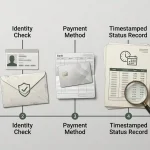
Think of the label as the start of an identification check. Is the site describing itself as Gibraltar-licensed, or merely referring to a company in Gibraltar? Is the claim attached to the casino itself, or mentioned somewhere in a broader corporate description? Those distinctions matter because “Gibraltar casino sites” is a loose phrase people use for different things: casinos claiming a Gibraltar licence, businesses connected with Gibraltar, or simply sites someone has grouped under that heading.
The same care applies to Gibraltar slot sites. A page focused on online slots tells you about the games being presented, not which jurisdiction supervises the operator. Game category and regulatory status are separate questions. It is easy to mix them up when the site’s branding makes the whole package look like one neat label.
I would also avoid assuming that every site linked to the same place operates in the same way. The broad category includes casinos associated with several licensing jurisdictions, not just Gibraltar. Malta, Curaçao and Anjouan are also names that may appear in this context. The jurisdiction is part of the picture; it is not a universal description of every casino carrying that label.
Online Casinos with Malta MGA Licences in the UK
Keep the terms distinct
“Non-UK-regulated” is the clearest description when the point is that a casino operates without UK Gambling Commission oversight. “Gibraltar casino” is less precise: it can suggest a licence connection or a company connection, and those are not interchangeable ideas. If a site uses the phrase, read it as a claim to understand, rather than a verdict.
That distinction helps when comparing online casino sites associated with Gibraltar with sites linked to other jurisdictions. You are not looking at a separate type of slot or a special form of casino game. You are looking at an online gambling site whose regulatory connection is described by reference to a jurisdiction outside the UK Gambling Commission’s oversight.
The label is only a starting point. Don’t let it do the thinking for you.
How I’d Judge a Casino Calling Itself “Best”
I’ve learned to treat “best” as a sales word, not a finding. A casino can look polished, carry a Gibraltar connection and still leave you with questions that matter more than the games: who is responsible for protecting you, what happens if gambling stops being fun, and where can you take a complaint? I would not call a site the best for UK play just because its own pages say so.
My first check would be whether the operator is regulated for the market it serves, and what that regulation means in practice. For customers in Great Britain, the important safeguards are those attached to a UK Gambling Commission licence. A non-UK-regulated casino may be subject to less demanding responsible-gambling and data-protection rules than a UKGC-licensed operator. That does not prove every such site behaves badly; it does mean I would not assume that familiar protections follow simply because a casino looks professional.
UK Casino Safety & Regulation: Licensing Guide
Look past the responsible-gambling page
A page listing safer-gambling advice is not the same thing as tools you can use on your account. I would check what controls the operator actually offers, how easy they are to find, and whether the site explains what happens when you ask for help. The UK has mandatory responsible-gambling tools for customers at regulated operators. Players using offshore casinos do not get those mandatory protections.
GamStop is another point I would check before creating an account. Casinos not on GamStop are outside the UK Gambling Commission’s self-exclusion scheme, so registering with GamStop should not be treated as a way to block access to them. If you have chosen to self-exclude, that distinction is not a technical footnote. It changes what the safeguard can do.
I used to skim the safer-play links and tell myself that having a policy meant I was covered. It didn’t. Read the controls, not the reassurance.
Ask what happens if something goes wrong
I would also look for a clear route to raise a complaint and understand who can review it. When you play at an offshore casino, you forfeit access to the UK’s Financial Ombudsman Service and to the mandatory responsible-gambling tools available through the UK system. That makes recourse part of the decision, not paperwork to think about after a problem appears.
No UK Recourse
When playing at an offshore casino, you forfeit access to the UK’s Financial Ombudsman Service and mandatory UKGC responsible-gambling tools.
I would be wary of treating a live chat or a friendly reply from support as independent oversight. It may help resolve a routine issue, but it is not the same as having a UK regulator or the Financial Ombudsman Service available to you. Before depositing, I’d want to know where the operator says complaints go, and whether that route is genuinely independent. If the information is hard to find or vague, I would count that against the site rather than assume it will be fine.
Treat privacy as a real part of the choice
Data protection deserves the same attention as account security. Non-UK-regulated casinos may operate under less stringent data-protection rules than UKGC-licensed operators. I would look for a readable privacy policy that explains what information is collected, how it is used, and who it may be shared with. A generic promise to keep information safe tells me little by itself.
A site’s design, game selection or Gibraltar branding cannot answer those questions. Nor can a “best online casino” label. I would judge the operator by what protections are actually available, how clearly they are explained, and what recourse remains if the operator does not resolve a problem. If those details do not stand up to scrutiny, a generous-looking welcome page would not change my view. No shortcut here.
“Top” Casino Sites in 2026: Read the Terms Before the Hype
If you’re looking at casino options in the UK for 2026, licensing is an important point to check for yourself. This list gives you one stated detail for each operator: its payout speed.
1. BeOnBet
Payout speed: 1-3 business days BeOnBet lists a payout speed of 1–3 business days, giving you a stated timeframe to consider.
2. EvoSpin
Payout speed: 1-3 business days EvoSpin lists payouts at 1–3 business days, so you have a stated timeframe to refer to.
3. Revery Play
Payout speed: 1-3 business days Revery Play lists a payout speed of 1–3 business days. This gives you a clear stated detail to weigh up.
4. NightLuck
Payout speed: 1-3 business days NightLuck lists payouts at 1–3 business days, providing you with a stated timeframe.
5. Zombillion
Payout speed: 1-3 business days Zombillion lists a payout speed of 1–3 business days, which gives you a specific timeframe to consider.
6. Dieselwin
Payout speed: 1-3 business days Dieselwin lists payouts at 1–3 business days. You can use this stated timeframe as one point of reference.
7. SpinFormula
Payout speed: 1-3 business days SpinFormula lists a payout speed of 1–3 business days, giving you a stated timeframe to keep in mind.
8. NightWin
Payout speed: 1-3 business days NightWin lists payouts at 1–3 business days, providing you with a stated detail about payout timing.
9. Britsino
Payout speed: 1-3 business days Britsino lists a payout speed of 1–3 business days, giving you a timeframe to consider.
10. WinBeast
Payout speed: 1-3 business days WinBeast lists payouts at 1–3 business days. This is the stated payout timeframe available for you to consider.
A page calling something a “top” Gibraltar casino is making a judgement, not proving that the site is right for you. I’d treat a ranking as a starting point for checking the terms, not as a recommendation. A polished badge or confident verdict doesn’t tell you how a withdrawal works when you actually want your money back.
The year in the headline doesn’t change that. A list labelled for 2026 can still rely on old details, and a site’s policies can change. Before relying on any claim about deposits or withdrawals, look for the operator’s current terms and make sure you can find the rules that apply to your account. If the wording is vague, I wouldn’t fill in the blanks with optimism.
There is a genuine trade-off worth noticing. Non-UK-regulated casinos may set more lenient deposit and withdrawal policies, with fewer restrictions and the possibility of faster payouts. That can sound appealing if you have run into frustrating limits elsewhere. But “more lenient” is not a promise that every request will be easy, or that a headline ranking has checked the exact terms you will face.
I’ve learnt not to stop at the deposit rules. A site can make it straightforward to put money in while setting separate conditions on how much you can take out and when. Read the withdrawal section before you deposit, and check whether it describes limits by day, week or month. If a limit applies, a large win may have to be withdrawn in instalments rather than as one payment.
Casino Without a Swedish Licence: UK Rules Explained
A specialist review reports that some non-UK-regulated casinos impose those daily, weekly or monthly caps. That is a report about some sites, not a rule for every casino with a Gibraltar connection. Policies differ, and the useful question is what the specific operator’s terms say now. I’d also look for whether the cap applies to all withdrawals or only particular account circumstances, rather than assuming the most favourable interpretation.
That detail matters more than a “top” label. A limit can shape how long it takes to receive a large balance, even if the site describes its overall policy as flexible. If the terms are hard to locate, contradict themselves, or leave the cap unclear, I’d count that as a reason to pause. The friction usually arrives later.
My own mistake used to be reading the bright claims and skimming the conditions. Now I’d compare the actual withdrawal wording across any sites I was considering, and keep a copy of the terms shown when I registered. That gives you something concrete to refer back to if the wording changes or you need to question how a rule was applied.
Withdrawal Terms Check
- Read the withdrawal section before depositing
- Check for daily, weekly, or monthly withdrawal caps
- Verify if large wins must be paid in instalments
- Save a copy of the terms shown during registration
So, if you’re weighing up Gibraltar casino sites in 2026, don’t let a ranking make the decision for you. Look past the label, check the current deposit and withdrawal policies, and pay particular attention to any limits that could split a larger withdrawal into instalments. A fast-sounding promise is easy to print. The terms are where it gets real.
Real-Money Play: Payments and the Limits of Convenience
A payment logo can make a casino look easier to use than it is. I’ve learned to treat the cashier as a description of possible ways to deposit, not a promise that every route will work for every player—or that the same route will be available when you want your money back.
A non-UK-regulated casino may list cards, e-wallets, bank transfers and cryptocurrency. Payments can be handled through alternative processors, so the name on a transaction may not match the casino’s name. That can make it harder to recognise a payment or work out who to contact if something goes wrong. Before sending money, I’d check the payment instructions shown by the operator and whether they identify the processor and the account receiving funds.
Non-UK Licence Casinos: What the Licence Means
A familiar logo isn’t the whole story.
Credit cards need particular care. Gambling with a credit card is banned in the UK, but a non-UK-regulated site may still describe card payments among its options. Cryptocurrency can bypass the UK ban on credit-card-funded gambling, but that doesn’t make a crypto deposit equivalent to using a UK-licensed casino or bring the site under UK rules. The payment method changes how money moves; it does not change the operator’s regulatory status.
E-wallets and bank transfers bring their own practical checks. An operator may direct you to a particular provider or processor, and a method displayed on the deposit page might not be available to you at checkout. I wouldn’t assume that a payment route shown in a general list is active for every country, account or currency. Read the live cashier screen before confirming anything.
The same goes for withdrawals, though the detail belongs to the operator’s terms: a deposit method does not guarantee that a withdrawal can be sent back through it. The site may specify a different route or require you to use one it supports. I’d look for those rules before depositing, not after a balance has built up. Small print first.
International Casinos for UK Players: Rules and Risks
There are also reports of more unusual ways to fund an account. One specialist review reported casinos offering deposits charged to a mobile phone bill or taken from a prepaid balance. Treat that as a reported option, not a standard feature: availability can vary, and the operator’s current cashier is what matters.
If you’re comparing real-money casino sites connected with Gibraltar, keep two questions separate: where the operator is based or licensed, and how a payment is processed. Neither a Gibraltar connection nor a smooth-looking cashier tells you that the service is authorised for customers in Great Britain. Remote operators serving that market need a UK Gambling Commission licence, regardless of location.
I’d check the payment route, the processor, any conditions attached to using it, and the withdrawal method before putting money in. Don’t mistake convenience for protection. A quick deposit can still leave you with questions about where the money went and what options you have next.
Non-UKGC-Licensed Casinos: Rules and Risks
Online Casino Payouts: Delays, Checks and No UK Recourse
The time shown beside a withdrawal method is not a promise that the money will arrive then. Reports on non-UK-regulated casinos disagree: some say a withdrawal can clear within 24 hours to 5 business days, depending on the payment method; others say it can take three or four weeks. That gap matters. A quick estimate is not much comfort if the operator can keep the request pending.
I have learned to separate processing time from the time spent waiting for checks. After you ask to withdraw, an operator may review your account or request more proof of identity. A specialist casino review has also reported requests for notarised documents or a video call in some cases. That is a reported possibility, not a standard step at every site, but it is worth knowing before a balance is sitting there.
A request can therefore turn into a longer exchange: you submit documents, wait for them to be reviewed, then respond if the operator asks for more. Keep copies of what you send and save messages and screenshots showing the request and its status. If the account is frozen or the payment is delayed, that record may help you explain the problem to the operator. It does not create an external route to force a payout.
With a non-UK-regulated casino, you cannot take the complaint to the UK Gambling Commission’s complaints process or rely on a UK regulatory deadline to make the operator act. There is no UK regulatory clock for enforcing the stated withdrawal time. That is the part I would weigh more heavily than a promise of speed.
Safe Online Casinos in the UK: Checks Before You Play
Before requesting a payout, read the withdrawal and verification conditions and check what documents the operator may ask for. If a request for extra checks arrives, use the operator’s stated complaint channel and keep the exchange in writing where possible. Be wary of treating a delay as harmless simply because the site says the payment is being reviewed. You may have limited practical recourse if it stays that way.
A Gibraltar connection does not, by itself, tell you how quickly a particular casino will pay or what checks it may require. The useful question is what the operator’s written terms say about withdrawals, and what happens if the process stalls. Fast on paper. Different in practice.
New Casino Offers: The Wagering Fine Print I’d Check First
A welcome offer can look generous until you find out what you have to wager before withdrawing any winnings. I’ve made the mistake of judging a bonus by its headline, then discovering the important part was tucked into the conditions. Now I start there.
The multiplier is only half the story. A specialist review has reported offshore welcome offers with wagering requirements of 35x or more, but that is a reported example, not a rule for every casino or promotion. Check what the multiplier applies to: the bonus alone, your deposit and bonus together, or another combination. Those versions can leave you with very different amounts to wager.
A specialist review has also described an offer with a 40x requirement applied in different ways: to the bonus and deposit combined, to the bonus alone, or to the bonus and free spins together. Don’t assume the most favourable interpretation. Find the wording in the offer’s own terms and work out the base before deciding whether the offer is worth taking.
Bonus Terms
Attention: Wagering requirements can apply to the bonus alone, the deposit and bonus combined, or the bonus and free spins together, significantly changing the amount you must wager.
Free spins have their own catches. One specialist review reported requirements of 30–50 times the winnings, alongside withdrawal caps of £5–£50. Those figures are reported terms, not a promise that every offer uses them; the particular promotion matters. A cap can also mean that even a lucky run does not translate into an equivalent cash withdrawal.
I’d check the expiry conditions too. A specialist review has reported free-spin packages that expire within 24–72 hours. That is a narrow window to use them, and any winnings may still be subject to wagering and a withdrawal cap. “Free” can come with quite a list.
Before accepting a promotion, I’d look for the wagering base, which games count, any maximum bet while wagering, the deadline, and the cash-out cap. Then I’d save a copy of the terms shown at the time. Promotions and their conditions can change, so don’t rely on an old review or a banner alone.
If the terms are hard to locate or the wording leaves you guessing, I’d treat that as a reason to pause, not as a challenge to figure out later. The headline is the sales pitch. The conditions are the deal.
Anjouan as a Cautionary Comparison for Gibraltar Casino Claims
A Gibraltar connection can sound reassuring, but the word “licensed” is not a complete description of what protections apply. I’ve learned to treat the jurisdiction named on a casino’s paperwork as a starting point, not a shortcut to a verdict. Anjouan is a useful comparison here—not because its rules tell you anything about Gibraltar, but because it shows how much licensing standards can differ between jurisdictions.
Anjouan Casino Licence in the UK: What It Means
Under the Anjouan framework, casinos are not required to keep player funds separate from operating funds. If an operator fails, players are unsecured creditors, which means their claims are not backed by a guarantee that their balances have been ring-fenced. That is a material detail, not fine print I’d wave away while looking at a polished site.
The framework also does not require casinos to have their random number generators tested or to undergo audits. That does not prove a particular game is unfair. It does mean the licensing rules do not mandate those checks, so a player should not infer that they happen simply because an Anjouan casino licence is displayed. The distinction matters when a site’s design and marketing give an impression of oversight broader than the jurisdiction’s requirements.
Complaints are another place where the label alone can mislead. Anjouan’s authority does not take up, mediate or decide individual player disputes, and the framework does not provide an independent resolution route comparable to the services available through UK-approved arrangements. Operators are required to answer complaints within 30 calendar days. An answer from the operator is not the same thing as an independent decision if you and the casino disagree.
USA Casinos for UK Players: Licensing and Risks
That is the point of the comparison. These are facts about Anjouan, not a description of Gibraltar’s rules. I would not use them to declare that Gibraltar-licensed casinos have the same safeguards, or that they lack them. The Gibraltar online casino industry needs to be assessed on its own regulatory framework and the specific operator’s status. The same applies when you encounter claims about new casinos or “top” sites connected with Gibraltar: a jurisdiction’s name is not evidence that every operator under it has identical protections.
So when a casino advertises a Gibraltar link, look for the actual regulator and the company named on the licence, then check what the applicable rules require. Do not borrow assumptions from another jurisdiction, even one whose licence looks familiar. Anjouan makes the risk of that mistake plain: rules on fund protection, game testing and dispute handling can be quite specific, and one licence does not stand in for another.
I’d rather see a precise answer about who regulates the operator and what that regulator can do than rely on a broad claim about being “licensed”. The badge is only the beginning.
Can UK players legally play at casinos licensed in Anjouan?
UK law does not explicitly prohibit you from using gambling services licensed in another country, and playing on an unlicensed site is not itself a criminal offence. However, an Anjouan licence does not authorise a casino to operate in Great Britain; operators serving customers there need a UK Gambling Commission licence.
Are Anjouan-licensed casinos safe and fair?
An Anjouan licence does not guarantee independent game testing, audits or segregated player funds. You also do not get an independent dispute-resolution route comparable to UKGC-approved services, and the Anjouan authority does not adjudicate player complaints.
What payment options are available at Non UK Casinos?
You may find credit cards, e-wallets, bank transfers and cryptocurrencies, often processed through alternative providers. Some casinos also accept deposits charged to a mobile phone bill or deducted from a prepaid balance.
Are sites that are not on GamStop legal for players in the UK to access?
UK law does not explicitly prohibit you from using gambling services licensed in another country, and a player does not commit a criminal offence merely by gambling on an unlicensed site. But casinos not on GamStop are outside the UK Gambling Commission’s self-exclusion scheme, and operators serving customers in Great Britain need a UKGC licence.
Safety

Anjouan Casino Licence in the UK: What It Means
An Anjouan licence reflects the operator’s claimed approval under its own framework, not permission to...

Foreign Casinos for UK Players: Rules and Risks
Foreign casinos accepting UK customers sit outside UKGC regulation, which can affect player protections, bonuses,...

International Casinos for UK Players: Rules and Risks
Foreign licences, bonus terms, player safeguards and payment delays all affect how offshore casinos differ...

Offshore casino sites in the UK: licence checks
An offshore licence is not a substitute for UKGC approval, and payment, bonus and verification...

Offshore casinos for UK players: what to check
A practical look at licensing, promotions, crypto and withdrawals, with a focus on what changes...

British Casinos Not on GamStop? What the Label Means
The label describes a casino’s distance from GamStop, not its safety, UK status or equivalent...

Casino sites not on GamStop: what UK players should know
Explore how operator participation, licensing, payment claims and bonus rules relate to the limits of...

Casino Without a Swedish Licence: UK Rules Explained
A casino’s location or international label does not establish its licensing status or whether it...

Casinos That Bypass GamStop: What to Know
GamStop applies to UKGC-licensed operators, while casinos outside that system may offer different licensing, support...

Curaçao casino licence in the UK: what it means
A Curaçao licence identifies an operator's regulatory framework, but does not mean it is regulated...

Merkur Casino Online UK: Games, Licences and Checks
Merkur branding does not identify a casino or confirm its games, so check the operator,...

Trustworthy Online Casinos in the UK: What to Check
Trust depends on the operator’s licence and terms, while even regulated sites cannot guarantee a...

Non-Gamban casinos in the UK: what it means
Gamban only indicates whether access is blocked; it does not confirm a casino’s safety, suitability...

Non-GamStop Curaçao Casino Sites: UK Licence Checks
A licence badge is not proof of UK authorisation or participation in the UK self-exclusion...

Non-GamStop European Casinos: UK Rules Explained
European branding does not establish UK licensing or GamStop participation; the distinction matters when exclusion...

Non-UK Licence Casinos: What the Licence Means
A licence identifies the regulator and oversight system, but non-UK authorisation does not mean the...

Non-UK-Registered Casinos: What the Label Means
The guide separates a casino’s licensing jurisdiction from UKGC oversight and examines protections, payments and...

Non-UK-Regulated Casinos: Licences and Risks
A licence applies under the rules of its jurisdiction; UKGC permission is required for operators...

Non-UKGC-Licensed Casinos: Rules and Risks
A look at how non-UKGC casinos are licensed, what protections may be missing and what...

Online Casinos with Malta MGA Licences in the UK
An MGA licence sets obligations for operators, but does not by itself establish that a...

Online slots not on GamStop: what it means
GamStop participation depends on a casino’s regulatory position, which can affect the protections and checks...

Safe Online Casinos in the UK: Checks Before You Play
A practical look at operator information, terms, support and payments when assessing whether a casino...

Casinos Not on GamStop UK: What Trust Really Means
A clear-eyed guide to licensing, gambling safeguards, bonuses and withdrawals at casinos outside the UKGC...

Trusted UK Casinos in 2026: Licence Checks
A practical check starts with UKGC permission, then looks at player safeguards, bonus terms, support...

USA Casinos for UK Players: Licensing and Risks
A practical guide to licensing status, cash-out routes, ownership ties and the limits of offshore...

VPN-Friendly Casinos in the UK: Rules and Risks
Understand how casino VPN policies differ from licensing, and what offshore sites may mean for...