Bonus-Buy Slots in the UK: Demo Play and Safer Use
 Available in GB

See how demo play, game volatility and UK stake limits affect the way bonus-buy features fit into a slot session.
Table of Contents
- Try the Feature in Demo Mode Before You Risk a Stake
- What to Check Before Using a UK Casino
- The Bonus-Buy Button: What It Actually Does
- Slots With a Buyable Bonus—and What Volatility Changes
- Bonus-Buy Slots Under Great Britain’s Stake Limits
- Free Play Is Practice, Not a Free Cash Win
- Playing Bonus-Buy Slots Online: Pace and Limits
- How Slot Designs Shape Bonus Rounds
- How to Think About a Buyable Bonus Session
- Where Bonus-Buy Slots Fit—and Where Table Games Differ
- Games
Try the Feature in Demo Mode Before You Risk a Stake
A demo is useful for one simple reason: it lets you look around a slot without putting your own money into it. If the game offers a bonus-buy option in demo mode, you can see how that part of the interface feels, follow the on-screen steps and get used to the pace without treating the session as a test of your luck.
I used to skip that stage because I thought I already knew what I was doing. Then I’d open a game, tap around too quickly and only afterwards realise I hadn’t understood the options on screen. A few minutes in a demo would have saved me the confusion. Not the losses, necessarily. The confusion.
Use the demo to learn the layout
Start by opening the game in demo mode and taking a moment before you spin. Look at the controls and read any information the game displays about its features. If a bonus-buy option is available, check how it is presented and what confirmation steps appear. You are learning the route through the game, not making a claim about what the feature will pay.
When choosing bonus buy slots, you should check both the games and the practical details of the casino. The information available for these listings is limited to payout speed, so it does not confirm bonus buy availability.
1. BeOnBet
Payout speed: 1-3 business days BeOnBet is listed with a payout speed of 1–3 business days. You should check whether its games include the bonus buy slots you want.
2. EvoSpin
Payout speed: 1-3 business days EvoSpin is listed with a payout speed of 1–3 business days. The available information does not specify its bonus buy slot selection.
3. Revery Play
Payout speed: 1-3 business days Revery Play is listed with a payout speed of 1–3 business days. You’ll need to check its game catalogue for bonus buy options.
4. NightLuck
Payout speed: 1-3 business days NightLuck is listed with a payout speed of 1–3 business days. No details are provided about its bonus buy slots.
5. Zombillion
Payout speed: 1-3 business days Zombillion is listed with a payout speed of 1–3 business days. The available information does not confirm which bonus buy slots, if any, it offers.
6. Dieselwin
Payout speed: 1-3 business days Dieselwin is listed with a payout speed of 1–3 business days. Check its current game selection to see whether it suits your bonus buy preferences.
7. SpinFormula
Payout speed: 1-3 business days SpinFormula is listed with a payout speed of 1–3 business days. No specific information is available here about its bonus buy slot range.
8. NightWin
Payout speed: 1-3 business days NightWin is listed with a payout speed of 1–3 business days. You should verify its game catalogue for bonus buy availability.
9. Britsino
Payout speed: 1-3 business days Britsino is listed with a payout speed of 1–3 business days. The details provided do not indicate which bonus buy slots it carries.
10. WinBeast
Payout speed: 1-3 business days WinBeast is listed with a payout speed of 1–3 business days. You’ll need to check its game selection for bonus buy options.
That distinction matters because titles do not all present their menus in the same way. Some make the relevant option easy to spot; others place it among several controls or explanations. In a demo, you can take your time, close a panel and reopen it, or pause to read the wording without feeling that every second is costing you.
If you are looking for bonus-buy video slots to practise with, treat the demo as a way to compare the experience of using their interfaces. Notice whether the instructions make sense to you and whether you can tell what you are selecting before you confirm it. Don’t assume that a familiar-looking screen works exactly like another game’s.
Watch what happens, not what you hope will happen
A demo can show you how the game responds when you enter a feature, what screens appear and how the round is presented. Pay attention to the sequence. Does the game explain your choices clearly? Is there a result summary you can follow? Can you tell when the feature has ended and the ordinary game screen has returned?
These details are more useful than trying to judge whether a demo session is “good”. Fake credits are not money, and any balance shown in demo play is only part of the simulation. The game does not pay out cash in demo mode. A large-looking result on screen is not a win you can withdraw, and a poor run does not mean you have uncovered how a real-money session will go.
I’ve made the mistake of remembering a fun demo run as though it said something about the next time I played for money. It didn’t. The sequence of outcomes in a demo is not a promise, a forecast or a record of what you can expect when you switch modes. It is just a way to experience the game’s presentation.
Make a small checklist for yourself
When you try a bonus-buy slot demo in the UK, keep your attention on practical questions:
- Can you find the game’s instructions without guessing?
- Do you understand the prompts before confirming a selection?
- Is the feature sequence easy for you to follow?
- Do you know how to leave the game or return to its main screen?
You do not need to turn this into homework. The point is to catch anything that would otherwise make you feel rushed or uncertain. If the controls are confusing, try another game or read the help panel again. There is no reason to learn while money is at stake.
A demo can also help you decide whether you enjoy the style of a game. You may find the animations too slow, the presentation too busy or the feature sequence less engaging than you expected. That is a perfectly good reason to move on. The word “exciting” in a game description is advertising language; what matters is whether you actually like sitting through the experience.
Keep the result in its proper place
The demo’s most tempting trap is the apparent balance. Since it looks like a running total, it can feel meaningful. It isn’t a cash balance. The credits are fictional, and demo play awards no payouts, however convincing the display may look. Don’t count a demo result as winnings or use it to justify a later deposit.
Attention: Demo credits are fictional and have no cash value. A large result on a demo screen is not a win you can withdraw.
Nor can a demo tell you that a buyable feature will turn a losing session around. Over enough play, a game with an advantage built in for the house is mathematically unfavourable to the player, even when losses arrive slowly rather than all at once. A short demo cannot change that underlying fact or show you a reliable route to profit.
I now use demos for what they can actually do: let me learn the screen, read the prompts and decide whether I like the game’s feel. If the demo is unavailable, or its bonus-buy option is disabled, don’t treat that as a reason to guess. You can still explore the ordinary interface, but you have not practised that particular feature.
A demo is a preview, not a rehearsal that guarantees the same experience with real money. Keep the credits imaginary, take the time you need, and stop once you have learned what you came to learn. No cash win.
What to Check Before Using a UK Casino
When I’m looking at a casino that offers bonus-buy slots, I try to ignore the welcome banners for a moment. A feature on a game page tells you nothing about who is taking your deposit or what safeguards apply to your account. The first check is whether the operator is authorised to serve players here.
3-reel slots in the UK: how to find them
In Great Britain, the UK Gambling Commission oversees commercial gambling, including online casino services. It is the only regulator for commercial gambling in Great Britain. An operator selling remote gambling to consumers there needs the relevant Commission licence even if its equipment or business is based elsewhere. A foreign address is not a substitute for permission to serve the British market.
Before depositing, find the operator’s licence details and check the licence number against the Commission’s public register. I don’t treat a logo or a line in a site footer as proof on its own: details should identify the business behind the casino and match the register entry. If you cannot find a number, or the register does not support the claim, stop before sending money. This small bit of checking is less exciting than choosing a game. It matters more.
A UK-facing site may use “licensed” in its own wording, but that wording is not the check. The Commission issues operating licences to businesses, while personal licences apply to individuals working in relevant roles. For a player choosing where to open an account, the operator’s authorisation is the key point. Keep in mind, too, that the Gambling Act 2005 applies in England, Wales and Scotland, not Northern Ireland; the legal framework is not identical across every part of the UK.
Checking UK Casinos
- Verify the operator’s licence number against the Gambling Commission’s public register
- Confirm the operator is authorised to serve the British market
- Locate responsible gambling tools and self-exclusion options
- Ensure the payment method does not use credit cards
Account checks before a deposit
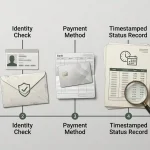
A licensed casino should verify your age before it allows you to deposit. Don’t read an account opening screen as a promise that you can start gambling immediately: the operator has to establish that you are old enough first. If the checks are unresolved, wait for them to be completed rather than trying to work around the process.
The site should also prompt a new customer to set a financial limit before the first deposit, and provide account controls that let you manage limits afterwards. I used to skip past settings because they felt like admin. That was a poor habit. Setting a boundary before money is in the account gives you a decision made with a clearer head, rather than one made mid-session.
Look for responsible gambling tools, including self-exclusion, and make sure you can locate them without digging through layers of menus. Licensed casinos must provide these tools. If you want to stop gambling, self-exclusion is a practical account control, not a decorative link. It is worth knowing where it sits before you need it.
Payment rules are another useful signal. UK-licensed casinos cannot accept credit cards for gambling, and remote operators cannot take credit-card payments routed through a money service business. They also cannot accept wallet payments when that wallet allows credit-card funds to be used for gambling. If a payment route seems to bypass those restrictions, do not assume it is acceptable just because the cashier offers it.
RTP Casino Slots in the UK: What the Figure Means
Know what happens if there is a problem
Before you play, find the complaints information. UK Gambling Commission licensees must have an internal complaints process and give customers access to an approved Alternative Dispute Resolution service. That does not mean every disagreement will be settled the way you want. It does mean there should be a stated route to raise it and, where appropriate, take it beyond the operator.
Save relevant account messages and payment records if an issue arises, and use the casino’s stated process rather than relying on a chat promise that disappears from view. I learned to check these pages before I had a reason to complain. Much easier that way.
None of these checks tells you whether a particular slot will suit you, and a licence is not a promise of a winning session. It establishes who is responsible for offering the service and which safeguards should be in place. For a casino with bonus-buy games, I’d make the register check and account controls part of the decision before considering anything else. No banner beats that.
The Bonus-Buy Button: What It Actually Does
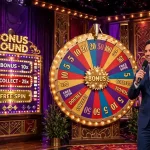
A bonus-buy feature is a paid route into a slot’s bonus round. Instead of spinning through the base game and waiting for the feature to trigger, you pay the amount shown by the game to enter it directly. That is the basic idea behind slots with a buy bonus feature: you are buying access to a round, not buying a win.
The wording can make the option sound more certain than it is. “Buy bonus” means the game starts the bonus feature after you accept its price; it does not mean you purchase a particular payout. The round still plays according to the game’s rules, and its result can be small, large or nothing useful to your balance. Entry is the thing being bought. The outcome is not.
A bonus-buy feature grants entry into a bonus round; it does not guarantee a specific payout or remove chance from the outcome.
I used to blur those two ideas together. If a game put a price beside a feature, I treated that price almost like a ticket to a better result. It isn’t. The price covers entry into a different part of the slot, with its own sequence of spins or events. It does not remove chance from what happens next.
A bonus round might involve extra spins, symbols that trigger further features, or another mechanic defined by that particular game. The details vary, so the label alone tells you very little about what the round will do. Two slots can both offer a bonus buy and still have quite different features and outcomes. Read the rules for the specific game rather than assuming the button means the same thing everywhere.
The buy option also changes how you reach the feature, not what the slot is designed to pay overall. If you enter directly, you skip the usual wait for the base game to trigger the bonus. That can make the session feel more immediate. It can also make the cost feel easier to underestimate, because the price is charged in one deliberate step rather than accumulating through ordinary spins.
There is no magic in that shortcut. If a slot has a positive house edge, its mathematical expectation is negative over enough play, whether losses arrive gradually or are concentrated around feature entries. A bonus buy does not turn that expectation around. A good-looking bonus result can happen, but it does not prove the purchase was profitable as a general strategy.
Highest RTP Slots in the UK: What RTP Really Means
It helps to separate three things: the price of entry, the feature’s rules, and the result it produces. The game tells you the first two; chance determines the third. I’ve had rounds that felt promising and delivered very little. That is not a broken promise by the button. It is the risk that comes with paying to reach a feature whose outcome is uncertain.
Some games do not offer a purchase option at all, and a game that does may set its own terms for how the feature works. So “bonus-buy slots” is not a guarantee of a standard feature or a standard result. It is a broad description of slots that let you pay to enter a bonus round directly.
The button is an entry point. Nothing more.
Slots With a Buyable Bonus—and What Volatility Changes
A buyable bonus is part of a slot’s feature set, but it doesn’t tell you what the rest of a session will feel like. That depends in part on volatility: the game’s pattern of returns. I used to treat the bonus as the main event and the spins around it as filler. That was a mistake. The game’s volatility still matters, whether you reach the feature through ordinary play or pay to enter it.
Low-volatility slots tend to spread returns across more frequent, smaller wins. Across most titles, winning combinations typically appear every three to six spins on average. That can make a session feel less stop-start, but it doesn’t mean every run will deliver a win on schedule, or that those wins will cover what you have staked. An average describes a broad pattern, not a promise about your next few spins.
Low Volatility
Returns are spread across more frequent, smaller wins, making the session feel less stop-start.
High Volatility
Wins occur less often but can be larger, often involving longer stretches between hits.
High-volatility slots take the opposite shape: wins tend to come less often, but can be larger. A quiet stretch may be followed by a stronger result, but there is no dependable point at which that change arrives. I’ve sat through a run thinking the game “owed” me a hit. It didn’t. The gap between wins is part of the risk, not evidence that a larger one is due.
That difference matters when a slot offers a buyable bonus. The feature may be the reason you chose the game, yet its presence doesn’t turn a high-volatility session into a steady one. Nor does choosing a lower-volatility slot guarantee that the bonus will pay well. The bonus is one possible part of the game’s results; volatility describes the broader pattern in which wins are distributed.
So, when comparing slots with bonus buy, look beyond whether the feature can be entered directly. Consider whether you can tolerate a session with frequent, modest returns or one with longer stretches between wins and the possibility of larger amounts. Neither pattern makes the game safe or predictable. “Best” depends less on a headline feature than on whether the likely rhythm suits your appetite for swings.
This is also why a slot’s bonus-buy option shouldn’t be mistaken for a shortcut to a better outcome. Paying for the feature changes how you enter that part of the game, not the game’s underlying volatility. If the slot tends to produce less frequent, larger wins, that profile still matters during the bonus; if it tends towards smaller, more frequent returns, that doesn’t promise a profitable feature either.
Fruit Machine Slots UK: How Online Games Work
I now pay attention to the sort of session a game can produce before getting drawn in by its bonus. A buyable feature can make the slot look more immediate. Volatility is the less flashy detail, but it gives you a clearer sense of the possible pace: smaller returns spread through play, or fewer wins with bigger swings. Neither is a forecast. Just a useful warning.
Bonus-Buy Slots Under Great Britain’s Stake Limits
A bonus-buy stake still sits within the rules for online slots in Great Britain. A specialist review reports a maximum of £5 per game cycle for customers aged 25 and over, and £2 for those aged 18 to 24. These are limits on the total stake in a cycle, not a separate allowance for entering a feature.
That distinction matters when you are weighing up a buyable bonus. The amount shown for entry may look like a single price, but the relevant question is whether the total stake for that game cycle stays within the limit for your age group. A feature purchase does not make the slot exempt from the stake cap.
I used to focus on whether the displayed price looked manageable and ignore what it meant for the round as a whole. That was a poor way to think about it. The cap is a boundary, not a recommendation to stake up to it, and it does not make a purchase sensible for your budget.
Stake Limits
Maximum stakes are £5 for players aged 25+ and £2 for those aged 18–24. Feature purchases must stay within these legal limits per game cycle.
If you are aged 18 to 24, the lower limit applies to you; being close to your next birthday does not change which age band you are in now. For customers aged 25 and over, the higher limit applies. In either case, check the amount the game treats as the stake for that cycle rather than assuming the feature price is assessed in isolation.
This can also affect how you compare games. A buyable feature may be offered at a price that does not fit within the limit that applies to you. If so, do not treat that as a puzzle to work around. The limit is there to constrain the stake, not invite you to find another route into the same spend.
The review’s description is a useful prompt, but rules and product details can change. Check the current information available for the game and the applicable Great Britain requirements before staking. If a screen makes the stake unclear, pause rather than guessing. A few seconds spent checking beats discovering the amount only after you have committed.
I find it helps to decide what I can afford to lose before I open a slot, then keep that figure separate from the legal maximum. The cap answers what is permitted for a game cycle; it does not tell you what you can comfortably afford, nor does it promise anything back. A permitted stake can still be money gone.
Penny Slot Machines in the UK: Stakes and Costs
Keep those ideas apart: the legal ceiling, the feature’s stated cost, and your own spending boundary. They are not interchangeable. The stake cap is a hard limit on the cycle, while your personal limit should reflect what you can genuinely spare. No clever wording changes that.
Free Play Is Practice, Not a Free Cash Win
Free play can make a bonus-buy slot feel like a no-risk test, but that description needs a small correction: it is no-risk only because the balance is pretend. You are not staking money, and any result on screen is not a cash payout. I remind myself of that because a lively session can feel convincing even when nothing real is at stake.
The useful part is getting comfortable with the game’s controls. You can see where the displayed balance sits, how the menus respond and what happens when you choose an option. If the free version includes access to a buyable feature, you can learn how to find and activate it without paying. That is practice with the interface, not evidence that the same choice will be worthwhile with real money.
I used to treat a good free-play run as a sign that I had found a promising game. It was an easy mistake: a string of appealing results looks like a pattern when you are watching it unfold. But free credits do not establish what a real-money session will return. They are not withdrawable winnings, and a result on a screen cannot promise what will happen when you switch to real play.
Do
- Use free play to learn the game layout
- Practise activating bonus-buy features
- Check if you enjoy the game’s pace
Don’t
- Treat demo wins as a forecast for real money
- Assume a lucky demo run guarantees profit
- Use pretend credits to justify deposits
The same caution applies if free play goes badly. A run of losing results does not prove that the next paid session is due a win, either. Each session can look different. Over enough play, a game with a house edge in the casino’s favour has a mathematical expectation that works against the player, whether losses arrive gradually or in more noticeable bursts. The pretend balance does not change that underlying arithmetic.
So I use free play for small, practical questions: Can I understand the controls? Can I follow what the game is showing me? Do I actually like the pace and presentation? If the answer is no, there is little reason to move on to real money. If the answer is yes, that still tells me only that I might enjoy the game—not that I have found a way to make it pay.
Keep the two balances mentally separate. Fake credits are there to let you handle the game, not to build a bankroll or forecast a result. I have caught myself getting carried away by a free-play win, then having to remember that the win had no cash value at all. Better to notice that before money is involved.
Free play is most useful when you leave it with a clearer sense of the controls and a more realistic idea of what the game feels like. It cannot tell you that a real-money session will repeat the same results, and it cannot turn a losing game into a favourable one. Practice, not proof.
Progressive Slots Online in the UK: How Jackpots Work
Playing Bonus-Buy Slots Online: Pace and Limits
The pace of online slot play is less frantic than some game screens make it look. In Britain, a slot spin must take at least 2.5 seconds from the start of one game cycle before another can begin. Autoplay is also banned, so you cannot set a slot to keep spinning unattended. You have to make each play yourself. That pause can feel small, but it gives you a moment to notice how quickly you are choosing to stake again.
I used to treat a quick run of spins as if it barely counted. It did. When I was focused on the screen, the repeated button press made the session feel almost automatic, even though I was the one doing it. Online bonus-buy slots still follow these play conditions; looking for a feature does not remove the pause or allow autoplay.
A specialist review reports that, in Great Britain, the maximum slot stake for a single game cycle is £5 for customers aged 25 and over, and £2 for those aged 18 to 24. Treat that as a rule to check against current official guidance, not as a reason to stake the maximum. A permitted ceiling is not a suggested spend. A buyable feature can make the amount you choose feel like one deliberate decision, but repeated play can still add up.
Account-level financial limits are more useful when they match what you can genuinely afford to lose. Remote operators must prompt new customers to set a financial limit before their first deposit, and they must make account limit controls accessible. I find it easier to choose a boundary before opening a game than to negotiate with myself once I am already playing. Set a limit you can live with, and do not raise it just because a session has gone badly.
In Great Britain, a slot spin must take at least 2.5 seconds, and the autoplay feature is banned to prevent unattended play.
Age checks matter here, too: operators must verify a customer’s age before allowing a deposit. That is a condition of access, not a sign that a particular stake is sensible for you.
If a slot makes it easy to move from one cycle to the next, use the built-in pause as a cue to check your balance and your limit. You do not need to fill every gap with another spin. And if you have reached the amount you set, stop there rather than treating the next play as a way to undo the previous ones.
Slow enough to notice.
How Slot Designs Shape Bonus Rounds
When I look at a slot, I try not to let the bonus animation do all the talking. The layout matters too: how many reels are on screen, how wins are formed, and what the bonus round actually does with them. Those details can make two bonus-buy slots feel quite different, even if both advertise a feature round.
A 5 reel slot game can apply a bet across all five reels. That does not tell you how often a winning pattern will appear or what it will pay; it describes part of the game’s structure. Paylines add another layer. A line is a route across the reels on which matching symbols may form a win, while some games use other ways of counting combinations. More lines can mean more possible routes to a win, but they do not turn every spin into a winner.
I used to see a busy grid and assume it meant more action. Sometimes it just meant more rules to keep straight. Check the game’s paytable and feature notes instead of judging by how much is moving on screen. A neat-looking layout can still have a complicated bonus.
Some low-volatility slots have five reels and twenty-five or more paylines. Their bonus rounds may use multipliers on wins already collected during the feature. In plain terms, the multiplier can increase those accumulated wins; it does not make every symbol on the screen pay, nor does it promise that a bonus will finish with a return. Read the feature description closely: the order of events matters. A multiplier applied to a small collected win is still working from a small win.
Jackpots have their own design distinction. These games may show fixed jackpot amounts rather than a progressive pool that grows as play contributes to it. The label alone does not tell you how likely a jackpot is, so I treat it as a description of the prize structure, not a forecast.
That is the useful way to compare slot games where a bonus can be bought: look at the reels, the win routes, and the bonus rules as separate pieces. A flashy feature is only one part of the design. I’ve learned to read the dull-looking paytable first. Less sparkle, more sense.
Slot Design Basics
- A 5 reel structure and paylines define how wins are formed
- Multipliers in bonus rounds increase accumulated wins but don’t guarantee returns
- Jackpot labels describe the prize structure, not the likelihood of winning
How to Think About a Buyable Bonus Session
I used to treat a bonus purchase as a separate event from the rest of a slot session. It felt like I was paying to skip the dull part and get straight to the interesting bit. That framing made it easier to ignore the cost. The money still came from the same balance, and it still counted towards what I was willing to spend.
Before playing, decide what amount you are prepared to lose in total. Then think of the feature entry as part of that amount, not as a side bet or a shortcut to a result. If buying the bonus takes up a large share of your session budget, there may be little left for anything else. If losing that entry would leave you chasing the outcome, that is a good reason to stop before starting.
A feature purchase can make the session feel more concentrated: one decision, then the bonus round. It cannot make the result predictable. You may get a return, a small one, or nothing that offsets the cost. The purchase changes how you enter that part of the game; it does not remove the risk attached to the spin.
I’ve made the mistake of judging a session by its most dramatic moment. A bonus round looked exciting, so I counted that as a near-win even when the balance said otherwise. Now I try to keep the plain measure in view: what went in, what came back, and whether I am still comfortable stopping. No storyline required.
Over enough sessions, a game with a positive house edge has a negative mathematical expectation for the player. That remains true whether losses arrive slowly through ordinary spins or feel sharper around feature entries. A few good results do not change the underlying expectation, and a run of poor ones does not make a better result due.
If you are comparing slots you can buy a bonus on, focus less on the promise implied by a feature label and more on whether its cost fits your limit. “Instant action” means you reach the bonus sooner; it does not mean you have improved your chances of ending ahead.
I find it helps to decide the stopping point while calm, then stick to it when the game starts feeling personal. Keep the session small enough that a loss stays a loss, not a problem to solve. That’s the whole point.
Where Bonus-Buy Slots Fit—and Where Table Games Differ
When people ask which casino games let you buy a bonus, they mean slots. The feature is part of a slot’s design: it offers a route into that game’s bonus round. It is not a general casino option you can attach to any game.
Roulette works differently. You choose a type of bet, place it before the ball is released, then wait for the result. European roulette has 37 pockets, numbered from 0 to 36. There is no slot-style bonus round to buy; the round is built around the wheel, the ball and the bets on the table.
Blackjack is different again. You play hands against the dealer, making decisions within the rules of the game. A bonus-buy feature does not turn up as an extra entry button there either. Slots, roulette and blackjack may sit beside each other in a casino lobby, but they are not interchangeable formats.
I once searched broad game categories expecting a buyable bonus to be a casino-wide feature. It isn’t. If you want that mechanic, look for a slot that specifically includes it. A bonus-buy slot is still a slot; the word “bonus” does not make it a roulette or blackjack feature.
There is also a regulatory distinction worth keeping clear. A specialist review states that Great Britain’s online slot stake limits do not apply to roulette or blackjack. That is a statement about those games’ treatment, not a reason to assume their risks or rules match a slot’s. Check the game you are actually playing.
Different games, different decisions. No magic crossover.
Games

Aviator Casino Game in the UK: What to Check
Licensing, demo access, game terms, bonuses and payment options can all affect how an Aviator...
3-reel slots in the UK: how to find them
A practical guide to checking reel layout, trying free play and understanding limits, odds and...

5-Reel Slots in the UK: Free Play and How They Work
A practical guide to grid bets, free browser play, bonus features, volatility and the difference...

High-Volatility Slots in the UK: How They Work
High-volatility slots tend to pay less often, with potentially larger wins, but that pattern cannot...

Low Volatility Slots in the UK: How They Play
Low volatility describes how often and how much slots tend to pay, not what will...

Progressive Jackpot Slots: Availability and Rules
Progressive slots can differ by operator, with jackpot networks, game rules and qualifying bets affecting...

RTP Casino Slots in the UK: What the Figure Means
RTP describes a slot’s theoretical return across repeated play, not the result any individual session...

Video Slots in the UK: How Online Play Works
Each spin follows a simple cycle: a stake is set, the game produces an outcome,...

Casino Dice Games in the UK: Rules and Checks
Online dice can resemble slots or table games, but the wager, rules, demo options and...

Chicken Road Game Casino UK: What to Know
The guide separates slot labels from confirmed game formats and explains how casino access, demo...

Classic Slots Online in the UK: What to Know
A practical guide to testing reels in demo mode, understanding features and checking play options...

Crash Casino Games in the UK: How They Work
Crash games are one part of an online casino, and their fast rounds bring distinct...

Fruit Machine Slots UK: How Online Games Work
A practical guide to reel layouts, paylines, game features and the checks that matter when...

Highest RTP Slots in the UK: What RTP Really Means
RTP describes a game’s theoretical long-run relationship between stakes and payouts, while individual sessions can...

JetX Casino Game in the UK: Format and Checks
JetX is examined as a crash game, with attention to what a demo can show...

Mines Casino Game UK: Rules, Risks and Randomness
A Mines-style game’s label, demo and past results do not establish how it works or...

Online casino games for real cash in the UK
Each spin is a separate game cycle, while paytables, bonus conditions and withdrawal processing shape...

Online Slot Tournaments in the UK: Entry and Rules
Entry costs, eligible games, scoring and prize terms shape how a free slot tournament works...
Penny Slot Machines in the UK: Stakes and Costs
Learn how per-line stakes affect the full spin, and what to check in game information...

Plinko Casino UK: Licensing, Play and Payments
A practical guide to finding the game, understanding random outcomes and checking licensing, terms and...

Progressive Slots Online in the UK: How Jackpots Work
Learn how contributions, qualifying bets, free-spin terms and slot RTP affect the way progressive jackpots...

UK Slot Casino Sites: How to Compare the Details
A practical guide to licensing, slot information, bonuses and play conditions on UK online casino...