Extreme Spins Licence, Safety & Player Protection
 Available in GB
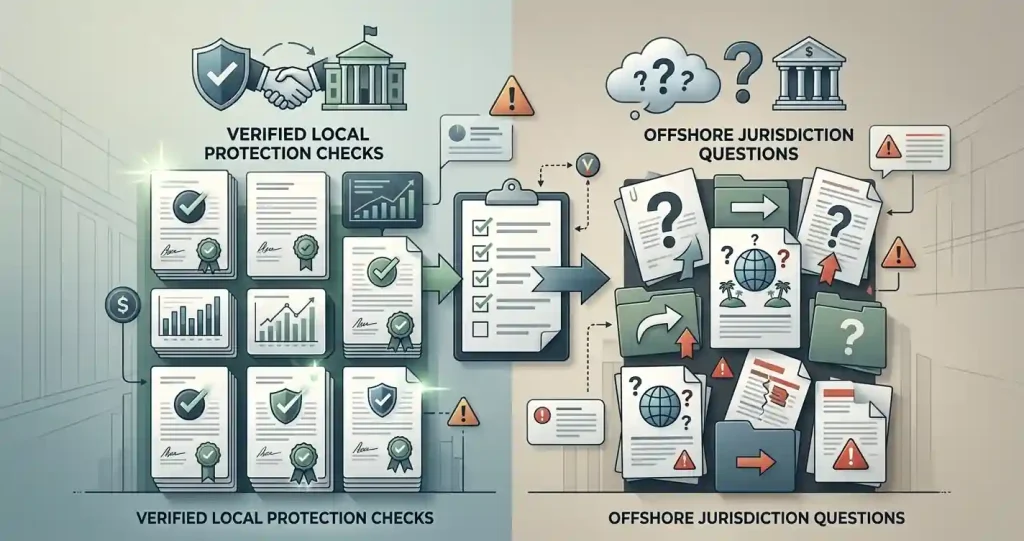
No UK Gambling Commission licence was verified for Extreme Spins. The brand is reported as operating under a Curaçao licensing jurisdiction, but the exact licence-number claim is disputed and is not presented here as verified. For a reader in Great Britain, that distinction matters because operators providing remote gambling to consumers in Great Britain require an appropriate Gambling Commission operating licence. Without a verified UKGC licence, you should not assume that UKGC licence conditions, GAMSTOP coverage or the standard UK licensed-operator ADR route apply to Extreme Spins. Separately, Casino Guru’s September 2026 listing gives Extreme Spins a Safety Index of 0.6, classed as “Very low”, and records 39 complaints, 26 unresolved. Those are third-party reputation signals, not a finding that the operator is fraudulent or criminal.
Table of Contents
- Extreme Spins Licence Status: UKGC Coverage & Security Standards
- Why the UKGC status matters in Great Britain
- Curaçao jurisdiction is not the same as UK authorisation
- What protections should not be assumed without a UKGC licence
- Current third-party safety signal: Casino Guru
- What the unresolved complaint pattern tells you
- How to read “non-GAMSTOP” claims
- Great Britain and Northern Ireland are not identical regimes
- Five checks before depositing
- Why a complaint count needs context rather than panic
- What “safe” should mean for a player decision
- What the licence gap changes for an Extreme Spins player in Britain
Extreme Spins Licence Status: UKGC Coverage & Security Standards
Extreme Spins should not be treated as a UKGC-licensed casino because no UK Gambling Commission licence was verified for the brand or its domain. Curaçao is the reported licensing jurisdiction, while the specific licence number circulated by some sources remains conflicting. The jurisdiction can be stated, but the disputed number should not be treated as a verified regulator record.
This is not the same as making a blanket claim that the casino is “legal”, “illegal”, “legit”, “a scam” or “fraudulent”. Those labels collapse several different issues into one word. A better decision framework asks which regulator authorises the operator, which consumer protections are actually attached to that authorisation, what the complaint record looks like and whether the player is comfortable with the resulting enforcement gap. To learn more about our review methodology and editorial guidelines, visit the about this site page.
Why the UKGC status matters in Great Britain
The UK Gambling Commission regulates commercial gambling in Great Britain. Its current licensing guidance states that a business providing remote gambling facilities to consumers in Great Britain needs an appropriate Gambling Commission operating licence. Great Britain in this context means England, Scotland and Wales.
No Extreme Spins UKGC licence was verified in the current register check. The practical consequence is not that every product fact becomes false. The casino can still have a game library, payment methods, English support and a mobile site. The consequence is that those product features should not be confused with local regulatory authorisation.
A UK-facing website or support for GBP does not itself prove UKGC licensing. Likewise, the ability to register or reach a cashier does not establish that the operator participates in the British licensed market on the same terms as a UKGC licensee.
Curaçao jurisdiction is not the same as UK authorisation
Available source material identifies Curaçao as the reported licensing jurisdiction for Extreme Spins. That is a jurisdiction statement, not a claim that a particular licence number has been independently validated. Current third-party material conflicts over the number shown in circulation, so the number is omitted rather than treated as verified.
Regulatory jurisdiction answers where an operator says its gambling licence sits. Local authorisation answers whether that operator has the licence required for the target market. For a Great Britain reader, these questions are not interchangeable. A Curaçao-related claim does not create UKGC coverage and a missing UKGC record does not automatically erase unrelated product facts.
If an operator displays a licence badge or number, verify it against the regulator’s current public records rather than relying on the badge itself. A number repeated across affiliate sites is still not equivalent to a regulator record.
What protections should not be assumed without a UKGC licence
UKGC-licensed remote operators are subject to licence conditions and social-responsibility requirements. These include self-exclusion duties. GAMSTOP states that all online gambling companies licensed in Great Britain must participate in its online self-exclusion scheme, and the Gambling Commission describes GAMSTOP as covering websites and apps run by businesses licensed in Great Britain.
Because no UKGC licence was verified for Extreme Spins, do not assume that a GAMSTOP exclusion will block access to Extreme Spins in the same way it is designed to block participating Great Britain licensees. A player relying on self-exclusion should therefore not treat a non-GAMSTOP or offshore site as equivalent protection.
Complaints escalation is another difference. UKGC-licensed businesses must maintain complaint procedures and arrangements for disputes to be referred to an approved Alternative Dispute Resolution provider when applicable. An unverified or non-UKGC operator should not be assumed to provide that same UKGC-mandated ADR route. In practice this can mean a dispute rests on the operator’s own internal process and whatever voluntary mediation a third-party review service chooses to offer, rather than a regulator-backed route with binding weight in Great Britain.
Current third-party safety signal: Casino Guru
Casino Guru’s September 2026 listing assigns the casino a Safety Index of 0.6, labelled Very low. The same listing records 39 total complaints, including 26 unresolved, one resolved and 12 rejected. Casino Guru says its assessment takes into account terms and conditions, complaint history, estimated casino size, blacklists and other factors.
These numbers should be read as an attributed third-party evaluation, not as an official regulatory determination. Complaint databases contain allegations, rejected cases and cases where the operator may disagree with the player. The useful signal is the pattern and the review site’s own classification, especially when paired with its stated complaint methodology.
For a deeper look at payout-specific reports, the withdrawal reports page separates complaint cases from verified cashier rules. That distinction prevents a player complaint from being rewritten as if it were the operator’s published policy.
What the unresolved complaint pattern tells you
Several current Casino Guru complaint pages concern delayed withdrawals and cases closed under the review site’s “No reaction policy” after mediation attempts. Recent examples include delayed payments in 2026 and UK cases where players reported completed verification but said withdrawals had not arrived. Those case summaries are useful reputation evidence because they show the type of dispute being reported.
They do not prove that every Extreme Spins withdrawal will be delayed, and they do not establish a universal processing time. Exact withdrawal limits, fees and service levels should be checked against the live cashier and current terms rather than inferred from player complaints. If payout reliability is your main concern, use the complaint record as a risk signal and the live cashier terms as a separate source of contractual information.
How to read “non-GAMSTOP” claims
Search results around Extreme Spins frequently use the phrase “non-GAMSTOP”. For decision-making, the useful meaning is that the site should not be assumed to sit inside the Great Britain GAMSTOP network unless a current verified participation or UKGC licence establishes that link. The phrase is not a quality mark and it is not a substitute for licence verification.
For someone who has chosen GAMSTOP because gambling is causing harm, seeking out a site specifically because it sits outside that protection defeats the purpose of the exclusion. The regulatory question and the personal-risk question may therefore point in the same direction even though they are conceptually different.
Great Britain and Northern Ireland are not identical regimes
The Gambling Act 2005 framework discussed by the Gambling Commission applies to Great Britain, not Northern Ireland. Northern Ireland has a separate gambling framework under the Betting, Gaming, Lotteries and Amusements (Northern Ireland) Order 1985 as amended in 2022.
That territorial distinction matters when “UK law” is used too loosely. Under the Gambling (Licensing and Advertising) Act 2014, remote operators wishing to advertise gambling services to consumers in Great Britain are subject to Gambling Commission licensing requirements, while Northern Ireland retains a separate gambling framework. England, Scotland, Wales and Northern Ireland should therefore not be treated as a single undifferentiated licensing system.
Five checks before depositing
- Verify the regulator record. Do not rely on a footer badge or affiliate review for a local licence claim.
- Read the withdrawal terms. Check the live cashier and current terms before funding the account, especially if limits or verification rules matter to you.
- Review complaint patterns. Look at recent cases, not only an average star rating.
- Understand your dispute route. Know whether the operator provides an independent escalation path and whether it is part of a regulator-mandated scheme.
- Protect your own limits. If you use GAMSTOP or other self-exclusion tools, do not assume an offshore site will be covered.
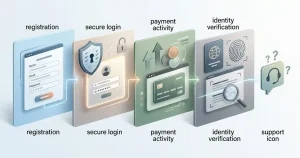
The separate cashier guide helps with payment-method decisions, while the registration and KYC page explains how to keep account records consistent if verification is requested.
Why a complaint count needs context rather than panic
A raw complaint number can mislead in both directions. A large casino may naturally attract more complaints because it has more customers, while a smaller operator can have fewer complaints in absolute terms but a worse ratio relative to its size. Casino Guru says it considers complaint seriousness and casino size in its Safety Index methodology, which is why the 0.6 score is more informative than simply repeating the total count.
It is also useful to separate unresolved, resolved and rejected cases. An unresolved case means the dispute was not resolved through that review site’s process; it does not automatically prove the player’s version of every event. A rejected complaint is not equivalent to an operator fault. The current 39 total and 26 unresolved figures are therefore best read as an attributed pattern rather than as a criminal allegation.
For your own decision, look at the type and recency of cases. Repeated withdrawal-delay reports are more relevant to a prospective cashout decision than an unrelated complaint from years ago. Save the current terms and your own account records so that, if a dispute occurs, you have evidence that is specific to your transaction rather than relying only on other players’ stories.
What “safe” should mean for a player decision
Safety is not a single yes-or-no badge. For a player decision, it combines local authorisation, licence evidence, complaint handling, payout reputation, account security and the player’s ability to use meaningful safeguards. Extreme Spins has verified product features, but those features do not neutralise the licence and complaint signals described above. We prioritize player safety across every trusted UK casino platform we analyze.
The current evidence supports three separate statements. First, no UKGC licence was verified. Second, Curaçao is the reported licensing jurisdiction, but the exact licence number is disputed and should not be presented as verified. Third, Casino Guru currently rates the casino 0.6 out of 10 on its Safety Index and records a high unresolved-complaint count relative to its review assessment.
Read those facts together instead of replacing them with a vague “legit” label. The full Extreme Spins review puts the trust findings alongside bonuses, games, payments and mobile access without letting licence status distort unrelated product facts.
What the licence gap changes for an Extreme Spins player in Britain
For a player in England, Scotland or Wales, the central issue is the absence of a verified UK Gambling Commission licence. You should not assume UKGC licence conditions, GAMSTOP participation or the standard UKGC-mandated ADR framework apply to Extreme Spins. The separate Curaçao jurisdiction claim does not replace local Great Britain authorisation, and the disputed licence number is not safe to publish as verified.
The current third-party reputation signal adds another reason for caution: Casino Guru’s September 2026 data shows a 0.6 Safety Index and 26 unresolved complaints out of 39 recorded cases. That is not proof of fraud, but it is material decision information. If regulatory recourse and self-exclusion coverage are priorities for you, compare those protections explicitly before depositing rather than assuming that a GBP cashier or UK-facing review page provides them.